Gerrymandering Battle Heats Up: Virginia Vote Could Shift Power
Virginia Democrats are pushing for a vote on a new congressional map that could shift political power. This redistricting effort is part of a larger national strategy by both parties to gain an advantage. The practice, however, raises concerns about increased partisanship and its impact on democracy.

Gerrymandering Battle Heats Up: Virginia Vote Could Shift Power
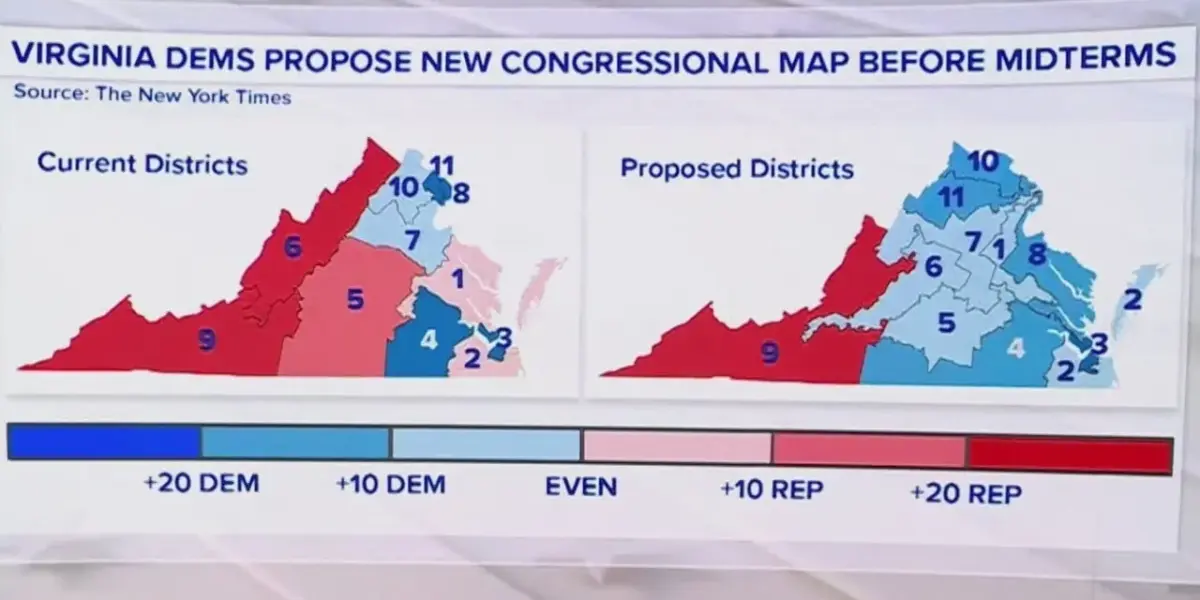
Virginia Democrats are pushing for a vote on a new congressional map. This move could significantly impact the upcoming midterm elections, potentially helping Democrats regain control of the House and Senate. Republicans, who have historically used redistricting to their advantage, might find themselves on the losing end of this political fight.
The strategy of redrawing district lines after a census, known as redistricting, has become a major political battleground. Republicans started this trend in states like Texas, creating extra districts that favored their party.
Now, Democrats are fighting back, adding new districts that lean Democratic in states like California and Utah. Virginia’s upcoming vote could add four more such districts, tilting the balance of power.
A High-Stakes Election
Former Republican Governor of Virginia, reflecting on the situation, stated that the effort to change the maps is an uphill battle, with significant money poured into the campaign. He believes the proposed maps are unfair and aims to trick voters. However, the reality on the ground suggests a different outcome, with many seeing the vote as a chance for a fairer representation.
The election in Virginia is expected to be close. While Democrats appeared to have an advantage with early and absentee voting, Republicans made gains in the final days.
The final results might take hours to confirm after the polls close. If the new map passes, it would drastically change Virginia’s current district map, which is largely Republican-leaning, into one that heavily favors Democrats.
This is not good for voters. It’s not good for Americans, but we are in such a closely fought partisan era that every seat really does count. And you better bet both parties are going to do that. Nobody is above it. Not Republicans, not Democrats.
The Impact on Democracy
Political analysts point out that redistricting, while a common practice, often leads to increased partisanship and less incentive for compromise. When parties can choose their voters through district design, it can create more extreme political environments. This practice, unfortunately, is not unique to one party; both Democrats and Republicans engage in it.
The core issue is that such practices make elections more about turning out a party’s base rather than appealing to a broader range of voters. This can empower more extreme voices within each party.
The current system encourages a focus on winning primaries, where a smaller, more motivated group of voters often decides the outcome. This can lead to candidates who are more ideologically pure but less able to work across the aisle.
Historical Context and Future Outlook
This intense focus on redistricting is not entirely new. Similar levels of mid-decade redistricting were last seen in the late 1800s, following the Civil War. Those redistricting battles took about 20 years to fully resolve, highlighting how long these issues can take to settle.
The current trend suggests that redistricting battles will continue to be a significant factor in national politics for the foreseeable future. Population shifts, such as people moving from states like California to Texas, add another layer of complexity. These demographic changes can alter the long-term advantage of certain districts and states.
Upcoming Supreme Court cases and gubernatorial races could bring further changes to redistricting rules and outcomes. While Democrats may see some gains now, the fight for political control through district lines is likely to persist for many election cycles to come. This ongoing struggle shapes not just individual elections but the broader direction of American governance.
The last time this much redistricting happened in the middle of a decade was in the 1880s and 1890s. It took about 20 years to sort out those changes.
Source: Virginia redistricting vote could help shift nation’s political control, panel says | On Balance (YouTube)

Related Articles


GOP Eyes Supreme Court Vacancy as Midterm Boost
Senate Republicans are reportedly viewing a potential Supreme Court vacancy as a key factor to boost their chances in the upcoming midterm elections. Meanwhile, Democrats are engaging in redistricting battles, such as in Virginia, to counter Republican gerrymandering efforts and solidify their political position.

Progressive Firebrand Ana Maria Rodriguez Takes Oath in Congress
Newly sworn-in Congresswoman Ana Maria Rodriguez is quickly focusing on affordability and democratic integrity. Despite a rapid entry into Congress, she faces an immediate re-election bid and plans to connect economic concerns directly with the health of democracy.


Democrats Must Fight: New Book Demands Power
Brian Tyler Cohen's new book, "The Day After," argues that Democrats must learn to wield power more effectively to defend democracy. The book criticizes past Democratic hesitations and offers strategies for a more assertive approach. Cohen believes this is crucial for countering current political threats and ensuring democratic survival.