Vance Tells Pope to ‘Tread Carefully’ on Theology
Senator JD Vance has faced criticism for telling Pope Francis to "tread carefully" on theological matters, a move many find audacious given the Pope's position. The comments highlight the complex intersection of religion and politics, with historical parallels and modern tribal dynamics influencing public discourse.

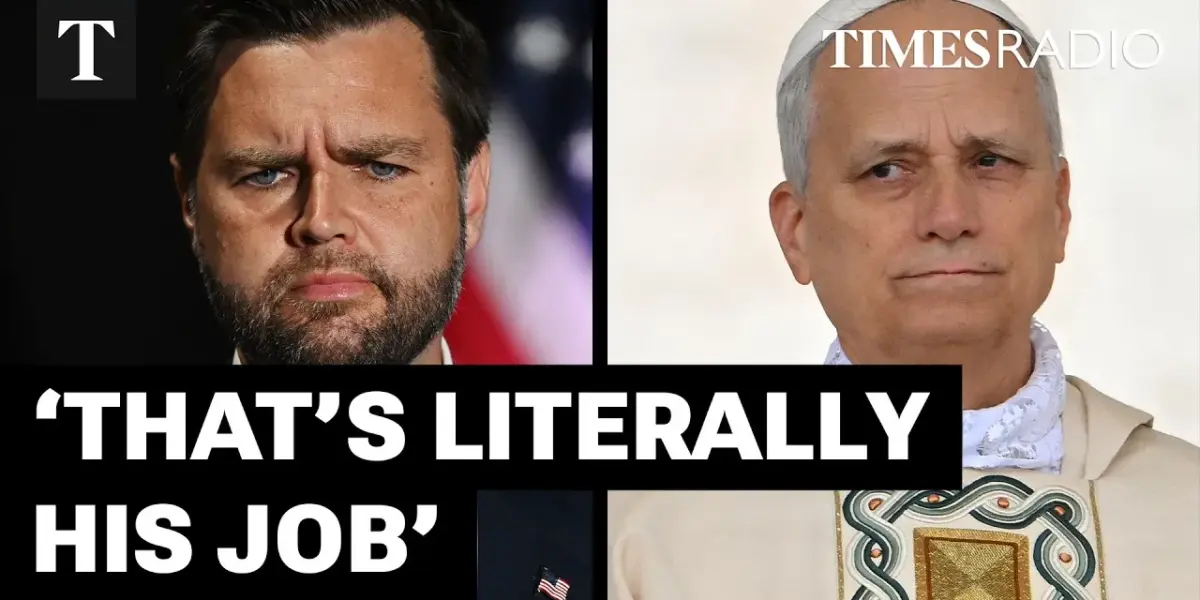
Vance’s Bold Statement to Pope Francis Sparks Outrage
Senator JD Vance has drawn widespread criticism for telling Pope Francis to “tread carefully” when discussing theological matters. The comments, made by the junior U.S. Senator from Ohio, struck many as exceptionally bold, given the Pope’s role as the head of the Catholic Church. The exchange occurred as Vice President Kamala Harris also engaged with the Pope, adding another layer to the political discussions surrounding the Vatican.
Journalist and comedian Timandra Harkness described Vance’s remarks as “just wild.” She explained that while it would be understandable for Vance to advise the Pope to be cautious when discussing politics, telling him to avoid theology is “wild.” Harkness noted that the Pope’s job is theology, while Vance’s is politics, a distinction she found crucial.
The Pope’s Role vs. Vance’s Political Ambitions
Harkness elaborated on the perceived audacity of Vance’s statement. “If you’re going to pick somebody in the world to say you should think before you talk about theology the pope,” she remarked, highlighting the inherent contradiction. She emphasized that the Catholic Church is one of the world’s major religious institutions, making Vance’s directive particularly jarring.
Vance himself stated, “I think it’s very very important for the pope to be careful when he talks about matters of theology.” He added that when opining on theological matters, one must “make sure it’s anchored in the truth.” This statement, according to Harkness, essentially amounts to telling the Pope to be careful when discussing God, which is the very essence of his role.
Vance’s Catholic Background and Political Strategy
Andrew Billan, features writer for The Times, pointed out that Vance is a relatively recent convert to Catholicism. This personal connection might explain his strong feelings, but Billan questioned if Vance fully grasps the implications of his public statements. He suggested Vance might still hold onto some of his previous beliefs, leading to a conflict with his current religious position.
Billan also noted that Vance has reportedly stepped back from his initial strong stance. Reports suggest that Vance clarified his remarks, indicating he wasn’t specifically targeting Donald Trump. This attempt to de-escalate the situation was seen by some as disappointing for those who enjoy political drama.
Broader Context: Politics, Religion, and ‘Memeification’
The entire episode unfolded against a backdrop of intense political discourse in the United States, heavily influenced by Donald Trump. The week saw a significant amount of discussion involving Trump, Jesus Christ, God, and biblical imagery. Harkness described this as an “extraordinary” “memeification” of modern arguments and conflicts.
She found the “kitification” of religion odd, especially the use of images resembling Sunday school pictures, complete with a slight glow, in political contexts. As an atheist, Harkness admitted her perspective is from the outside, but she believes religion, particularly the existence of a divine creator, is a serious topic that should be treated with gravity.
Historical Precedents of Papal-Political Clashes
Billan drew parallels to historical disputes between popes and political leaders. He mentioned Joseph Stalin’s famous question, “How many divisions has the Pope?” highlighting that while popes lack military power, they command the devotion of millions globally. The Catholic population in America is substantial, comprising diverse groups from Latin American immigrants to liberal Bostonians.
He argued that engaging in a public dispute with the current Pope, who is American and from Chicago, could be poor political strategy. Billan recalled past conflicts, such as those between Pope Boniface VIII and Philip IV of France, and Pope Leo XIII’s criticisms of American liberalism in the early 20th century. These historical examples show that clashes can occur when powerful figures with significant followings interact.
Assessing JD Vance’s Political Trajectory
Harkness reflected on Vance’s earlier work, particularly his book “Hillbilly Elegy.” She found it perceptive in capturing the sentiments of the neglected populations in the Rust Belt, giving a voice to the disenfranchised. However, she questioned if his observational skills translate into effective political action, suggesting he may have reached his limits.
Billan offered a more critical assessment, suggesting Vance might be nearing the end of his political career. He pointed to Vance’s recent campaign efforts for figures like Viktor Orbán, who subsequently lost an election. Billan framed Vance’s recent actions as a series of political missteps, including a failed attempt to mediate peace in Iran, suggesting he is not a “King Midas” figure whose touch turns everything to gold.
The ‘Mafia Boss’ Persona and Tribal Politics
The language used in the political arena, sometimes echoing mafia-style threats, was also discussed. Harkness noted the recurring comparison of Trump to a “mafia boss,” a persona that seems to align with his “my way or the highway” attitude.
The discussion also touched upon the tribal nature of modern politics. Billan observed how individuals and groups often align themselves with those who oppose their enemies, even if it leads them into uncomfortable positions. He cited examples of people on the left defending regimes they would typically oppose, driven by a desire to stand against a common adversary rather than by consistent principles.
Looking Ahead: Vance’s Next Move
Vance’s recent actions suggest a strategic pivot, but the effectiveness and long-term consequences remain to be seen. His willingness to engage in high-profile disputes, whether with religious leaders or foreign politicians, marks a distinctive approach to his senatorial role.
The political establishment and the public will be watching to see if Vance’s bold tactics yield political success or lead to further missteps. His future decisions and public statements will likely continue to be a subject of intense scrutiny and debate.
Source: JD Vance Telling The Pope To Tread Carefully Discussing Theology Is ‘Just Wild’ | Timandra Harkness (YouTube)

Related Articles
Trump’s Chaotic Diplomacy Fuels Iran Tensions
Conflicting reports and last-minute changes surrounding JD Vance's role in Iran negotiations highlight the Trump administration's chaotic foreign policy. This pattern of escalating threats followed by claims of progress raises questions about U.S. credibility and the path toward stability.

Trump Halts Vance’s Iran Peace Talks Amidst New Developments
Former President Donald Trump has unexpectedly withdrawn Senator JD Vance from upcoming peace talks with Iran just hours before they were scheduled to begin. Citing undisclosed new information, Trump's decision introduces uncertainty into the critical diplomatic negotiations. The reasons behind Vance's exclusion and its potential impact on the talks remain a subject of intense speculation.
Trump’s Divine Claims Fuel Feud with Pope Francis
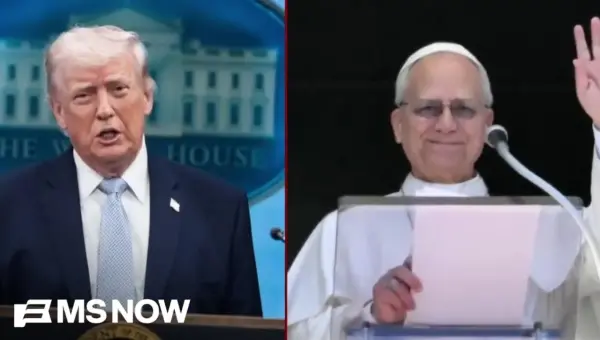
Former President Donald Trump has escalated his feud with Pope Francis by sharing an AI image of himself as a Jesus-like figure and planning a marathon Bible reading. Analysts suggest his actions are fueled by those around him who encourage him to see himself as divinely appointed, a sentiment echoed by some political allies.