Chernobyl’s Shadow: Unveiling Earth’s Most Radioactive Hotspots
While Chernobyl is a symbol of radiation danger, everyday activities like flying and habits like smoking can expose you to significant levels of radiation. Bananas serve as a relatable measure for understanding these varying doses. Astronauts on the ISS face intense radiation, but smokers can experience similar internal bombardment daily.

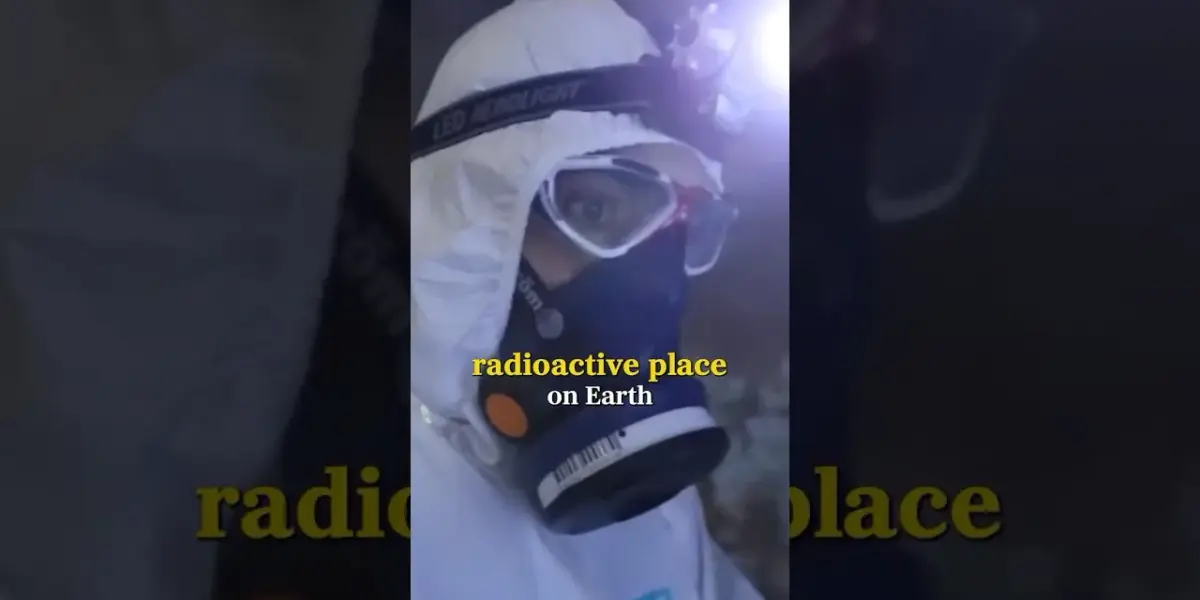
Chernobyl’s Shadow: Unveiling Earth’s Most Radioactive Hotspots
When considering the most radioactive places on Earth, the mind often drifts to the site of the 1986 nuclear disaster. Chernobyl remains a potent symbol of radiation’s power and danger. Yet, understanding radiation levels involves more than just one notorious location; it’s about comparing our daily exposure to truly hazardous environments.
To grasp these levels, we can use a common fruit as a measuring stick: the banana. Bananas contain potassium, and a tiny fraction of potassium atoms are naturally radioactive.
Eating a single banana exposes you to about 0.0001% of radioactive material. It would take consuming roughly 20 million bananas simultaneously to reach a lethal dose of radiation, though other issues would likely arise long before radiation became the primary concern.
Our everyday lives involve constant, low-level radiation exposure. Spending a day in a park exposes you to about 65 “banana equivalents” of background radiation from the Earth’s soil and cosmic rays from space. This natural radiation is a constant companion, a gentle hum in the background of our existence.
Traveling by air increases this exposure significantly. As an airplane ascends, there is less atmosphere above to block cosmic rays. Consequently, a five-hour flight, like one from New York to Los Angeles, is equivalent to eating about 150 bananas worth of radiation.
Now, consider the stark reality of Chernobyl. Spending 24 hours within the exclusion zone exposes a person to roughly 1,200 banana equivalents of radiation. This level is substantially higher than what we encounter during air travel or daily park visits, highlighting the lasting impact of the disaster.
Beyond Earth: Radiation in Space
Astronauts aboard the International Space Station (ISS) face an even more intense radiation environment. They are exposed to over 4,300 banana equivalents of radiation every single day. This constant bombardment from space is a significant challenge for long-duration space missions.
However, even the ISS’s radiation levels are surpassed by a habit many people engage in daily. Smoking tobacco introduces highly radioactive elements, such as polonium and lead, directly into the lungs. When these radioactive atoms are inhaled, they continuously bombard sensitive lung tissues with radiation.
The radiation dose experienced by a smoker can be equivalent to that of an astronaut on the ISS. The critical difference lies in duration and recovery.
Astronauts eventually return to Earth’s protective atmosphere, reducing their exposure. In contrast, smokers receive this intense internal radiation dose day after day, often for decades.
Historical Context and Future Implications
The understanding of radiation’s effects has evolved dramatically since the discovery of radioactivity by Henri Becquerel in 1896. Early 20th-century pioneers like Marie Curie bravely worked with radioactive materials, unaware of the long-term dangers. The Chernobyl disaster in 1986 served as a grim, large-scale lesson in the devastating consequences of uncontrolled nuclear events.
Comparing radiation doses, whether through bananas, airplane flights, Chernobyl, the ISS, or smoking, helps us contextualize risks. It illustrates that while natural background radiation is a constant, certain human activities and environments dramatically amplify our exposure.
The ongoing study of radioactive environments and their effects continues. Scientists monitor radiation levels in Chernobyl’s exclusion zone and research the long-term health impacts on flora and fauna. Understanding these extreme environments helps inform safety protocols for nuclear facilities and space exploration.
The next steps in understanding radiation involve continued monitoring of areas like Chernobyl and further research into the biological effects of long-term, low-dose exposure. Efforts to mitigate radiation risks for smokers remain a public health priority.
Source: The Most Radioactive Place On Earth (YouTube)

Related Articles


Humanity Will Dominate Solar System, Conquer Space’s Challenges
Humanity is poised to dominate the solar system, driven by economic expansion. Experts discuss the challenges of interplanetary living, favoring rotating space stations over low-gravity planets. The vastness of the universe and the realities of space observation are explored, alongside the crucial lessons learned from ISS missions and the significant hurdles yet to overcome for Mars colonization.

New Comet Could Dazzle Skies With Naked-Eye Visibility
Comet C/2025 R3 (PanSTARRS) is expected to make its closest approach to Earth on April 19th, with predictions suggesting it could become bright enough to be seen with the naked eye. This icy visitor from the outer solar system offers a rare and potentially dazzling celestial display.


Trump’s Health and erratic posts raise alarms amid global tensions
Recent observations highlight concerns about Donald Trump's health and a surge of erratic social media posts. Amid failing international negotiations and rising global tensions, his online activity has become increasingly bizarre, featuring fabricated stories and distorted realities. This pattern raises significant questions about his fitness for leadership and the potential impact on national and international stability.