Budget Director Stumbles Under Sharp Congressional Questioning
During a recent congressional hearing, Budget Director Russ Vote faced intense questioning from Democratic lawmakers. The focus was on the administration's budget proposals and alleged politically motivated funding decisions. Vote was challenged on claims of economic improvement, accusations of punishing 'blue states,' and significant proposed cuts to research and consumer protection.

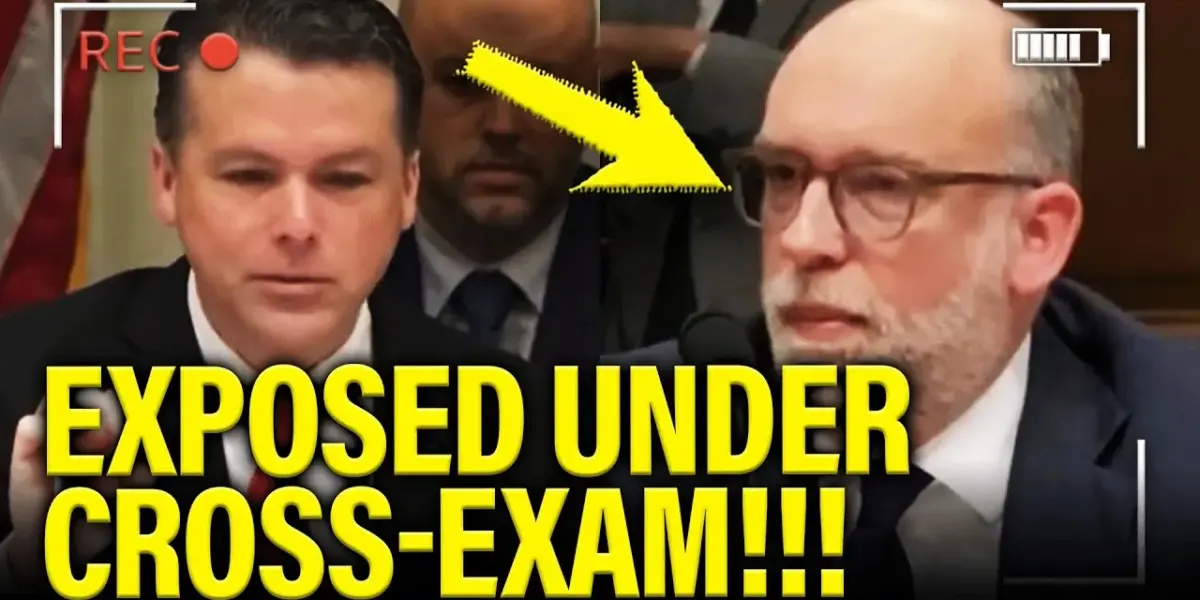
Budget Director Faces Scrutiny in Heated Congressional Hearing
Russ Vote, a key figure from the Office of Management and Budget and associated with Project 2025, recently faced a tough cross-examination in Congress. Having avoided public questioning for a significant period, Vote appeared ready to deliver prepared remarks praising economic conditions under Donald Trump. However, Democratic lawmakers shifted the focus, challenging his statements and revealing what they described as a pattern of politically motivated decisions.
Challenging Economic Claims
Vote initially presented an optimistic view, stating, “We’re in the midst of passing… The extension of the president’s tax cuts.
Many of those were aimed at working-class individuals… I think that’s going to lead to an explosion in affordability for the American people.” This claim was immediately met with skepticism.
“Look, it seems pretty obvious to me that your entire strategy here is to take revenge on blue states and anyone who doesn’t vote for Donald Trump. You’re using your position… To punish them and to try to inflict pain.” – Rep. Balon
During the hearing, Vote was pressed on decisions regarding clean energy grants. He was asked directly if $7.6 billion in grants were awarded based on whether recipients lived in a “blue state.” Vote stated he did not recall. However, he was confronted with a federal judge’s statement from January 12, 2026, which allegedly said that grant decisions were made “primarily if not exclusively based on whether the awardee resided in a state whose citizens voted for President Trump in 2024.” Vote’s response was to deflect, suggesting the focus was on “states that we think are mismanaged.”
Allegations of Political Retaliation
Further questioning revealed that federal judges had characterized freezes of child care and family assistance funding as appearing “designed to punish communities that the administration agreed with.” Another court reportedly found withholding congressionally approved funding to be “vindictive and unlawful,” causing “irreparable harm.” The Government Accountability Office, a watchdog agency, also reportedly found that Vote’s office broke the law multiple times by refusing to spend money allocated by Congress.
When asked directly if he was trying to get revenge on states that did not vote for Donald Trump, Vote denied it, attempting to pivot to actions by the Biden administration. However, he was repeatedly brought back to the question, with lawmakers emphasizing that Congress, not the President, holds the power of the purse, and that such actions take power away from the people.
Questions on Defense Spending and Foreign Wars
The hearing also turned to significant budget proposals. Senator Murray questioned Vote about a proposed $450 billion increase in defense spending, calling it the largest since World War II.
She also inquired about the cost of the war in Iran, asking for specific figures. Vote struggled to provide an exact amount, stating, “I wouldn’t want to make a characterization of that at this point.” This answer disappointed Senator Murray, who expected more precise information from the Director of the Office of Management and Budget.
Vote stated that the total request for defense spending was $1.5 trillion, with $660 billion for non-defense spending, and a proposed cut of $70 billion to non-defense programs. Despite acknowledging he referred to himself as a “fiscal hawk,” Vote defended the $1.5 trillion defense budget. He was questioned about whether he had warned President Trump that such spending would “explode the deficit,” but he stated he fully supported the budget.
Cuts to Research and Consumer Protection
Concerns were also raised about proposed cuts to scientific research. Congresswoman Gia Paul highlighted that grants for Alzheimer’s and aging research were cut by almost 50% the previous year, with similar reductions for mental health and cancer research.
She asked if Vote’s budget proposed another 12% cut to the National Institutes of Health (NIH). Vote initially disputed that NIH was cut, but later confirmed a proposed cut to specific programs.
The conversation also touched on the National Science Foundation (NSF), with a proposed cut of over 55%. While Vote stated this wouldn’t impact investments in artificial intelligence, research university directors reportedly expressed concerns that such cuts could slow scientific progress and threaten the nation’s global economic standing.
Vote was questioned about his role as acting director of the Consumer Financial Protection Bureau (CFPB). He was asked why he aimed to eliminate the agency, which had returned billions to consumers.
Vote countered that the CFPB caused $350 billion in added costs to consumers and that his proposal to reduce its workforce would protect consumers. However, he was challenged on reducing the workforce to a level that would leave very few employees to oversee financial companies holding trillions in debt.
Tariffs and Economic Impact
Senator Kaine questioned Vote about tariff projections in the budget. He noted that tariffs had been determined illegal by the Supreme Court and that $166 billion was being refunded.
Despite this, the budget projected dramatic increases in tariffs. Vote stated that tariffs are imposed on foreign importers and do not raise prices for American consumers, a claim disputed by reports from the New York Federal Reserve and the Tax Foundation, which indicated that the cost of tariffs largely fell on American consumers and businesses.
Why This Matters
This hearing exposed significant disagreements about economic priorities and the administration’s approach to federal funding. The questioning highlighted concerns that budget decisions may be driven by political retribution rather than sound economic policy. The proposed cuts to research and consumer protection agencies also raise questions about the long-term impact on innovation and public welfare.
Implications and Future Outlook
The exchange suggests a deep divide in how federal resources should be allocated. Democrats emphasized investments in areas like healthcare, education, and consumer protection, while the administration, as represented by Vote, appeared to prioritize defense spending and potentially use budget tools to exert political influence.
The reliability of budget projections, particularly concerning tariffs, remains a point of contention. Future budget negotiations will likely reflect these opposing viewpoints, potentially leading to continued conflict over funding priorities and the role of government agencies.
Historical Context
The power of Congress to control federal spending is a cornerstone of American governance, established by the Constitution. Historically, disputes over budget allocation and the executive branch’s use of funds have been frequent.
The allegations of using federal funding to punish political opponents echo past concerns about the politicization of government resources. The debate over tariffs also has a long history, with ongoing discussions about their economic effects on both domestic industries and consumers.
The hearing concluded with continued debate on these issues, with lawmakers expressing strong opinions on the direction of national spending. The effectiveness of agencies like the CFPB and the importance of funding scientific research remain central to the ongoing policy discussions.
Source: Trump Witness QUICKLY COLLAPSES under CROSS EXAM at HEARING!! (YouTube)

Related Articles


Trump’s Iran Stance Sparks Outrage, Splits US Politics
President Trump's handling of Iran has sparked impeachment calls and highlighted how Donald Trump himself has become the central focus in American politics. This 'Trump Metric' means foreign policy is often viewed through a partisan lens, complicating national discourse and potentially hindering effective diplomacy.
GOP’s Trump Loyalty Now Fuels Their Own Election Woes
Republicans' decision to back Donald Trump on a controversial war has backfired, hurting their own election chances. Their fear of Trump leads them to sacrifice their independence and electoral prospects. This strategy risks alienating voters who are experiencing real economic pain and moral concerns.

Trump’s Claims Crumble Amid War and Court Setbacks
Donald Trump's claims about international deals and national security face scrutiny amid war escalations and court losses. Legal challenges, including a blocked ballroom construction and a potential $10 billion taxpayer settlement, raise questions about accountability and priorities.