New Jersey Tops ‘Least Free’ State Ranking
New Jersey has been ranked the 'least free' state due to its heavy regulatory burden, according to the Cato Institute. The report contrasts this with states like Arkansas, Iowa, and South Dakota, which have fewer regulations. This has significant implications for business growth and investment attractiveness.

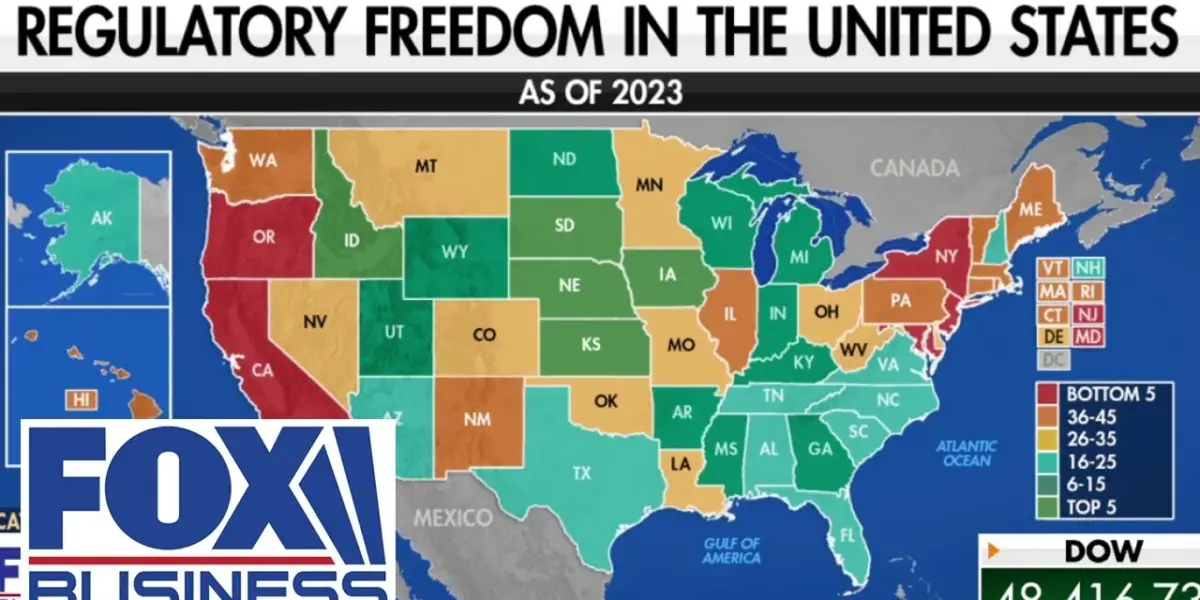
New Jersey Ranked Least Free State Amid High Regulatory Burden
New Jersey has been identified as the state with the most restrictive regulations, according to a new report from the Cato Institute. This ranking highlights concerns about the impact of heavy regulation on business attractiveness and economic growth. States like California and New York also ranked poorly, signaling a trend of stricter oversight in populous, high-cost areas.
Conversely, Arkansas, Iowa, and South Dakota were recognized for having the fewest regulations, positioning them as potentially more business-friendly environments. This contrast highlights the significant differences in regulatory approaches across the United States.
Business Owner’s Experience Highlights Regulatory Pain
One real estate executive, who previously operated a business in New York City, shared her struggles with the state’s complex regulatory requirements. She described the process of submitting paperwork and ensuring compliance as exhausting. The need to manage new annual reports added to her burden, making the business environment increasingly difficult.
This overwhelming regulatory environment led her to relocate her business to Florida last year. However, even that move was complicated by New York’s stringent regulations. She noted that moving an LLC in most states is straightforward, but New York’s process involved extensive paperwork and reporting requirements.
She expressed regret for not moving sooner, stating that the added cost and complexity of New York’s regulations resulted in lost savings. The executive also cited taxes as a major factor in her decision to move. By leaving New York, she achieved a 15% saving due to the elimination of state and city taxes, allowing her to reinvest more in her business’s marketing efforts.
Regulatory Actions and Cost Savings
The impact of regulatory policy is significant, with the Trump administration finalizing 1460 regulatory actions in fiscal year 2025. These actions resulted in an estimated $211.8 billion in net cost savings for Americans. This figure represents a substantial reduction in the financial burden placed on businesses and individuals by government rules.
An example of this regulatory rollback involved the FDA easing restrictions on laboratory tests. This move is expected to reduce costs and encourage innovation within the healthcare sector. The White House estimates that this specific change will save approximately $20 billion.
Regulation’s Link to Economic Growth
Economists suggest a direct correlation between high regulatory burdens and slower economic growth. John Lawnski, an economist, explained that regulation acts like a tax on businesses. Companies must pay this cost to operate within a state, diverting resources and management attention away from core business growth activities.
He further explained that states with more regulations often face slower economic expansion. Heavily regulated industries may need to hire more staff to manage compliance, creating an additional cost for businesses. This situation can lead to states incurring expenses on regulatory oversight without generating corresponding tax revenue.
This dynamic can create a cycle where businesses struggle to grow, and states face increased spending on enforcement. The overall effect is a less dynamic and potentially less prosperous economic environment for both businesses and residents.
Market Impact and Investor Considerations
For investors, the regulatory environment of a state can be a critical factor. States with fewer regulations may offer a more attractive climate for startups and established companies looking to expand. This can translate into higher potential for business growth and, consequently, stronger investment returns.
Conversely, states with high regulatory burdens might present challenges for businesses. Investors may need to carefully assess the operational costs and potential growth limitations imposed by such regulations. Companies operating in these states might require more resilience and a strong focus on compliance.
The ongoing debate over regulation versus economic freedom highlights a key consideration for policy makers and business leaders alike. As states compete for investment and talent, their regulatory frameworks will likely continue to play a significant role in shaping their economic futures. The Cato Institute’s ranking provides a data-driven perspective on this critical issue.
Source: 'LEAST FREE STATE': New Jersey hit with BRUTAL ranking (YouTube)

Related Articles


World Cup Ticket Prices Skyrocket for Fans
Fans attending the 2026 World Cup in New Jersey face a shocking $150 round-trip train fare to MetLife Stadium, a huge increase from the usual $12.90. This price hike is intended to help New Jersey cover its $62 million hosting costs. On-site parking is unavailable, with nearby American Dream Mall charging $225 for game day parking.

Tax Cuts Fuel Growth, Iran Policy Shifts Global Energy
President Trump's tax cuts are providing substantial benefits to millions, stimulating the economy. Simultaneously, a firm stance on Iran has lowered oil prices and reshaped global energy dynamics. These developments are seen as key factors influencing upcoming elections and the broader financial outlook.


Crypto Poised for Growth as Clarity Bill Nears Senate Vote
The cryptocurrency market is anticipating a significant boost as the Clarity bill, focusing on stablecoin regulation, nears a Senate vote. Industry experts like Zach Pandl from Grayscale express strong optimism, predicting increased institutional adoption, a wave of acquisitions, and further innovation in tokenization and decentralized finance. Grayscale's new Avalanche Staking ETF (GAVA) exemplifies efforts to bridge traditional finance with crypto.