Eight Eurasian Nations Reshape Global Power Balance
Eight Eurasian nations—Armenia, Azerbaijan, Hungary, Kazakhstan, Mongolia, Pakistan, Turkey, and Uzbekistan—are emerging as crucial 'swing states' in a shifting global power balance. These middle powers are strategically navigating relationships with the US and China, influencing international dynamics. Experts suggest China may be most effectively building influence through economic ties.

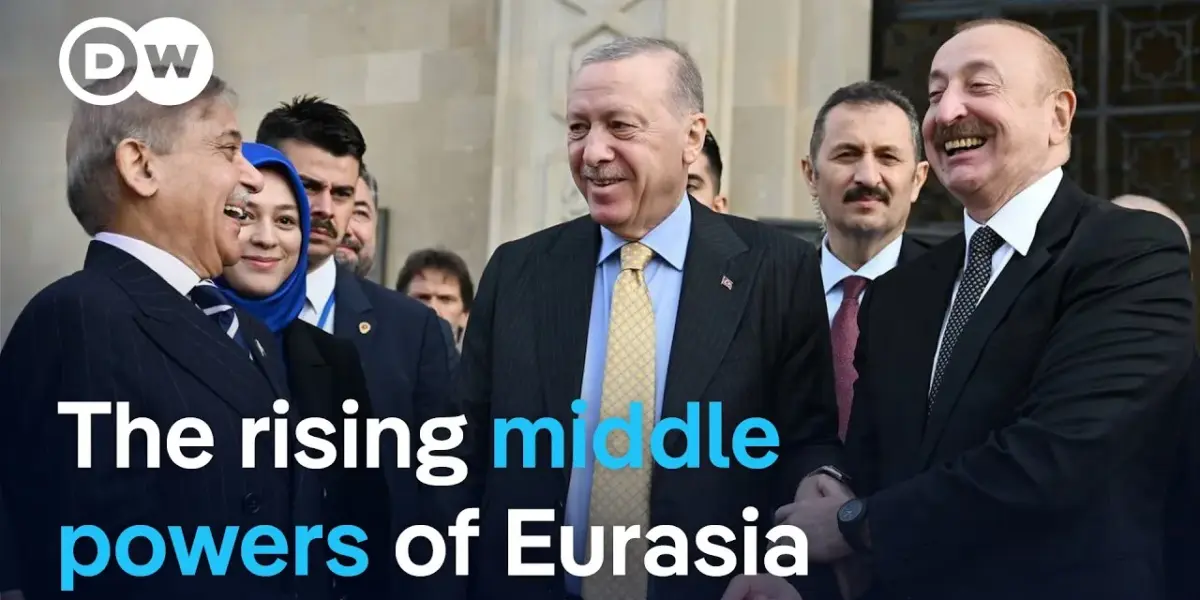
World Order Shifts: The Rise of ‘Swing States’
The global political scene is undergoing a significant transformation. Talk of America’s declining superpower status and China’s growing influence dominates discussions. Many experts now point to a new era of ‘multilateralism.’ In this shifting world, no single nation holds absolute power.
Instead, middle-sized countries, often called ‘middle powers,’ are actively building relationships with many nations. They also carefully manage their ties with larger countries, a strategy known as hedging.
Pakistan: A Key ‘Swing State’ Broker
Pakistan is a prime example of this new dynamic. The nation recently stepped forward to help broker a ceasefire between Iran and another party. This move reflects broader geopolitical strategies.
“Pakistan um I think the fact that they’re trying to mediate peace kind of reflects what China wants,” explained Ken Moryasu, a senior fellow at the Hudson Institute and former international correspondent for Nikkei Asia. China, he noted, prefers stability and lower oil prices, and does not oppose Pakistan’s mediation efforts. This balancing act, Moryasu believes, serves both American and Chinese interests, highlighting Pakistan’s role as a crucial ‘swing state.’
Defining Eurasia’s ‘Swing States’
The term ‘swing state’ is often used in US politics to describe states that can vote for either major party. However, Moryasu uses it to describe a specific group of middle powers in Eurasia. These nations are strategically important because their allegiances can influence major global power dynamics.
Moryasu identifies eight such countries: Armenia, Azerbaijan, Hungary, Kazakhstan, Mongolia, Pakistan, Turkey, and Uzbekistan. Their geographical locations and political stances make them key players in the competition between great powers.
Land Power Competition in Eurasia
While much attention focuses on the Indo-Pacific region, Moryasu emphasizes the importance of land-based power competition across the Eurasian continent. China, for instance, has long sought to reduce its dependence on sea routes like the Strait of Hormuz, which are vulnerable to disruption.
“China for 15 years has been trying to avoid dependence on the Indian Ocean because Indian Ocean is full of maritime choke points,” Moryasu stated. He argues that countering China requires engaging with Eurasian land routes and strategic choke points.
Azerbaijan and Armenia: A New Peace Route
Both Azerbaijan and Armenia are on Moryasu’s list and recently agreed to a peace deal brokered by the United States. This agreement is seen as a significant foreign policy achievement. The deal, partly driven by a US-proposed land connection called the ‘Trump route,’ aims to link Azerbaijan with its exclave through Armenia.
This new route offers an alternative to the existing ‘middle corridor’ that passes through Central Asia, the Caspian Sea, Azerbaijan, Georgia, and Turkey. Having multiple options is crucial for Eurasian connectivity, especially given political uncertainties in countries like Georgia.
Hungary: A European Gateway
Hungary stands out as the only European nation on the list. Under Prime Minister Viktor Orban, Hungary has maintained relationships with China, Russia, and the United States. China views Hungary as a key entry point into the European Union, investing heavily there.
Hungary’s sometimes strained relationship with other EU members has created an opening for Chinese investment. Simultaneously, Orban maintains close ties with the US, allowing Hungary to benefit from relationships with both sides.
“They’re really uh in the middle uh of these two sides. I I think they’re playing it pretty well,” Moryasu commented on Hungary’s strategic positioning.
Kazakhstan: Central Asian Connector
Located centrally in Eurasia, Kazakhstan is a vast country rich in oil and a vital transit point for rail and pipeline infrastructure connecting China to Europe. “Kazakhstan um by its geography, it is right next to China on the west side. It is where the railroad from China to Europe passes through,” Moryasu explained.
The country pursues a ‘multi-vector foreign policy’ to avoid becoming overly dependent on either Russia or China. This approach creates opportunities for the United States to deepen its ties with Kazakhstan.
Uzbekistan: Flexible Diplomacy
Uzbekistan, another Central Asian nation on the list, offers a unique advantage: it shares no borders with either China or Russia. This geographical position grants it greater flexibility in its foreign policy. The US is actively working to strengthen its relationship with Uzbekistan, recognizing its potential as a strategic partner in the region.
Mongolia: Caught Between Giants
Mongolia sits directly between Russia and China, making it a nation constantly courted by both. Its historical connection to the Mongol Empire also influences regional dynamics. Moryasu noted the historical impact, stating, “the Russian invasion of Ukraine is it comes from a a paranoia on the Russian side of needing to defend its borders having buffer state that comes from the memory of the Golden Horde.” This historical context shapes the security concerns and foreign policy considerations for both Russia and Mongolia.
Turkey: A Geopolitical Bridge
Turkey, positioned at the crossroads of Europe and Asia, is described as the most significant of the swing states, particularly for Japan’s deterrence strategy against China. Its strategic geography and diverse identities—part of the Islamic world, the Black Sea economic zone, and historically linked to North Africa—make it a versatile player. Turkey’s growing interest in the Organization of Turkic States is seen as a potential move to create a stronger, more cohesive unit that could influence regional politics and serve as a counterweight to China’s western border.
China’s Growing Influence
While these eight nations navigate complex relationships, Moryasu suggests that China is currently most effectively leveraging the situation. Chinese President Xi Jinping’s vision of a ‘community of shared destiny’ aims to foster economic interdependence through infrastructure projects like pipelines and ports. The goal is to create a scenario where neighboring countries’ prosperity is tied to China’s.
“And what that means is to build pipelines, build ports to to connect the economic uh prosperity uh with China,” Moryasu observed. This interconnectedness, he believes, could lead these nations to align with China on international matters, such as votes in the UN or WTO.
Looking Ahead
The strategic importance of these eight Eurasian nations is set to grow as global power dynamics continue to evolve. Their ability to balance relationships with major powers will shape regional stability and international alliances. Observers will be watching closely to see how these countries continue to play their cards and whether China’s strategy of economic integration proves most successful in the long run.
Source: The eight countries that could swing the global power balance | DW News (YouTube)

Related Articles

US Navy Lacks Ships to Secure Oil Tankers in Hormuz
A recent Pentagon briefing reveals the U.S. Navy lacks sufficient ships to escort oil tankers through the Strait of Hormuz. Senior National Security Reporter David Rohde highlighted this critical shortage, which could impact global energy prices and regional stability. The situation points to challenges in maintaining naval capacity for vital global security missions.


Trump Official Faces Scrutiny Over War Crime Allegations
Democrats in the Senate questioned Ambassador Mike Waltz about alleged war crimes during the Trump administration, focusing on statements regarding Iran and historical international law. Waltz defended the administration's actions, citing historical precedents and diplomatic outcomes.

Trump Eyes Iran Deal; Software Stocks Draw Investor Interest
Former President Donald Trump announced potential progress on an Iran deal and ceasefire talks, while the tech market shows signs of cooling after a strong rally. Investor Michael Bur's recent acquisitions in software stocks like Adobe and Salesforce are also drawing attention.