House Votes to Extend Spy Powers Amid Fierce Debate
The House is debating a controversial spy bill that would renew Section 702 of FISA for 18 months without reforms. Critics worry about government spying on Americans, while supporters say it's vital for national security. The bill faces opposition from Democrats and some Republicans, despite calls for unity from former President Trump.


House Advances Controversial Spy Bill Amid Deep Divisions
Late last night, the House of Representatives moved forward with a key section of a government surveillance bill, but the fight is far from over. This bill, which includes Section 702 of the Foreign Intelligence Surveillance Act (FISA), aims to renew broad spying powers for another 18 months. However, the process has been rocky, with significant opposition from both Democrats and some Republicans, and even former President Trump weighing in.
The core of the debate centers on Section 702, a powerful tool designed to gather intelligence on foreign individuals outside the United States. Critics argue that current safeguards are not strong enough to prevent the government from improperly accessing information about American citizens. This concern isn’t limited to one party; both Democrats and Republicans have voiced worries about potential overreach and the protection of privacy rights for Americans.
During a recent committee hearing, Congressman Jim Jordan of the Judiciary Committee attempted to calm these fears. He stated that existing penalties are in place for those who misuse the system.
Jordan explained that consequences exist for violations under both Title I and Section 702. He also suggested that if future abuses are discovered, criminal penalties could be strengthened.
Despite these assurances, the bill faced a tough hurdle in the Rules Committee. No Democrats voted in favor of advancing the reauthorization.
Three Republicans, who had reservations, chose to withhold their votes instead of voting no. This strategy allowed the bill to move to the full House floor for consideration, avoiding an outright defeat.
A similar tactic might be used when the bill comes up for a final vote in the full House. Instead of voting against it, which could easily sink the measure, Republican critics might vote “present.” This would lower the number of votes needed for final passage, making it easier for the bill to pass even with significant opposition.
Several Republican lawmakers have made their concerns about Section 702 public. They plan to hold a press conference today to discuss their issues further. This comes as former President Trump has called on Republicans to stand united on the issue.
Trump himself has been critical of how FISA was used, stating it was illegally used against his 2016 presidential campaign. While he acknowledged the potential for it to be used against him again, he expressed a willingness to accept that risk as a citizen for the good of the country. He believes the U.S. military urgently needs these spying capabilities, citing their success in operations related to Venezuela and Iran.
The intelligence community is also pushing hard to avoid any delays. General Dunford, the former Chairman of the Joint Chiefs of Staff, sent a letter to lawmakers. He warned that weakening or losing Section 702 would significantly harm U.S. national security and its ability to gather crucial intelligence.
Why This Matters
The debate over Section 702 highlights a fundamental tension in modern security policy: balancing national security needs with individual privacy rights. This law allows the government to collect communications data of foreign targets located abroad. However, the data collected can sometimes include information about Americans who communicate with these foreign targets, raising concerns about unconstitutional surveillance.
The history of FISA shows a constant struggle to adapt surveillance laws to new technologies and threats. Section 702 was created in 2008 to address the changing nature of international terrorism and espionage. It allows U.S. agencies to conduct warrantless surveillance on non-U.S. persons outside the U.S. but has faced scrutiny over how the data is handled and accessed internally.
The intelligence community argues that Section 702 is essential for identifying and neutralizing threats before they reach U.S. soil. They see it as a critical tool for staying ahead of foreign adversaries. The potential impact of losing or significantly reforming these powers, they argue, would leave the U.S. more vulnerable.
On the other hand, civil liberties advocates and a growing number of lawmakers worry about the potential for abuse. They point to past instances where the program’s data was improperly queried or used for purposes beyond national security. This leads to demands for stronger oversight and reforms that explicitly protect Americans’ privacy from domestic surveillance, even if the initial target is foreign.
The current push for reauthorization without significant reforms suggests the administration and intelligence agencies believe the existing measures are adequate. However, the continued opposition from a bipartisan group of lawmakers indicates that the debate over privacy versus security is far from settled. The outcome of this vote will set a precedent for how such powers are managed in the future.
Future Outlook
The path forward for Section 702 remains uncertain. The administration is actively lobbying lawmakers to secure the necessary votes for reauthorization.
The intelligence community’s warnings about national security risks carry significant weight with many members of Congress. However, the vocal opposition, fueled by privacy concerns and past controversies, cannot be ignored.
If the bill passes in its current form, it will likely lead to continued debate and potential legal challenges regarding the scope of surveillance powers. If it fails or is significantly altered, it could force a major rethinking of how the U.S. gathers foreign intelligence today. Lawmakers are expected to continue the floor debate today, with a final vote potentially coming soon.
Source: House Advances Spy Bill Amid Republican Opposition (YouTube)

Related Articles


Turkey Faces Shocking School Violence: Two Shootings in Days
Turkey is reeling after two school shootings in two days, an event considered extremely rare for the country. The violence has left four dead and over 30 injured, prompting national shock and calls for investigation. Authorities are probing how young students obtained weapons and why such attacks occurred.
Navy Recruit Accused of Selling Secrets to China
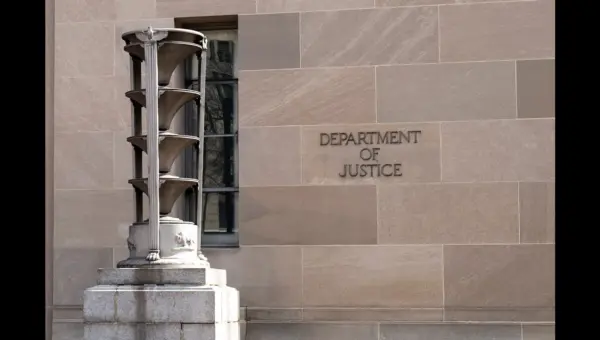
A Chinese national serving in the U.S. Navy has been indicted for allegedly conspiring to obstruct justice and sell secrets to a foreign agent. This incident, alongside a similar spying case in Taiwan, highlights the persistent threat of foreign espionage within military ranks.

White House Won’t Estimate Iran Conflict Cost, Cites Ongoing Work
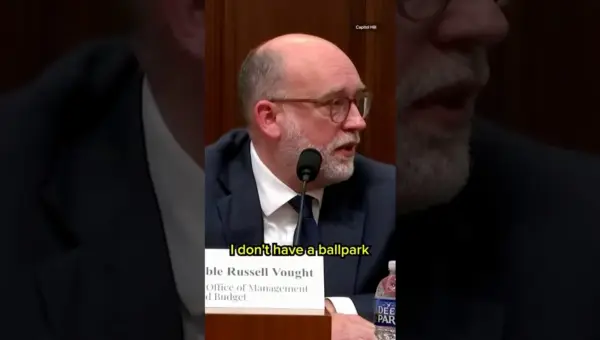
White House budget director Russ Vought stated that the administration has not yet determined how much money it will ask Congress to fund for the Iran conflict. Appearing before lawmakers at a House budget hearing, Vought admitted he does not have even a rough estimate, saying, "We're still working on it." This lack of a clear financial projection comes as tensions remain high in the region.