Space Data Centers: A Leap for AI or Economic Hubris?
SpaceX's ambitious plans for orbital AI data centers raise profound questions about economic sustainability and the future of humanity. This article explores the potential benefits, immense challenges, and critical risks associated with this futuristic endeavor.

Space Data Centers: A Leap for AI or Economic Hubris?
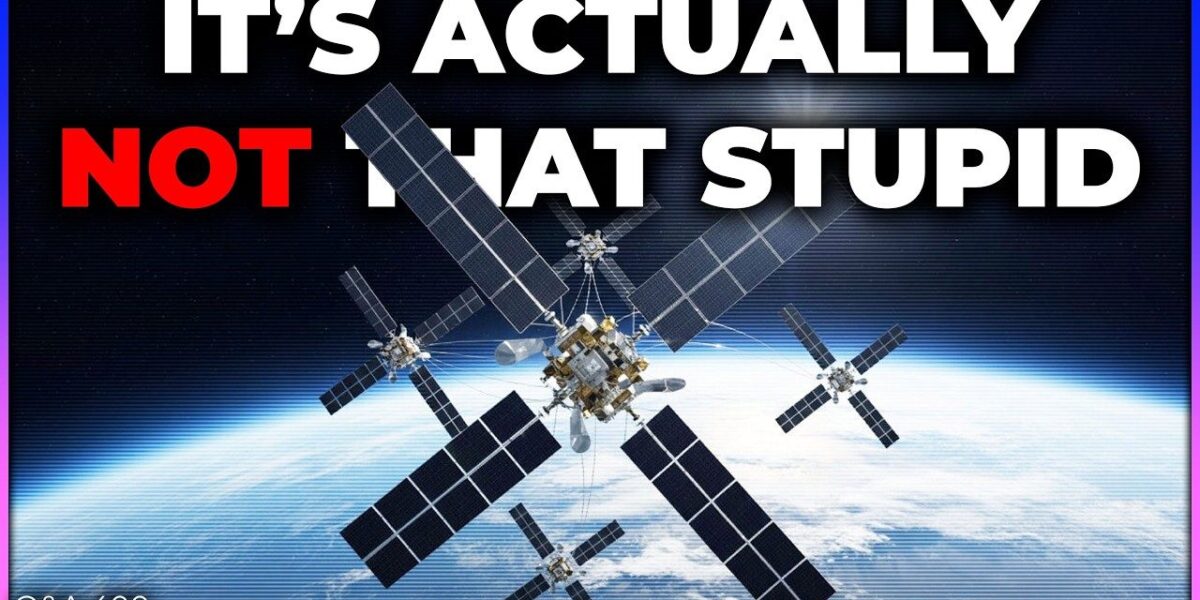
In a move that blurs the lines between science fiction and imminent reality, SpaceX, through its ambitious Starlink constellation plans, is reportedly exploring the deployment of artificial intelligence (AI) data centers in orbit. This audacious proposal, which could involve up to a million satellites, has ignited a fervent debate: is this a stroke of genius that will propel space exploration and infrastructure forward, or a precarious venture poised for a spectacular crash?
The Economic Crucible: Why Space?
The question arises: how dire must our terrestrial economy be to necessitate launching complex data centers into the vacuum of space? The current economic climate is undeniably strained. Inflation, rising costs of essential goods and services, and the escalating price of vital computing components like RAM and GPUs have placed immense pressure on everyday individuals. The tech sector, particularly AI, is currently propping up the stock market, leading to concerns about a potential bubble, reminiscent of the dot-com crash of the early 2000s. While that era ultimately laid the groundwork for the internet we rely on today, the current AI investment dwarfs previous booms, raising the stakes considerably.
The potential outcomes are stark. One possibility is a market crash, akin to the dot-com bust, which could devastate retirement savings and set back economic progress for years, echoing Japan’s “lost decades.” The other, perhaps more unsettling, scenario is that AI’s trajectory is correct: it could eventually automate vast swathes of human labor, leaving many questioning their future employment. In this context, the idea of offloading the immense energy and resource demands of AI data centers from Earth to space, where they can operate sustainably and transmit data back, begins to appear less like a fantasy and more like a pragmatic, albeit extreme, solution.
A Lunar Launchpad for AI?
Further elaborating on this concept, one vision involves a lunar-based infrastructure. Elon Musk has reportedly shifted focus from Mars to the Moon as a first priority for human exploration. A key component of this lunar strategy could be the establishment of AI data centers on the Moon’s surface. These facilities would then utilize a mass driver—a linear electromagnetic launch system—to propel satellites into orbit. The idea of a lunar mass driver is considered far more feasible than one on Earth. On the Moon, the absence of an atmosphere eliminates atmospheric drag and ignition concerns, while the significantly lower surface gravity reduces the energy required for launch. Abundant solar power and readily available lunar resources like silicon, oxygen, titanium, aluminum, and iron could be harnessed to construct solar panels and satellite components.
The process could involve sending processors from Earth, with the potential for future lunar chip fabrication. Satellites would be assembled on the Moon, loaded onto the mass driver, and launched. While a single launch might send a satellite into a trajectory that would eventually return it to the Moon, exceeding lunar escape velocity would send it into Earth orbit. With even greater velocity, it could enter solar orbit, or even escape the solar system entirely, effectively entering an orbit around the Milky Way. This concept echoes early visions of space colonization, such as Gerard O’Neill’s 1970s proposals for space stations constructed from lunar materials launched to Earth-Moon Lagrange points.
While a mass driver could provide the initial boost, spacecraft would likely still require onboard propulsion systems, such as ion engines, for orbital adjustments, repositioning, and collision avoidance. The significant communication delay between Earth and distant orbits might also necessitate closer proximity, requiring additional propulsion to decrease orbital altitude, a process that demands substantial fuel.
Engineering Challenges and Economic Justification
The forces involved in a mass driver launch are considerable, but a folded satellite structure could potentially withstand far greater G-forces than a human. The engineering challenge lies in managing acceleration. By extending the runway, perhaps along a mountain slope, the acceleration can be spread over a longer distance, ensuring the forces do not exceed the satellite’s structural limits. This remains a monumental engineering undertaking, requiring the development of lunar cities and advanced mass driver technology.
What makes this seemingly far-fetched scenario plausible is the staggering investment in AI infrastructure on Earth. Companies are spending hundreds of billions of dollars annually, with projections reaching trillions by the end of the decade. In this context, the cost of establishing a lunar base and mass driver, while immense, might become economically justifiable if it offers a more efficient or sustainable solution for AI’s burgeoning data processing needs. This could be the catalyst for space industrialization and the development of a solar system-spanning civilization.
Averting the Tragedy of the Commons
However, the prospect is not without its detractors and significant concerns. The potential for a massive AI bubble to burst looms large. Furthermore, the environmental implications of such a large satellite constellation are a critical consideration. One question posed was whether a million solar-powered data center satellites could sufficiently shade the Earth to combat global warming. While a dense constellation could indeed reduce incoming solar radiation, this is a dangerous and poorly conceived approach to geoengineering. Far more controllable and effective methods exist, such as deploying solar shades at the Earth-Sun L1 Lagrange point.
The primary solutions for climate change lie in reducing emissions, transitioning to renewable energy, and implementing natural carbon sequestration methods like reforestation and enhancing ocean carbon sinks. Relying on radical geoengineering, like atmospheric seeding or ocean iron fertilization, carries significant unforeseen consequences. The speaker expresses concern that as climate change impacts intensify, nations might resort to unilateral geoengineering projects, a path fraught with peril. Simply blocking sunlight from space is an inadequate and potentially catastrophic solution, with the risk of disrupting essential wavelengths for agriculture and triggering a cascade of unintended effects. A million satellites would be insufficient to meaningfully impact Earth’s radiation balance compared to the sun’s output.
Ultimately, the deployment of space-based AI data centers highlights the magnified flaws in our current economic and societal systems. The hope is that regulations can be implemented to prevent a “tragedy of the commons” in space, ensuring that capitalist endeavors do not exacerbate inequality or lead to environmental degradation. The future hinges on humanity’s ability to manage these transformative technologies responsibly, ensuring they benefit society rather than leading to further disparity or existential risks. The next few years will be critical in determining whether this venture leads to unprecedented progress or becomes another cautionary tale of unchecked ambition.
Source: Data Centers in Space. Genius or Just Dumb? | Q&A 400 (YouTube)

Related Articles


Google Rethinks AI Intelligence Testing
Google DeepMind has introduced a new framework for testing artificial general intelligence (AGI) that functions like an IQ test for AI. It evaluates systems across 10 cognitive abilities, comparing them to human performance to create a detailed profile rather than relying on single scores. This aims to bring scientific rigor to the debate on AI progress.

Artemis II Astronauts Set New Human Distance Record
The Artemis II mission set a new human distance record, reaching 413,145 km from Earth. The mission also established a record for the greatest distance between two groups of humans, with astronauts on China's Tiangong space station being 419,656 km away from the Artemis II crew.

Mars Rover Detects Mysterious Lightning Signals
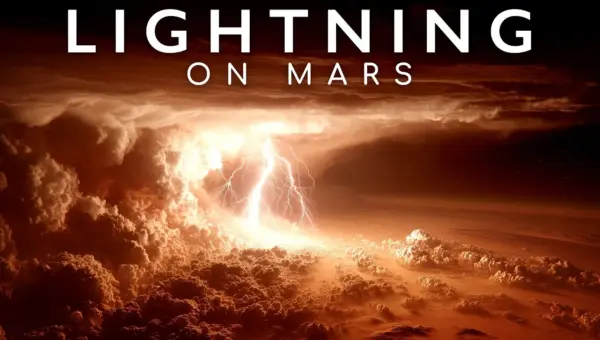
NASA's Perseverance rover has detected mysterious crackling sounds, providing the first tantalizing evidence of lightning on Mars. This discovery, along with a faint whistler wave detected by the MAVEN spacecraft, suggests that electrical discharges occur in Martian dust storms, impacting atmospheric chemistry and posing new challenges for future human exploration.