Trump’s Iran Deadline Looms: Is the US President Bluffing?
President Trump has issued a stern deadline to Iran, warning of severe consequences if demands aren't met. Analyst Zineb Riboua believes the President is serious and not bluffing, citing Iran's strategic miscalculations and overestimation of its own capabilities. The Strait of Hormuz remains a key flashpoint with potential global market impacts.

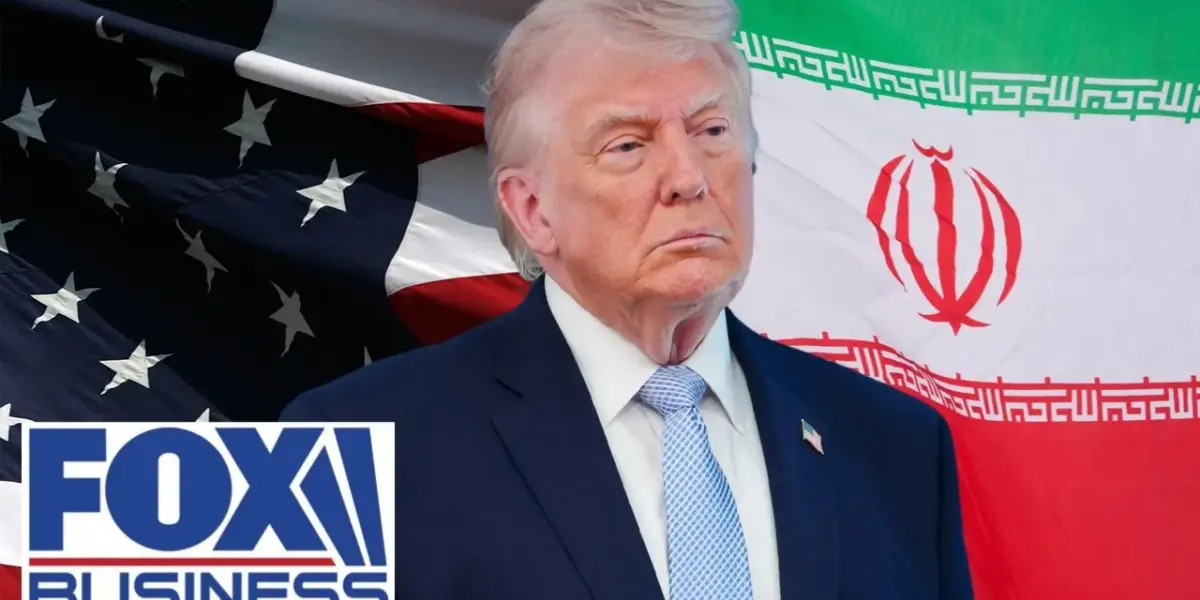
Trump’s Iran Deadline Looms: Is the US President Bluffing?
President Trump has set a firm deadline for Iran, warning that the entire country could face severe consequences if specific demands are not met, with the potential for action as early as tomorrow night. This stern ultimatum follows escalating tensions and a recent rescue operation for downed airmen in Iran. The President’s resolve is drawing sharp focus from analysts, particularly concerning his approach to Iran’s nuclear program and regional influence.
Zineb Riboua, a research fellow with deep expertise on Iran, suggests that President Trump is not engaging in mere political theater this time. She believes his pronouncements signal a serious and unwavering commitment to his stated goals.
Riboua pointed to the President’s campaign rhetoric, where he initially called for Iran to surrender, disarm its proxies, abandon nuclear weapons, and dismantle its ideology. She emphasized that Trump’s past actions show he sticks to his deadlines, indicating this one will be no different.
Reports emerging earlier today seemed to suggest some communication attempts from Iran, which were met by the President during his press conference. However, Riboua finds these overtures insufficient.
She believes Iran remains in a state of denial, underestimating the United States’ capabilities and overestimating its own. This dangerous miscalculation, she argues, is evident in Iran’s continued public statements and insults directed at President Trump and the U.S.
Iran’s Strategic Miscalculations
Riboua outlined seven strategic fatal miscalculations by Iran, noting that the nation is overestimating its own power. She explained that this overconfidence is a perilous position for any country, especially when facing increasing pressure.
The situation is further complicated by rising aggression in the region and the growing assertiveness of Gulf countries like Saudi Arabia, Kuwait, Qatar, and the UAE. These nations have already severed diplomatic ties with Iran, signaling a potential for a larger, coordinated operation against Iranian influence.
The Strait of Hormuz, a critical global oil shipping route, has become a focal point in the escalating tensions. President Trump has repeatedly mentioned this waterway, and Riboua believes Iran’s focus on it represents a significant error.
She explained that Iran’s actions in the Strait, intended to weaken enemies and improve its own standing, have instead backfired. The goal of such operations is typically to disrupt oil flow or create instability, but Iran has failed to achieve these objectives.
Market Impact and Investor Considerations
What Investors Should Know: The potential for conflict or heightened sanctions involving Iran carries significant implications for global energy markets. The Strait of Hormuz is responsible for transporting a substantial portion of the world’s oil.
Any disruption, whether through direct military action or increased trade restrictions, could lead to sharp increases in oil prices. This could impact transportation costs, manufacturing, and consumer spending across various sectors.
Geopolitical instability in the Middle East can affect global supply chains and investor confidence. Countries with significant economic ties to the region, or those heavily reliant on imported energy, may experience increased market volatility.
Investors often seek safe-haven assets, such as gold or certain government bonds, during periods of heightened international tension. The specific nature of any U.S. action against Iran, and Iran’s response, will determine the extent and duration of these market effects.
Riboua highlighted that Iran’s miscalculation regarding the Strait of Hormuz is twofold. Firstly, she stated that any significant action there would immediately put global markets into turmoil, forcing U.S. allies to pressure Trump for de-escalation. However, this scenario did not unfold as Iran might have expected.
Instead, Trump doubled down on his stance. Secondly, the Strait of Hormuz is not just a concern for U.S. allies but also for China, a key partner of Iran.
The current situation highlights the delicate balance of power and economic interests in the Middle East. As President Trump reiterates his firm deadline, global markets and international relations hang in the balance. The coming days will be critical in determining whether diplomatic solutions prevail or if the region moves closer to direct confrontation.
Riboua’s analysis suggests that Iran’s current strategy is flawed, potentially leading to more severe consequences. The President’s unwavering stance, coupled with the growing assertiveness of regional allies, paints a tense picture. The world watches to see how Iran will respond to the looming deadline and what actions President Trump will take if his demands are not met.
Source: Trump is not ‘bluffing’ this time: Zineb Riboua (YouTube)

Related Articles
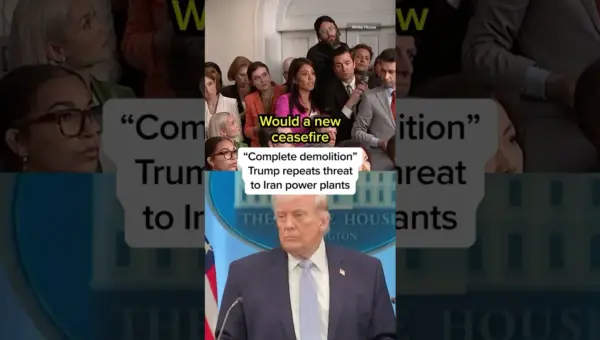
Trump Warns Iran: ‘Complete Demolition’ If Deal Fails
President Donald Trump issued a severe warning to Iran, threatening "complete demolition" if a deal is not reached by his Tuesday deadline. Speaking at the White House, Trump also expressed uncertainty about the current escalation of tensions and declined to rule out attacks on schools. The stark threats underscore the ongoing volatility in U.S.-Iran relations.


Trump’s Iran Deadline: A Risky Game of Threats
President Trump's administration announced a major escalation of strikes against Iran, calling it the largest volume since the operation began. This follows weeks of repeated deadlines and threats against Iran, which Iran has apparently dismissed as bluster.
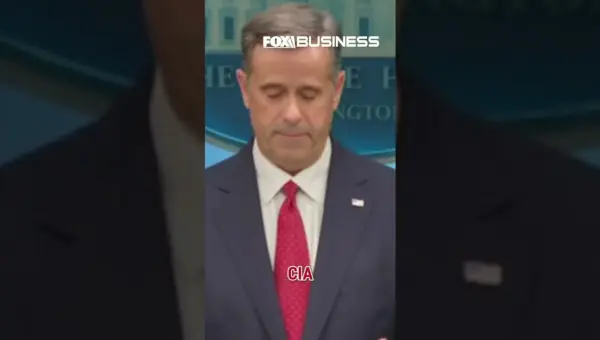
CIA Boasts Iran Humiliated by Audacious Airman Rescue
The CIA claims it executed a deception campaign that left Iran "embarrassed and humiliated" after successfully rescuing a U.S. airman. The mission involved locating the airman, confirming survival, and safely exfiltrating them under the noses of Iranian forces.