Trump Warns Iran: ‘Complete Demolition’ If Deal Fails
President Donald Trump issued a severe warning to Iran, threatening "complete demolition" if a deal is not reached by his Tuesday deadline. Speaking at the White House, Trump also expressed uncertainty about the current escalation of tensions and declined to rule out attacks on schools. The stark threats underscore the ongoing volatility in U.S.-Iran relations.

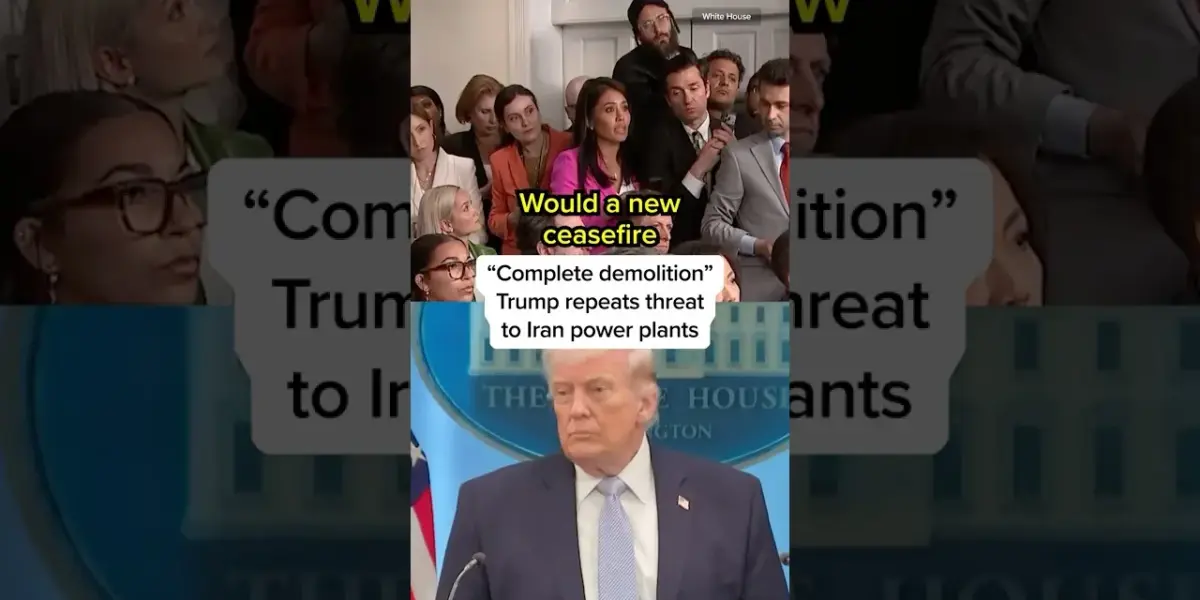
Trump Issues Stark Warning to Iran Over Nuclear Deal Deadline
President Donald Trump has once again threatened Iran with severe military action, vowing “complete demolition” if the country does not meet his deadline for a new deal. The president made these remarks during a press conference held at the White House on Tuesday, renewing his aggressive stance on Iran’s nuclear program and regional activities. This latest statement comes amid ongoing tensions and uncertainty surrounding the potential for further conflict in the Middle East.
Trump’s comments signal a hardening of his administration’s policy towards Iran, emphasizing a demand for a comprehensive agreement. The specifics of the proposed deal were not detailed, but the president’s language suggests a broad set of demands that Iran must satisfy. Failure to comply, according to Trump, will result in a response that is both swift and devastating.
Uncertainty Over Escalation and Future Actions
When questioned about the current state of tensions, President Trump expressed uncertainty regarding whether the situation with Iran is escalating or de-escalating. This ambiguity highlights the unpredictable nature of the ongoing diplomatic and military standoff. The president’s responses suggest that his administration is reacting to developments as they occur, rather than following a clearly defined, predictable path.
Adding to the concern, President Trump refused to explicitly state whether the United States would refrain from attacking schools in the event of hostilities. This evasive answer raises serious questions about the potential targeting strategies and the adherence to international humanitarian laws in any future military engagement. Such a refusal to rule out attacks on civilian infrastructure is highly unusual and alarming.
Background: A History of Tensions
The United States and Iran have a long and complex history of strained relations, particularly since the 1979 revolution. Tensions have frequently flared over Iran’s nuclear ambitions, its ballistic missile program, and its support for various regional militant groups. The Trump administration previously withdrew the U.S. from the Joint Comprehensive Plan of Action (JCPOA), commonly known as the Iran nuclear deal, in 2018.
This withdrawal was followed by the imposition of stringent economic sanctions aimed at crippling Iran’s economy and forcing it to renegotiate a more comprehensive agreement. The Iranian government has consistently denied seeking nuclear weapons and has accused the U.S. of engaging in economic warfare and destabilizing regional security. The current impasse represents a continuation of these long-standing disputes.
The Stakes of a Failed Deal
The implications of a failed deal and potential military escalation are significant for both the United States and the global community. A conflict involving Iran could disrupt global oil markets, leading to increased energy prices worldwide. It could also destabilize an already volatile region, potentially drawing in other countries and exacerbating existing conflicts.
For Iran, further military action or intensified sanctions could lead to severe economic hardship for its population and increased political instability within the country. The threat of “complete demolition” suggests a level of destruction that would have profound and lasting consequences for Iran’s infrastructure and its people. The international community has repeatedly called for de-escalation and a return to diplomatic solutions.
Looking Ahead: Diplomacy or Conflict?
The coming days will be critical in determining the trajectory of U.S.-Iran relations. The deadline set by President Trump looms large, and Iran’s response will be closely watched. International observers and policymakers will be scrutinizing every statement and action from both sides for signs of potential de-escalation or further confrontation.
The world waits to see whether diplomacy can prevail or if the region is headed towards a more direct and destructive conflict. The focus remains on whether Iran will meet the demands, however undefined, and what actions the U.S. will take if they do not.
Source: "Complete demolition": Trump repeats threat to Iran power plants (YouTube)

Related Articles


Trump’s Iran Deadline: A Risky Game of Threats
President Trump's administration announced a major escalation of strikes against Iran, calling it the largest volume since the operation began. This follows weeks of repeated deadlines and threats against Iran, which Iran has apparently dismissed as bluster.

CIA Boasts Iran Humiliated by Audacious Airman Rescue
The CIA claims it executed a deception campaign that left Iran "embarrassed and humiliated" after successfully rescuing a U.S. airman. The mission involved locating the airman, confirming survival, and safely exfiltrating them under the noses of Iranian forces.

Trump Warns Iran: “Entire Country Can Be Taken Out”
Former President Donald Trump issued a strong warning to Iran, stating the entire country could be taken out in one night. The declaration followed the crash of an American F-15 jet in Iranian territory and the successful rescue of its crew. This geopolitical tension could influence market sentiment and specific industry sectors.