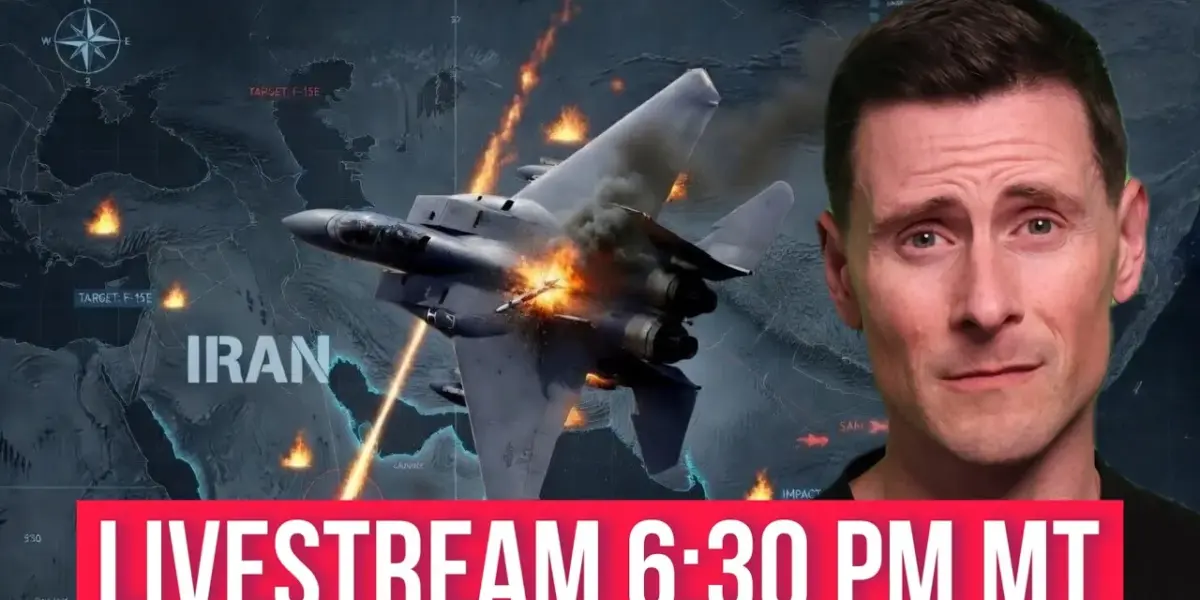
Iran Claims F-16 Down; F-15E Strike Eagle Lost
Iran claims to have shot down an F-16 fighter jet, while a U.S. F-15E Strike Eagle was lost over Iran, with one crew member missing. The incident involved combat search and rescue operations that came under fire, and Iran's claims of an F-16 shootdown have been met with skepticism due to questionable imagery.

Iran Claims F-16 Down; F-15E Strike Eagle Lost
Reports indicate a U.S. F-15E Strike Eagle was shot down over Iran, with one crew member accounted for and a second still missing. This incident follows claims by Iran that it also downed an F-16 fighter jet. U.S. Officials have suggested the F-15E was downed by hostile fire, though this remains unconfirmed by CENTCOM, the U.S. Military’s Central Command.
The F-15E Strike Eagle is a twin-engine, all-weather tactical fighter-bomber designed for ground attack and interdiction missions. It operates with a pilot and a weapon systems officer, providing a significant combat capability. The aircraft’s loss raises concerns about the evolving air defense capabilities in the region.
Combat Search and Rescue Under Fire
During the attempted rescue of the F-15E crew, U.S. Aircraft faced direct engagement. Two HH-60G Pave Hawk helicopters, specialized combat search and rescue (CSAR) aircraft, entered Iranian airspace to recover the downed pilot. One Pave Hawk was hit by small arms fire, causing injuries to its crew, but managed to land safely.
An A-10 Thunderbolt II, also known as the “Warthog,” providing CSAR support, encountered fire during the operation. The pilot ejected over the Persian Gulf and was successfully recovered. The A-10 is renowned for its ruggedness and ability to operate in austere environments, often providing close air support and CSAR.
Iran’s Claims and Debunked Footage
Iran has publicly claimed responsibility for downing an F-16, citing the use of the Bavar 373 surface-to-air missile system, comparable to Russia’s S-400. However, footage shared by Iran purporting to show the downed F-16 has been widely questioned.
Analysis suggests the images may be fabricated or digitally altered, possibly using AI. The presented wreckage often lacks identifiable markings and displays inconsistencies that do not align with a typical aircraft crash.
One image, claimed to be an F-16, appears to have a delta-shaped wing, more characteristic of an F-4 Phantom II or similar older aircraft, rather than the F-16’s more aggressive wing planform. Another image shows minimal damage with a small, lingering fire, which experts deem inconsistent with a recent shootdown. These discrepancies lead to the conclusion that Iran may be using misinformation to project strength.
Strategic Context and Geopolitical Influence
The increased frequency of air defense engagements and claims of successful intercepts could be influenced by external support for Iran’s military. Reports suggest that Russia and China may be providing Iran with advanced radar and surface-to-air missile technology. Such assistance would significantly enhance Iran’s ability to challenge air superiority in the region.
This development is also viewed through the lens of broader geopolitical rivalries. Russia may benefit from a prolonged conflict that diverts international attention from the war in Ukraine.
China, meanwhile, has an interest in controlling global oil flows, making stability in the Persian Gulf a key concern. The potential transfer of advanced military technology to Iran serves both countries’ strategic objectives.
Survival, Evasion, Resistance, Escape (SERE)
In the event of ejection, pilots rely on survival protocols known as SERE (Survival, Evasion, Resistance, Escape). This training equips aircrews with the knowledge and tools to survive in hostile environments.
Ejection seats are equipped with survival kits containing items like water filtration systems, first-aid supplies, and signaling devices. These kits are designed to aid survival in diverse terrains, including the high desert found in parts of Iran, where temperatures can fluctuate drastically.
The pilot of the A-10, after ejecting over the Persian Gulf, demonstrated a successful outcome of SERE training. Ejecting over water, especially near friendly naval assets, significantly increases the chances of a swift recovery and prevents the downed aircraft or its pilot from falling into enemy hands. The A-10’s design, including its titanium cockpit “bathtub” and self-healing wings, is intended to enhance survivability in combat, allowing pilots to endure significant damage and potentially return to friendly territory or eject in a more favorable location.
The Role of CSAR in Modern Warfare
Combat Search and Rescue (CSAR) operations are critical for maintaining aircrew morale and demonstrating commitment to personnel. The deployment of Pave Hawks and A-10s highlights the high-risk nature of these missions, especially in contested airspace. The engagement of rescue helicopters by small arms fire, reportedly from Iranian state police, indicates a determined effort to disrupt recovery operations.
The A-10’s role in CSAR, often referred to as “Sandy” missions, involves providing close air support to protect downed aircrew and rescuers. Its powerful GAU-8 Avenger cannon allows for precise engagement of threats. The aircraft’s ability to sustain damage and for its pilot to execute a controlled ejection over the Persian Gulf highlights the resilience of both the airframe and the pilot’s training.
The incident involving the F-15E and the subsequent CSAR operations illustrate the complex and dangerous dynamics unfolding in the region. The claims and counter-claims, coupled with the potential involvement of advanced foreign military technology, suggest a significant escalation in regional tensions. The focus now shifts to the recovery of the second F-15E crew member and a clearer understanding of the events that led to the loss of the aircraft.
Source: Iran Shoots Down U.S. F-15E & Search For Missing Crew LIVESTREAM (YouTube)

Related Articles
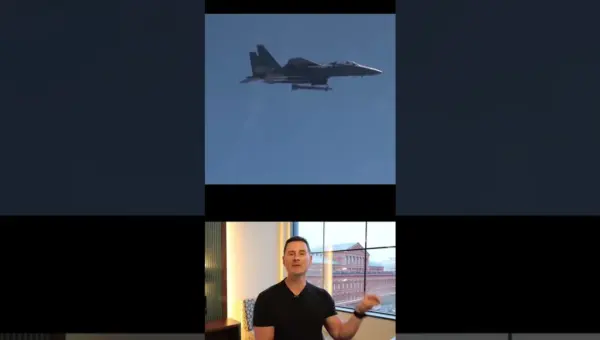
US Air Power Strikes Iranian Missile Sites
U.S. F-15E Strike Eagles deployed 5,000-pound GBU-72 bombs on hardened Iranian missile sites near the Strait of Hormuz. CENTCOM confirmed anti-ship threats were neutralized, securing vital oil shipping lanes. The strikes precede the arrival of 2,500 U.S. Marines, indicating preparatory battlefield actions.

US Pilot Rescued from Iran Amidst Escalating Tensions
A U.S. pilot was dramatically rescued from Iran after nearly 45 hours behind enemy lines, following the crash of an F-15 fighter jet. The massive operation unfolded amid escalating tensions and controversial threats from President Trump regarding Iranian infrastructure.
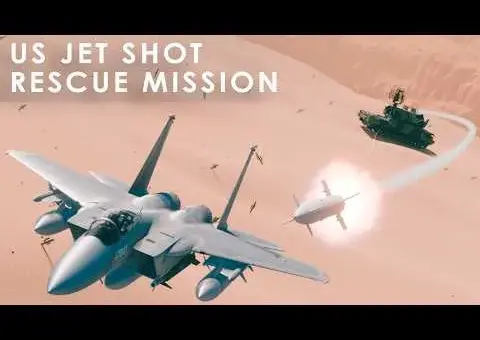
Iran Downs US Jets: A Night of Fire and Rescue
A daring mission deep into Iranian airspace turned into a nightmare as an F-15E was shot down, triggering a cascade of dangerous rescue attempts. The night highlighted the evolving threats to advanced aircraft and the military's unwavering commitment to saving its pilots.