Bill Browder: Trump Holds Key to Ending Putin’s War
Bill Browder argues that Donald Trump has the power to end the war in Ukraine immediately but chooses not to, driven by potential business interests in Russia. Browder critiques Western support as 'too little, too late' and highlights Ukraine's unexpected resilience against Putin's miscalculated invasion.

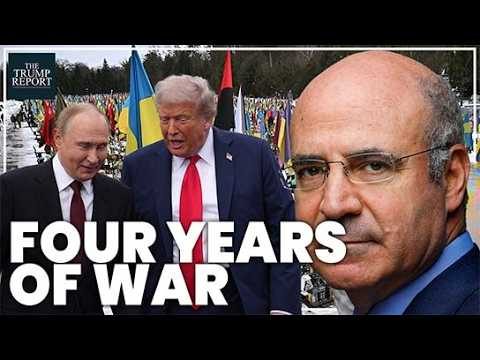
Browder Argues Trump Could End Ukraine War Immediately
Bill Browder, founder and CEO of Hermitage Capital Management and a prominent critic of Vladimir Putin, asserted in a recent interview that former President Donald Trump possesses the immediate ability to end Russia’s war in Ukraine but is deliberately choosing not to. Speaking on The Trump Report on the four-year anniversary of Russia’s full-scale invasion, Browder detailed his conviction that Trump’s inaction stems from a desire to conduct business in Russia, viewing the ongoing conflict as a mere ‘distraction’.
Ukraine’s Resistance and Putin’s True Motives
The interview began by reflecting on the four years since Russia’s invasion, which followed the 2014 annexation of Crimea. Browder dismissed any notion of a near-term peace deal, stating unequivocally that Vladimir Putin has no intention of agreeing to terms other than a ‘full victory.’ He argued that the only way the war will cease is through Putin’s defeat, lamenting that Western support for Ukraine has consistently been ‘too little, too late.’
Browder echoed sentiments from other analysts, such as Professor Phillips O’Brien, who noted Ukraine’s defiance against initial Western expectations of a swift Russian victory. ‘There’s no question. So this was a war that Putin believed he was going to win in three days,’ Browder stated. He highlighted the staggering Russian casualties, estimated at 1.2 to 1.3 million killed or permanently disabled, as evidence of Putin’s miscalculation and the unexpected strength of Ukrainian resistance.
Challenging Putin’s stated justifications for the invasion—such as NATO enlargement and denazification (which Browder found particularly absurd given Ukrainian President Zelenskyy’s Jewish heritage)—Browder posited the real reason lies in Machiavellian strategy. ‘The best way to avoid that rise up of the people is to create a foreign enemy and to start a war,’ he explained, suggesting Putin initiated the conflict to distract from domestic discontent and his own long-term ‘stealing and mismanaging Russia.’ Browder asserted that Ukraine’s unexpected strength has turned it into a ‘true powerhouse’ and likely the strongest military in Europe.
US Policy and Trump’s Role
Browder critically analyzed the United States’ current stance, particularly the absence of any high-level delegates in Kyiv on the war’s anniversary. ‘It says what I’ve been saying on your show every week… which is that Trump is not on on Ukraine’s side,’ Browder declared. He pointed to Trump’s past rhetoric, his humiliation of President Zelenskyy, and the US voting with Russia, North Korea, and Iran against Ukraine at the UN as clear indicators of his alignment. The cutoff of US military aid, Browder contended, speaks volumes and is ‘plain as day.’
Regarding Ukrainian President Zelenskyy’s hope that a visit from Trump might clarify matters, Browder was skeptical. ‘It’s not as simple as that at all. I mean, Trump made it very clear at every step of the way that that he just wants to align himself with Putin,’ he stated, referencing a photo of Trump and Putin with a red carpet in the Oval Office. Browder praised Zelenskyy’s ‘superhuman’ patience in a dire situation, acknowledging the difficult position of needing to maintain US support while not alienating potential allies.
European Challenges and Hungarian Obstruction
The discussion also touched upon Hungary’s recent veto of a €90 billion EU funding package for Ukraine, an act Browder described as ‘somewhat more sinister than that.’ He detailed how the EU’s inability to agree on using frozen Russian central bank reserves for a larger loan led to the €90 billion package. Browder suggested that the timing of US Secretary of State Antony Blinken’s visit to Budapest shortly before Hungary’s veto might indicate US influence encouraging the obstruction, though he hoped this was not the case.
Despite Hungary’s actions, Browder expressed confidence that Europe would ultimately resolve the issue, emphasizing that Hungary represents less than 2% of the EU’s population and cannot ‘sacrifice the geopolitical security of Europe.’ He warned that if Ukraine falls, Europe faces millions of refugees and a war on its borders.
US Aid Hindrance and Global Implications
Browder reiterated that the cutoff of US financial and military aid has been ‘unbelievably detrimental,’ as Europe lacks the resources to fill the gap. He acknowledged that the US still provides military equipment paid for by Europeans and shares crucial intelligence, which Ukraine seemingly values given its continued cooperation despite US policy shifts.
Addressing criticism of Trump’s approach, particularly the notion that he is ‘keeping dialogue going,’ Browder strongly disagreed. He asserted that if Trump truly wanted to end the war, he would confront Putin directly and demand an end to aggression. Browder pointed to a bipartisan Senate bill co-sponsored by 86-89 senators that proposes severe penalties on countries buying Russian oil as a clear mechanism to cripple Russia’s war funding. He suggested that Putin actively engages in ‘summits’ or phone calls with Trump to divert attention from such punitive measures, thereby prolonging the war.
Escalation and Strategic Weaknesses
The conversation turned to Putin’s recent statements about prioritizing nuclear weapons and President Zelenskyy’s comparison of the conflict to World War II. Browder agreed with Zelenskyy’s assessment, citing the open participation of Iran and North Korea, Russian sabotage efforts near Western military bases, and widespread drone attacks across Europe as evidence of a global conflict already underway. ‘It’s a world war. We I mean, it’s not a world war where where tens of millions of people are dying yet. But it will probably escalate into that if we don’t do something to to shut this thing down,’ he warned.
Browder highlighted Ukraine’s successful strategy of striking Russian oil refineries, noting that even the FSB’s increased security measures cannot fully protect all energy infrastructure. However, he stressed that the most significant economic leverage lies in targeting the eight major refineries in China, India, and Turkey that purchase Russian oil. Imposing targeted sanctions on these facilities, he believes, would quickly cripple Putin’s ability to wage war.
Looking Ahead
Browder concluded by reiterating that Donald Trump holds the power to end the war but has chosen not to, driven by personal and business interests. The ongoing conflict, he warned, has already escalated into a global confrontation with the potential for further devastating expansion if decisive action is not taken. The key, according to Browder, lies in cutting off Russia’s financial resources, particularly through sanctions targeting oil exports and the refineries that process them.
Source: Trump can ‘easily’ end Putin’s war today — he’s choosing not to | Bill Browder (YouTube)

Related Articles
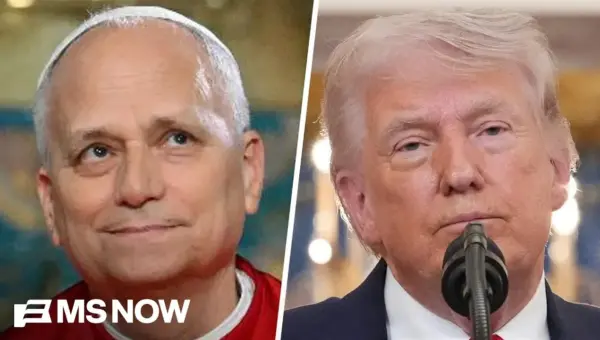
Trump’s Jesus Meme Sparks Outrage Among Religious Supporters
Donald Trump's sharing of a meme depicting him as Jesus Christ has ignited backlash from religious supporters, who also cite his feud with Pope Francis. This has led some to feel "duped," questioning his motives and fitness for leadership.

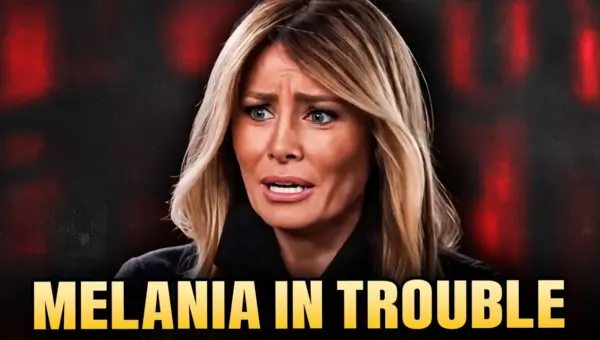
FBI Docs Contradict Melania’s Epstein Introduction Claims
Newly surfaced FBI documents challenge Melania Trump's recent claims about not being introduced to Donald Trump by Jeffrey Epstein. Witness testimony suggests Epstein facilitated the introduction, contradicting Melania's public statements and raising questions about her associations and those of figures like Paulo Zampoli.
Iran Blockade Sparks War Concerns, Backfires on US, Expert Warns
The U.S. blockade on Iranian ports, aimed at crippling its economy, is sparking concerns of an "act of war" and may backfire, according to former diplomat Barbara Leaf. While the U.S. and Iran prepare for potential peace talks, hardline rhetoric and the blockade's global economic impact complicate diplomatic efforts. A key concern is a potential confrontation with China if U.S. forces intercept Chinese vessels.