Cosmic Hum Hints at Gigantic Black Hole Mergers
Astronomers are using networks of rapidly spinning pulsars, nature's precise cosmic clocks, to detect the faint hum of merging supermassive black holes. New research is now focusing on pinpointing individual merger events, moving beyond the general background noise to understand these colossal cosmic collisions.

Cosmic Hum Hints at Gigantic Black Hole Mergers
The universe is a symphony of gravitational waves, and astronomers are tuning in to its grandest orchestra. While observatories like LIGO have detected ripples from merging stellar-mass black holes, a different kind of cosmic chorus is emerging. This deeper hum comes from supermassive black holes, millions of times heavier than our sun, found at the centers of galaxies. These colossal giants are also merging, and thanks to a clever network of cosmic clocks, scientists are getting closer to pinpointing these momentous events.
Pulsars: Nature’s Precision Clocks
The key to this discovery lies in pulsars, the incredibly dense remnants of dead stars. These celestial objects spin rapidly, emitting beams of radio waves that sweep across space like lighthouse beams. Millisecond pulsars, a particularly stable type, spin hundreds of times per second. Their radio pulses arrive at Earth with astonishing regularity, rivaling the precision of atomic clocks.
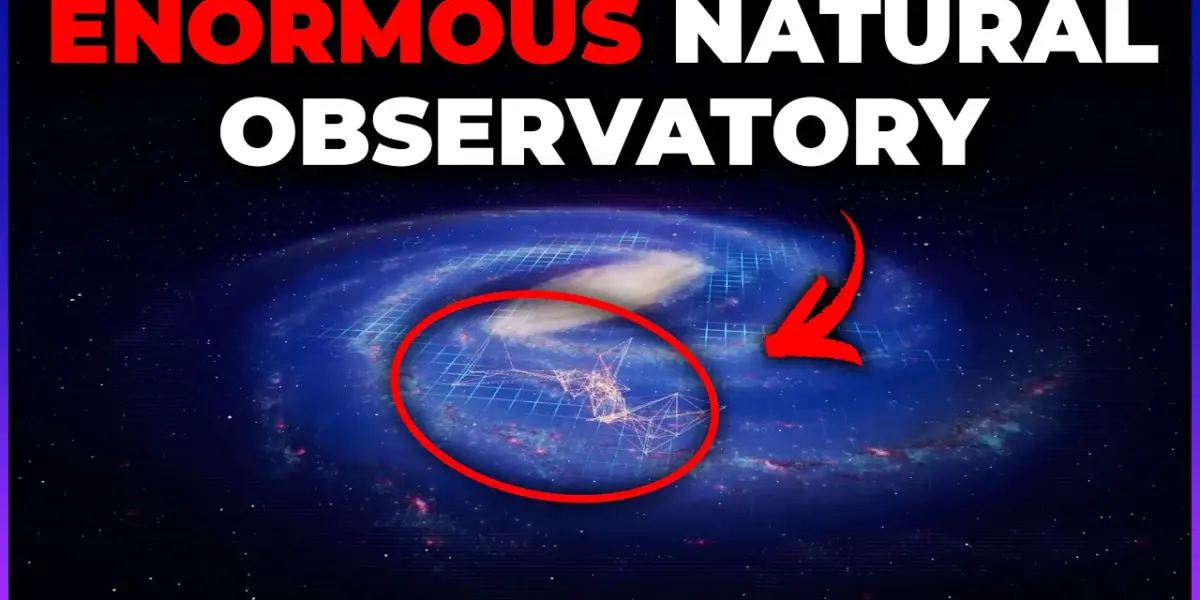
Astronomers form pulsar timing arrays by monitoring these pulsars. Imagine a gravitational wave passing through our galaxy. This wave would stretch and squeeze spacetime itself. As spacetime warps, the distance between Earth and a pulsar changes slightly. This means the pulsar’s radio pulses would arrive a tiny bit later or earlier than expected, like a cosmic Morse code signaling the wave’s passage.
“It’s like turning the whole galaxy into a gravitational wave detector,” explains Dr. Kiara Mingelli, an assistant professor of physics at Yale University. This natural observatory allows scientists to listen for the low-frequency gravitational waves that other detectors can’t catch.
From Spacecraft to Stars: A Gravitational Wave Journey
The idea of using cosmic signals to detect gravitational waves isn’t new. Back in 1975, scientists considered using radio signals from spacecraft like Pioneer to look for delays caused by gravitational waves. However, the signals were too noisy. The discovery of stable millisecond pulsars in 1982 provided a much better alternative.
These pulsars are remarkably accurate. They can keep time to within about 100 nanoseconds over a decade. This is comparable to the best atomic clocks. While atomic clocks have caught up, the sheer number and distribution of pulsars make them ideal for this task. LIGO detects changes in distance on the scale of a proton over kilometers; pulsar timing arrays are sensitive to changes the size of a virus over the diameter of the Earth.
The Gravitational Wave Background: A Symphony of Mergers
For years, scientists have been meticulously timing dozens of pulsars. This painstaking work, involving timing pulsars every two weeks or more, has paid off. The data revealed evidence for a persistent gravitational wave background. This “cosmic hum” is believed to be the combined signal from millions of supermassive black hole mergers happening across the universe.
“It took 15 years of… timing these pulsars… to find this result,” Dr. Mingelli notes. The current dataset spans 20 years and continues to grow. Unlike Earth-based observatories that require upgrades and downtime, pulsar timing arrays can simply keep observing, with instruments like ultra-wideband receivers improving the precision over time.
Finding Individual Giants: The Next Frontier
While the background hum confirms the existence of these mergers, the next goal is to detect individual supermassive black hole mergers. This is where new research, including work by Dr. Mingelli and her colleagues, is making strides.
“Measuring the individual ones… is now the name of the game,” she states. The challenge lies in distinguishing a specific, strong signal from the general background noise. To do this, scientists are using a technique called cross-correlation. By comparing the timing signals from pairs of pulsars, they can enhance the gravitational wave signal while reducing noise.
“So you always want more pulsars,” Dr. Mingelli explains. More pulsars mean more pairs to cross-correlate, strengthening the signal. The number of pulsars in these arrays is increasing, with international collaborations combining data from telescopes worldwide. This includes observatories in the Southern Hemisphere, which are crucial for covering the entire sky.
Targeted Searches and Cosmic Neighbors
A significant development is the move towards targeted searches. Instead of scanning the entire sky, astronomers can now focus on specific galaxies suspected of hosting supermassive black hole binaries. Researchers identify potential candidates based on their electromagnetic signals, such as periodic changes in light or X-rays.
“We search at a particular gravitational wave frequency and sky location,” Dr. Mingelli says. This “looking under the lamppost” approach allows them to tune the pulsar timing array to listen for signals from known celestial neighbors. This method is also paving the way for measuring the Hubble constant, a key value that describes the expansion rate of the universe.
Recent research has identified a few promising candidates. While the statistical evidence for these specific mergers is still weak, with “Bayes factors” around four (scientists typically look for hundreds or thousands for a confirmed detection), the names given to these candidates—Rohan and Gondor—reflect the excitement and dedication of the research teams.
The Future of Gravitational Wave Astronomy
The quest for clearer signals is ongoing. Future observatories like the Square Kilometre Array (SKA) in Australia, and proposed telescopes like DSA-2000 in the U.S., will significantly boost the number of pulsars and the sensitivity of these arrays. These next-generation instruments promise to provide denser data sets and access to previously unobserved parts of the sky.
Dr. Mingelli and her team have also developed a new method to identify specific gravitational wave signals. By analyzing the geometric patterns created by cross-correlating pulsar pairs, they can now distinguish individual supermassive black hole binaries from the background hum. This technique improves sky localization and allows scientists to separate individual mergers from the collective chorus.
“I think we will definitely get there,” Dr. Mingelli asserts. The ability to pinpoint these massive black hole mergers will offer unprecedented insights into galaxy evolution, the nature of gravity, and the most extreme environments in the universe. It’s a journey from detecting a cosmic hum to understanding the distinct songs of individual cosmic giants, promising to reveal even more secrets of the cosmos.
Source: Extracting Even More Gravitational Waves from The Pulsar Timing Array (YouTube)

Related Articles
Artemis II Astronauts Set New Human Distance Record
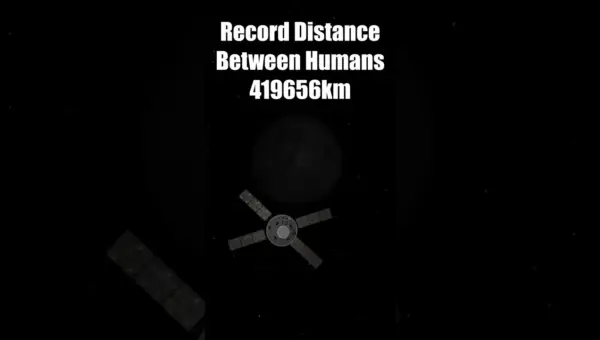
The Artemis II mission set a new human distance record, reaching 413,145 km from Earth. The mission also established a record for the greatest distance between two groups of humans, with astronauts on China's Tiangong space station being 419,656 km away from the Artemis II crew.


Distant Galaxy Appears to Break Light Speed Limit
A distant galaxy, GN-z11, appears to be moving away from Earth faster than the speed of light due to the expansion of space. This phenomenon, while seemingly violating Einstein's laws, is a key indicator of the universe's dynamic growth and offers insights into its early history.


Artemis 2 Crew Captures Stunning Earth Views from Moon Orbit
The Artemis 2 mission has captivated the world with stunning images of Earth from lunar orbit and record-breaking distances. Meanwhile, proposed NASA budget cuts, new insights from the James Webb Telescope, and novel approaches to exploring Mercury highlight the dynamic nature of space exploration.