US Navy Blockades Hormuz, Threatens Elimination
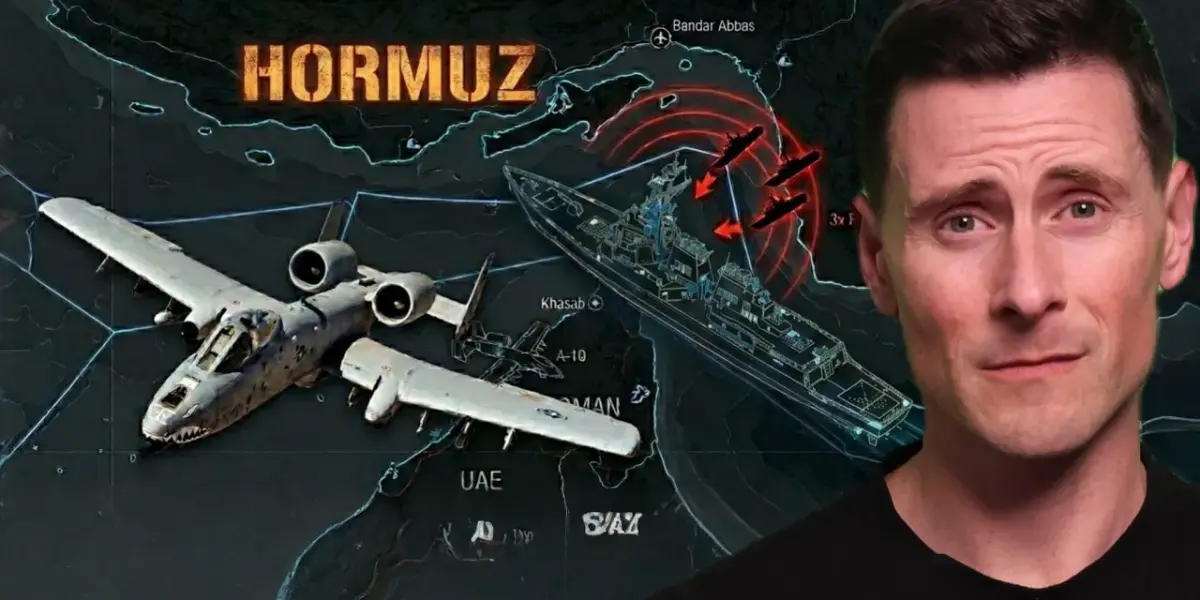
The U.S. Navy has imposed a full blockade on the Strait of Hormuz, aiming to halt Iran's oil exports and choke off funding for the IRGC. President Trump warned that Iranian ships approaching the blockade will be "immediately eliminated." This strategic move targets Iran's economic lifeline and escalates tensions in the region.

US Naval Blockade Tightens Grip on Hormuz Strait
On April 14th, 2026, the United States Navy initiated a full blockade of the Strait of Hormuz, a critical global shipping lane. This move, ordered by President Trump, aims to halt Iran’s oil exports and cut off funding for its Islamic Revolutionary Guard Corps (IRGC).
Strategic Chokepoint Under US Control
The Strait of Hormuz, a narrow waterway between Iran and the Arabian Peninsula, is vital for global oil transport. By controlling this chokepoint, the U.S. Navy seeks to exert significant pressure on Iran. Guided missile destroyers and aerial surveillance are in place to enforce the blockade with a zero-tolerance policy.
Targeting Iran’s Economic Lifeline
The blockade’s primary objective is to stop Iran’s oil exports, which are a major source of revenue for the regime. The U.S. Navy is focusing on key Iranian oil terminals and islands, including Kharg Island, which handles about 6 million barrels daily, and Lavan Island. These areas have reportedly been struck earlier in the conflict.
Other targeted locations include an unnamed capable oil island that helps sustain Iran’s economy and the port of Bushehr, which has reportedly been heavily damaged. The U.S. aims to prevent Iran from disguising its oil shipments as those from other nations like Russia or China.
Deterring Iranian Provocations
President Trump issued a stark warning: any Iranian ships approaching the blockade will be “immediately eliminated.” This policy targets Iran’s remaining fast attack craft, which rely on speed and swarm tactics. The U.S. Navy’s superior force includes assets like the USS Abraham Lincoln carrier strike group, Arleigh Burke-class destroyers, surveillance aircraft such as the E2-D Hawkeye, and RQ4 Global Hawk drones.
The Arleigh Burke-class destroyers are equipped with advanced Aegis combat systems, capable of launching Tomahawk missiles and SM6 interceptors. Submarines are also patrolling the area, adding a layer of stealthy threat. Marine Expeditionary Units with F-35B aircraft are also positioned to respond.
Iran’s Response and Potential Escalation
Iran has reacted defiantly, calling the blockade a violation of international law and piracy. However, officials have also signaled a potential temporary pause in their own shipping to avoid direct confrontation. The success of the blockade hinges on Iran’s ability to maintain its economic lifeline.
Broader Geopolitical Implications
The blockade occurs as peace talks have collapsed, with disagreements over Iran’s nuclear program unresolved. The U.S. demanded a 20-year moratorium on uranium enrichment, while Iran offered only a five-year pause. Vice President JD Vance accused Iran of economic terrorism, stating, “Two can play that game.”
Meanwhile, Russia and China are reportedly discussing their response. Russian Foreign Minister Lavrov’s visit to China suggests coordination on how to support Iran, potentially through advanced weapons systems like surface-to-air missiles and targeting systems. This cooperation could involve new weapon adaptations from Russia and China.
Shifting Shipping Routes and Proxy Threats
The blockade may also push nations to rely more heavily on alternative shipping routes. Saudi Arabia, for instance, is reportedly using the Bab el-Mandeb Strait, which handles over 7 million barrels of oil daily. However, this strait could become a new conflict zone, as Iran’s proxy forces, the Houthi rebels in Yemen, have threatened its security.
The U.S. strategy appears to be a form of “4D chess,” flipping Iran’s tactic of using the Strait of Hormuz as leverage. By controlling the waterway, the U.S. prevents Iran from using it to pressure global oil flows while also building its own alternative pipelines to circumvent the strait.
Propaganda and Information Warfare
The conflict is also marked by information warfare. Iranian propaganda, including AI-generated videos, attempts to portray the U.S. as fearful and without leverage. Conversely, the U.S. highlights Iran’s alleged “economic terrorism” and lack of transparency regarding its nuclear program and past crackdowns.
The U.S. Navy’s ability to enforce this blockade, alongside its surveillance capabilities, represents a significant projection of power. The coming days will be critical in determining how Iran responds and whether this action forces a de-escalation or leads to further kinetic engagements.
Source: Trump Just Warned Iranian Ships That They Will Be ELIMINATED (YouTube)

Related Articles

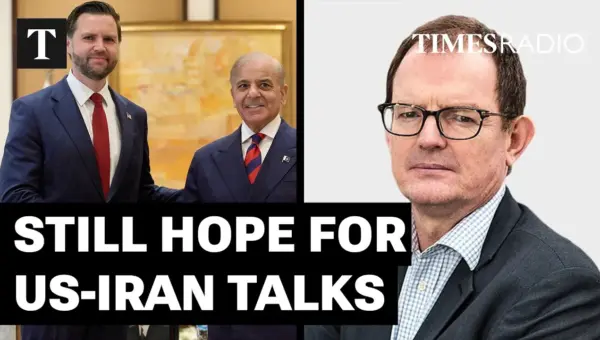
US-Iran Talks Hinted Despite Vance’s ‘All Over’ Claim
Rumors suggest new talks between the US and Iran may be imminent, despite recent claims of negotiation failure. Meanwhile, direct talks between Lebanon and Israel are set to occur in the US, aiming for pragmatic solutions amid ongoing conflict. Italy has also suspended its defense agreement with Israel, signaling shifting international pressure.
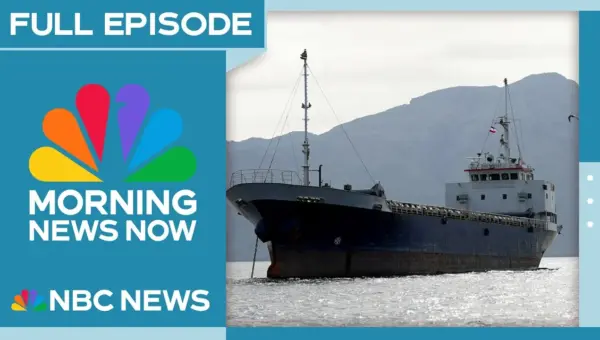
US Warships Blockade Iran, Triggering Global Economic Fears
U.S. warships have initiated a partial blockade of Iranian ports near the Strait of Hormuz, aiming to pressure Iran by cutting off oil exports. This action has drawn strong criticism from China and sparked protests in Tehran, with Iran calling it piracy. The blockade is creating global economic concerns, affecting oil prices and Wall Street, while also fueling an unlikely feud between President Trump and the Pope over war stances. Meanwhile, two U.S. lawmakers are resigning amid misconduct allegations, and the nation braces for severe weather and record heat.
Trump’s Risky Blockade & Divine Images: A Troubled Presidency
President Trump's naval blockade of Iran is a high-risk gamble, potentially escalating regional conflict. Meanwhile, controversial AI imagery and legal battles reveal fractures in his support base and a strained relationship with the media.