Farage Crypto Investment Sparks “Scandal in Plain Sight” Debate
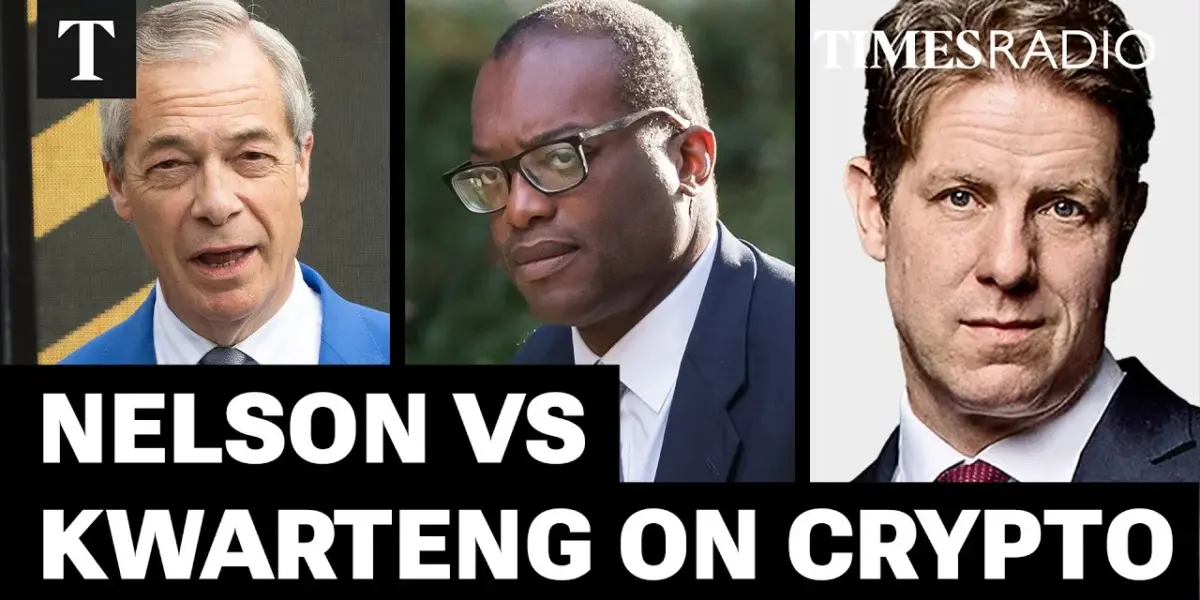
Nigel Farage's £250,000 investment in cryptocurrency firm Stack has ignited a debate over political ethics and conflicts of interest. Columnist Fraser Nelson calls the move a "scandal in plain sight," while former Chancellor Kwasi Kwarteng defends it as transparent and rule-compliant.

Farage Crypto Investment Sparks “Scandal in Plain Sight” Debate
Nigel Farage, the prominent political figure, has made a significant personal investment in a cryptocurrency company called Stack, a move that has ignited a public debate over potential conflicts of interest and ethical standards in politics. Farage has invested £250,000 of his own money into the firm, securing a 6% stake. Stack is chaired by former Chancellor Kwasi Kwarteng.
Columnist Calls Investment a “Scandal”
The controversy erupted when Times columnist Fraser Nelson took to social media platform X (formerly Twitter) to repost Stack’s announcement. Nelson described the situation as a “scandal in plain sight,” sparking a direct exchange with Kwasi Kwarteng. The two figures later debated the issue publicly, aiming to clarify the implications of Farage’s investment in the rapidly growing world of cryptocurrency.
Concerns Over Conflict of Interest
Fraser Nelson voiced his primary concern: conflict of interest. He argued that politicians should avoid situations where their personal financial gains could be linked to their policy advocacy. Nelson drew a parallel to past practices where politicians would divest shares to prevent even the appearance of impropriety.
“If you were a politician, for example, that was advocating for North Sea oil drilling, you wouldn’t spend quarter of a million pounds on BP shares hoping to enrich yourself.”
Nelson pointed out that Farage’s political party, Reform UK, advocates for policies favorable to cryptocurrency, such as opening London’s financial markets to digital assets. He suggested that Farage stands to benefit personally from these policy positions. Nelson also highlighted the volatile, hype-driven nature of cryptocurrency, noting that its value can rise based on perception rather than tangible production. He stated that Farage has already seen a significant paper gain of around £200,000 on his investment within days.
Kwarteng Defends Transparency and Rules
Kwasi Kwarteng defended Farage’s actions, asserting that they are transparent and adhere to existing rules. He explained that as a Member of Parliament (MP), any shareholding above £70,000 must be publicly declared. He also noted that owning 3% or more of a company requires declaration under stock exchange rules. Kwarteng stated that Farage has fulfilled these transparency obligations.
Kwarteng emphasized that the rules are stricter for government ministers due to the higher potential for conflicts of interest. He clarified that while Farage is not currently a minister, he would be subject to the ministerial code if he were to hold such a position in the future. Kwarteng suggested that Farage’s investment is in a public company, which makes the details more open to scrutiny than a private transaction.
“The rules are very clear. So, as an MP, I remember the there’s a 70,000 pound threshold. So, if you put 70,000 pounds in I’ve got 70,000 pounds of one shareholding, you have to declare that publicly.”
“Trumpification” of Politics Alleged
Nelson countered Kwarteng’s points by calling the situation a “scandal hiding in plain sight.” He argued that the mere visibility of the transaction does not make it ethically sound. Nelson expressed concern about the erosion of political norms, drawing a parallel to what he termed the “Trumpification of British politics,” where personal enrichment by political figures is done openly.
Nelson also noted that Reform UK receives significant funding from individuals associated with the cryptocurrency industry, suggesting a deeper connection between the party and the sector. He questioned whether transparency alone justifies actions that could be perceived as self-serving.
Distinguishing Investments from Conflicts
Kwarteng distinguished Farage’s investment from situations that would constitute a clear conflict of interest, such as a politician creating and promoting their own cryptocurrency. He argued that investing in a public company like Stack is different and that the market is too large for one individual to influence significantly. He also stated that people who invest in stocks generally aim to make money.
Responding to the idea that Farage could influence the market as Prime Minister, Kwarteng reiterated that specific rules, like the ministerial code, would apply in such a hypothetical scenario. He also mentioned historical examples, like Rishi Sunak’s wife’s investment in a nursery chain while the government supported nurseries, suggesting such situations have occurred previously without derailing political careers.
Public Servants and Financial Interests
The core of the disagreement lies in whether public servants should engage in financial dealings that could be perceived as influencing policy or benefiting from future political decisions. Nelson argued that public servants should be insulated from such policy-sensitive financial entanglements, as it could compromise their impartiality.
Kwarteng, however, suggested that politicians should be allowed to have investments, noting that MPs already have pension funds exposed to the stock market. He proposed that if concerns arise, rules could be tightened, such as lowering the threshold for declaring shareholdings. He insisted that Farage has been scrupulous in following current regulations.
What’s Next?
The debate highlights ongoing tensions between transparency, personal financial interests, and public trust in politics. As cryptocurrency continues to grow in prominence, similar ethical questions are likely to arise, potentially prompting a review of existing regulations governing the financial activities of politicians and public officials.
Source: Fraser Nelson Confronts Kwasi Kwarteng On Nigel Farage's Investment Into His Crypto Business (YouTube)

Related Articles


Crypto’s Grift Exposed: Actor Ben McKenzie Dives Deep
Actor Ben McKenzie's new documentary, 'Everyone Is Lying to You for Money,' dissects the cryptocurrency world, arguing it's largely a scam fueled by speculation and crime. He reveals how crypto fails to deliver on its promises and exploits a flawed financial system.


Bitcoin Surges as AI Fears Drive Flight to Digital Scarcity
Bitcoin is showing strong signs of a market turnaround, driven by rising inflation and emerging fears that advanced AI could threaten traditional financial institutions. Analysts believe these factors, combined with a potential shift to negative real interest rates, are creating a 'perfect storm' for digital assets like Bitcoin.


Crypto Faces “Black Swan” Risk Without Clarity Act
The cryptocurrency market faces a heightened risk of a "black swan" event due to a critical lack of regulatory clarity. With consumer sentiment at historic lows and concerning corporate actions mirroring past collapses, industry experts warn that the passage of the Clarity Act is paramount to preventing a potential market crash.