Mars Moon Phobos Could Be a Rebuilt Cosmic Wreck
New research suggests Mars's moon Phobos, a rubble pile asteroid, may have been destroyed and reformed multiple times due to Mars's tidal forces. This challenges our understanding of celestial body evolution and highlights the dynamic nature of the solar system.

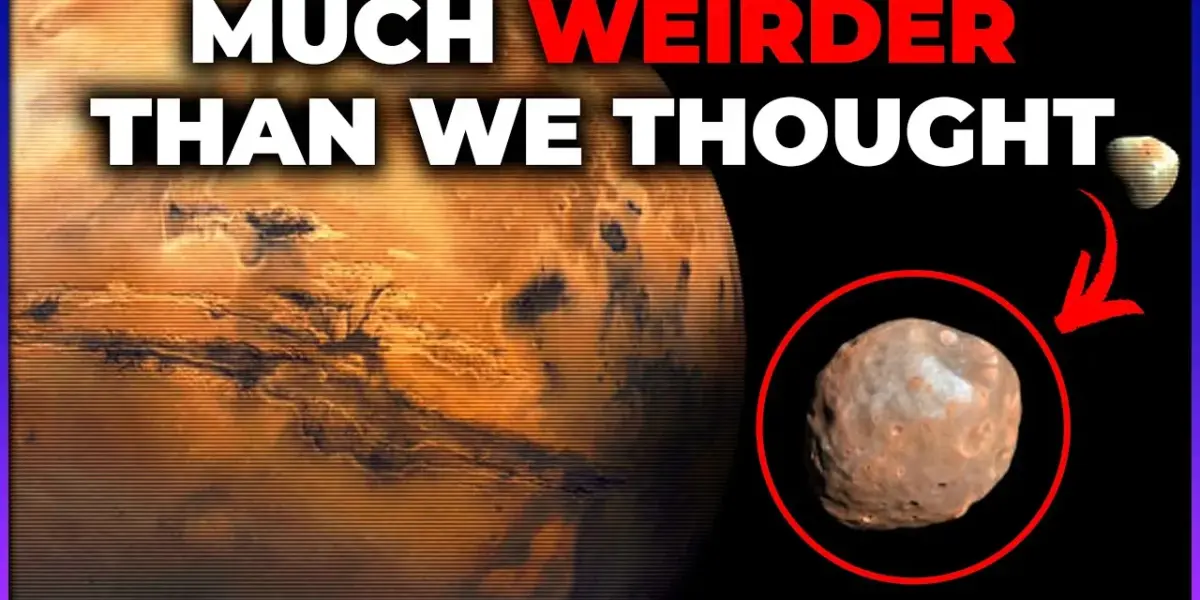
Mars Moon Phobos Could Be a Rebuilt Cosmic Wreck
Scientists are uncovering a surprising truth about the solar system’s smaller celestial bodies: many are not solid rocks, but rather loosely bound piles of debris, known as rubble piles. This revelation is reshaping our understanding of how asteroids and moons form and evolve. Now, new research suggests that Mars’s moon Phobos might not only be a rubble pile but could have been destroyed and reformed multiple times throughout its history.
Rubble Piles: The Solar System’s Scattered Fragments
For decades, astronomers imagined asteroids as solid, ancient remnants of the early solar system. However, missions like NASA’s OSIRIS-REx and Japan’s Hayabusa2, which visited near-Earth asteroids Bennu and Ryugu respectively, revealed a different picture. These and other studies indicate that most asteroids, especially those under a kilometer in size, are actually rubble piles. These are collections of rocks held together primarily by their own weak gravity, rather than by solid rock structures.
This understanding is crucial for planetary defense. The DART (Double Asteroid Redirection Test) mission, which successfully altered the orbit of the asteroid moonlet Dimorphos in 2022, targeted such a rubble pile. The mission demonstrated humanity’s growing capability to potentially deflect an asteroid on a collision course with Earth, a feat once confined to science fiction.
The Forces Shaping Asteroids
So, what holds these rubble piles together, and what forces cause them to change over time? The primary force is self-gravity, the mutual attraction between all the pieces of rock. While cohesive forces, like those found in fine dust, might play a minor role, experiments on asteroid surfaces have shown them to be surprisingly weak. This means gravity is the main binder.
External forces also play a significant role in shaping these celestial bodies. The heat from the Sun causes asteroids to warm up and radiate heat back into space. Because asteroids are not perfectly spherical, this uneven emission of heat and light, coupled with their rotation, creates subtle forces. The Yarkovsky effect, for instance, can nudge asteroids in their orbits over millions of years, slowly migrating them inward or outward through the solar system.
An even more subtle effect, known as the YORP (Yarkovsky-O’Keefe-Radzievskii-Paddack) effect, arises from the irregular shapes of asteroids. As they absorb sunlight and re-emit it as thermal radiation, they experience a slight torque. This torque can gradually spin the asteroid up or down, and even influence the tilt of its rotation axis. This process can be incredibly sensitive to the asteroid’s surface features, with small changes potentially altering its spin dramatically.
Spinning Up, Shedding Moons
These spinning forces can lead to fascinating phenomena. If an asteroid spins up fast enough, its own gravity might not be enough to hold it together, especially if it’s a rubble pile. This can cause the asteroid to shed material, which can then coalesce into its own moon. This is a leading theory for how many binary asteroid systems, like Didymos and Dimorphos, might have formed.
Interestingly, this process can also reverse. The gravitational interaction between a primary asteroid and its moon, along with radiative forces on the moon itself, can cause the moon’s orbit to change. In some cases, a moon could spiral inward, potentially crashing back into its parent asteroid or tidally disrupting to form a new, perhaps temporary, ring or set of smaller moons. Some top-shaped asteroids, like Bennu and Ryugu, which lack moons, may have lost them over time through such processes.
Phobos: A Moon on a Collision Course
Phobos, one of Mars’s two small moons, presents a unique case. Unlike Earth’s Moon, which is slowly drifting away from us, Phobos is spiraling inward towards Mars. This is because Phobos orbits Mars faster than the planet rotates. The gravitational pull between Phobos and Mars creates tidal bulges on the planet. Because Phobos orbits ahead of these bulges, Mars’s gravity is constantly pulling it back, slowing its orbit and causing it to descend.
Scientists estimate that Phobos will eventually either crash into Mars or be torn apart by Mars’s gravity, forming a ring of debris around the planet. This process is expected to happen within tens of millions of years.
A History of Destruction and Reformation?
The new research, however, suggests this might not be the first time Phobos has faced such a fate. Phobos is about 20 kilometers in size and is thought to be a rubble pile, possibly a captured asteroid or material reaccumulated after a giant impact on early Mars. If Phobos is a rubble pile, the tidal forces exerted by Mars could tear it apart when it gets close enough.
The critical question is the distance at which this disruption occurs, known as the Roche limit for tidal disruption. Previous calculations, based on assumptions about Phobos’s material properties, suggested this limit is around 1.6 to 1.8 times the radius of Mars. However, if Phobos is a loosely bound rubble pile, rather than a more cohesive body, it could be torn apart at a greater distance, or even multiple times.
The research explores the idea that Phobos might have already undergone cycles of destruction and reformation. It could have been pulled apart by Mars’s tides in the past, with the debris reaccumulating into a new Phobos. This process could have happened many times, with each cycle potentially rebuilding the moon. This explains why a moon like Phobos, which is clearly on a path to destruction, still exists today.
What Comes Next?
Understanding the nature and evolution of rubble pile asteroids and moons like Phobos is vital. Missions like the upcoming Martian Moons eXploration (MMX) mission, led by the Japan Aerospace Exploration Agency (JAXA), aim to study Phobos and Deimos up close. These missions will provide crucial data to test theories about their formation and evolution, including whether Phobos has indeed been through multiple destructive cycles.
The ongoing exploration of asteroids and moons continues to reveal a dynamic and active solar system, far more complex than previously imagined. Each discovery, like the potential cyclical destruction of Phobos, pushes the boundaries of our knowledge and deepens our appreciation for the cosmic processes that shape our celestial neighborhood.
Source: Phobos Might Already Be Destroyed and Reformed. Possibly Multiple Times (YouTube)

Related Articles
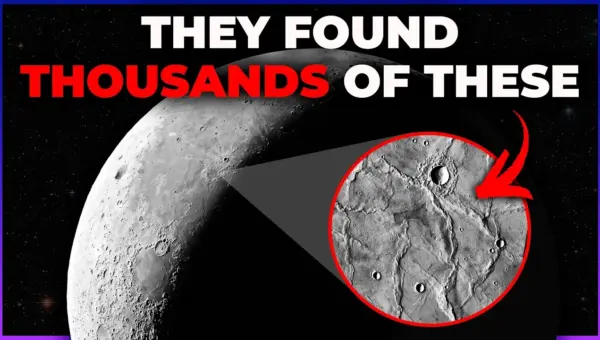
Moon’s Shrinking Core Creates Vast Scarps on Surface
Thousands of newly identified scarps on the Moon reveal that its interior is actively cooling and shrinking, causing the lunar crust to fracture. This ongoing geological activity, driven by global contraction, results in these massive cliff-like features and suggests the Moon is more geologically active than previously thought.

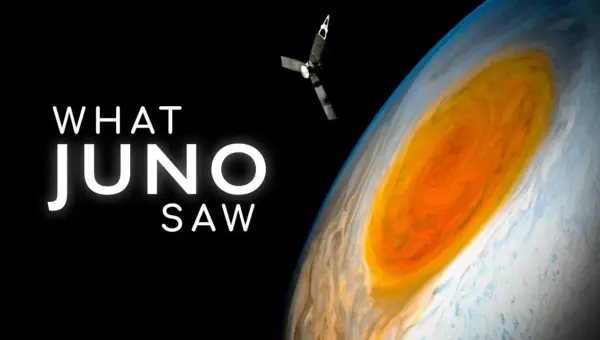
Juno Probe Uncovers Jupiter’s Fuzzy Core and Hidden Secrets
NASA's Juno mission has revealed that Jupiter's core is "fuzzy," challenging theories of planetary formation. The probe also captured stunning images of polar cyclones, analyzed atmospheric composition, and provided new insights into Jupiter's powerful magnetic field and auroras.

Uranus’s Interior May Be Rockier Than Believed
New research suggests Uranus's interior might be rockier than previously thought, challenging the 'ice giant' classification. Advancements in telescopic observations are also revealing a more dynamic atmosphere and complex magnetosphere, prompting renewed interest in a return mission.