Trump Exploits Cancer Patient for Political Gain
A DoorDash driver, whose husband has cancer, was used in a White House stunt to promote a 'no tax on tips' policy. Investigations reveal she's been repeatedly featured in Republican events, and the policy offers her minimal financial benefit, raising ethical concerns about political exploitation.

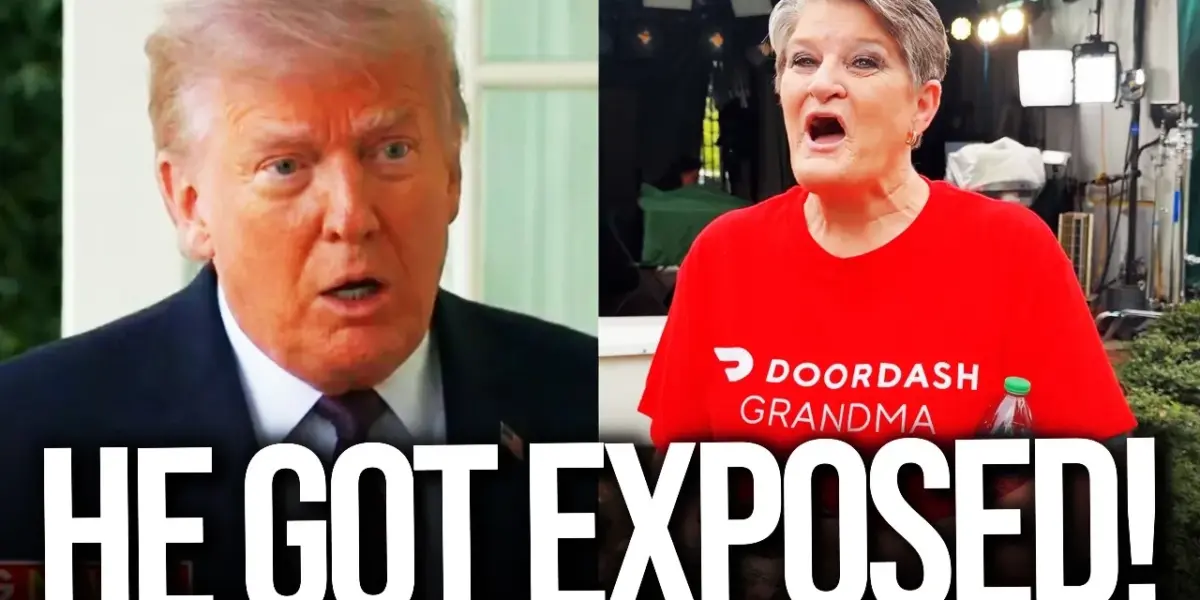
Trump Exploits Cancer Patient for Political Gain
A recent event featuring Donald Trump and a DoorDash driver, dubbed the “DoorDash Grandma,” has sparked significant controversy. The woman, whose husband is battling cancer, was brought to a White House event to support a policy about taxing tips. However, investigations suggest she has been repeatedly used by the Republican party for various political stunts over the past year or two.
A Genuine Struggle, Used as a Prop
The woman’s personal story is undeniably real: her husband has cancer, and she is working hard to pay for his medical treatment. This difficult situation, however, appears to have been exploited by Donald Trump and the Republican party. She was reportedly flown around the country to different events, acting in roles designed to support specific Republican agendas.
During the White House event, Trump attempted to draw the woman into a discussion about cultural issues, specifically asking her opinion on whether men should play in women’s sports. Her response, “I really don’t have an opinion on that,” was seen by many as a subtle rejection of Trump’s attempt to push his agenda. She clearly stated her focus was on the “no tax on tips” policy, effectively pushing back against what she perceived as unrelated “culture war BS.”
The Numbers Don’t Add Up
Further analysis of the situation reveals inconsistencies that raise serious questions. The woman stated she earned less than $22,000 last year. Based on standard tax deductions, this income level would likely mean she owed little to no federal income tax. Therefore, a policy eliminating taxes on tips would offer her minimal financial benefit, contradicting the idea that it’s a “life-changer” for her situation.
Even if all her income were taxable at a 12% rate, the savings from a “no tax on tips” policy would be less than $1,000. This amount seems insufficient to cover the significant costs of cancer treatment and other financial needs she mentioned. This discrepancy suggests that while her personal struggles are genuine, the claimed impact of the policy on her life might be exaggerated for political purposes.
“The person who’s the villain in this story and is using someone as a prop is Donald Trump and the Republican party.”
A Pattern of Exploitation
This is not the first time this woman has appeared at Republican events. Reports indicate she was also present at a hearing for the “big ugly bill” and has been used to lobby for various Republican policies. This suggests a pattern of the party utilizing her compelling personal story to push their legislative goals, even when the direct benefit to her is questionable.
The optics of the situation have also been widely criticized. Images of the grandmother, who is still engaged in gig work to pay for her husband’s medical bills, standing next to Donald Trump in a lavish setting like the White House, have been described as “sad” and “sickening.” Many believe these visuals highlight a disconnect between the struggles of ordinary Americans and the political elite.
Why This Matters
This incident highlights a concerning trend in political campaigning: the use of vulnerable individuals as props to advance political narratives. While the woman’s need for financial assistance for her husband’s cancer treatment is a genuine concern, her story is being manipulated to support policies that may not significantly benefit her. This raises ethical questions about political parties’ responsibilities when engaging with individuals facing hardship.
The situation also underscores broader economic issues. The fact that a grandmother is forced to rely on gig work to fund cancer treatment speaks volumes about the state of healthcare costs and economic security for many Americans. While the “no tax on tips” policy is presented as a solution, critics argue that more substantial economic reforms, such as addressing tariffs or ensuring affordable healthcare, would provide more meaningful relief.
Historical Context and Future Outlook
The Republican party has a history of advocating for tax cuts and economic policies that often benefit corporations and high-income earners. The use of a struggling individual to promote a specific tax policy, especially one with questionable personal benefit, fits a broader pattern of framing policies in ways that appeal to public sentiment, sometimes at the expense of factual accuracy.
Looking ahead, this event serves as a cautionary tale. Voters are increasingly scrutinizing the authenticity of political messaging and the motivations behind staged events. The demand for empathy and genuine solutions, rather than political theater, is growing. As political discourse evolves, there is a clear need for greater transparency and ethical conduct from all political actors, ensuring that personal stories of struggle are treated with respect and not merely as tools for political advancement.
The critique suggests that the Republican party’s strategy, as exemplified by this stunt, is a “sophisticated marketing scheme” for long-standing policies that have not always served the broader American public. The call is for a shift towards empathy and rebuilding democracy through more honest and less manipulative political practices, moving away from what is described as “MAGA scams.”
Source: Woman Leaks THE TRUTH on Trump's FAKE STUNT FAIL (YouTube)

Related Articles
Trump’s Faith Feud: Pope Clash, Jesus Pic Raise Doubts
Former President Donald Trump's recent public clash with Pope Francis over the war in Iran, followed by his posting of a Christ-like image, has ignited debate about his use of faith and leadership. Critics question his sincerity and judgment, drawing parallels to biblical warnings about false prophets.
Bishop Budde: Trump’s Attacks on Pope Are About Right vs. Wrong
Bishop Mariann Budde criticizes President Trump's attacks on Pope Francis, framing the conflict as a matter of right versus wrong and the misappropriation of faith. She discusses the role of religious leaders in public life and urges a focus on peace and human well-being over partisan politics.

Congress Faces Reckoning: Swallwell, Gonzalez Resign Amid Scandal
Two U.S. Congress members, Eric Swalwell and Tony Gonzales, have resigned amid scandals involving sexual misconduct allegations. Swalwell's swift departure followed Democratic party pressure, while Gonzales's resignation came after Republicans faced scrutiny for their delayed response. The events highlight differing party approaches to accountability and draw parallels to broader political loyalty concerns.