WLFI Token Linked to Market Crash: A Political Warning?
A report by Amber Data suggests that the WLFI token, linked to political figures, may have provided an early warning for the crypto market's $6.93 billion crash on October 10th. The token experienced significant selling pressure and volatility hours before Bitcoin and the broader market declined.

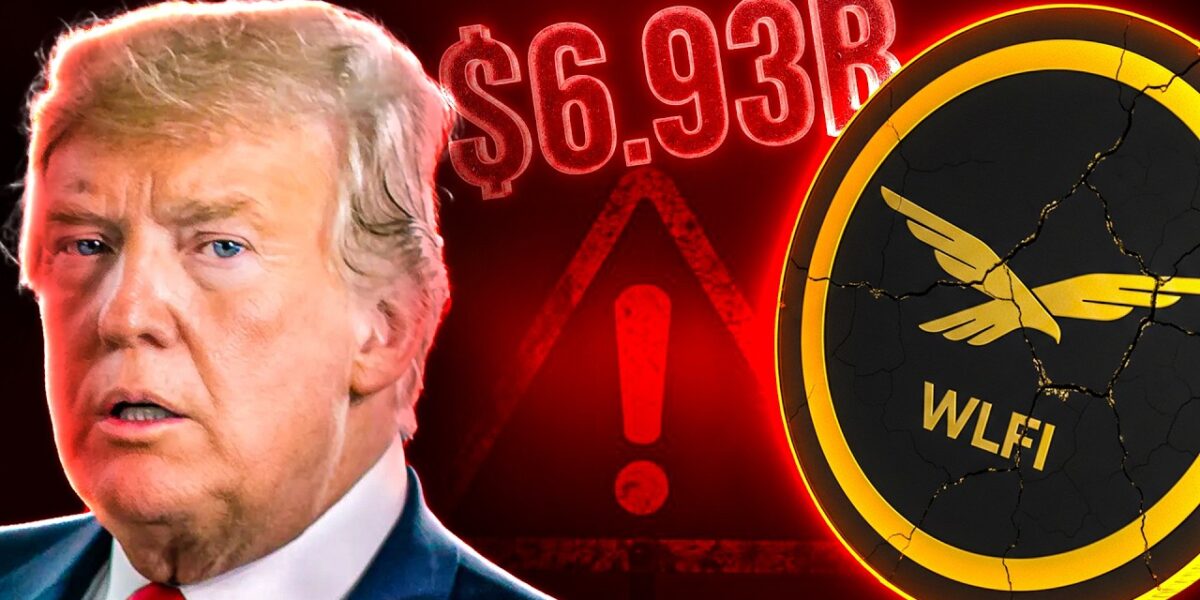
Political Token WLFI May Have Signaled Crypto’s $6.93 Billion Meltdown
A recent report from data analytics platform Amber Data suggests that the World Liberty Financial (WLFI) governance token may have acted as an early warning signal for the broader cryptocurrency market’s significant crash on October 10th of last year. The report, titled “Coincidence or Signal? Did WLFI Telegraph Crypto’s $6.93 billion meltdown?”, posits that the intersection of decentralized finance (DeFi) and politics, embodied by WLFI, provides unique insights into market movements.
The WLFI Token and Insider Influence
WLFI is the governance token of World Liberty Financial, a DeFi protocol reportedly linked to the Trump family. A key aspect highlighted by Amber Data is the concentrated ownership of WLFI among a select group of insiders, including entities associated with the Trump family, political advisors, and affiliated investors. This concentration is significant because these insiders may possess access to information regarding political and regulatory shifts that can profoundly impact financial markets, offering them an advantage over the average retail investor, or “pleb”.
An Ominous Precedent: October 10th Crash
The report zeroes in on October 10th, the date of a major liquidation event that is believed to have marked the beginning of a bear market. According to the analysis, WLFI experienced heavy selling pressure starting at precisely 3:32 p.m. UTC, more than five hours before the wider crypto market began its significant downturn. This timing raises the question of whether WLFI’s sharp decline was an anticipatory signal of the impending broader market crash.
Analyzing WLFI’s Funding Rate and Trader Behavior
To investigate this possibility, the report examined several key metrics. One crucial metric was WLFI’s funding rate in perpetual futures markets. The funding rate represents payments made by long traders to short traders to maintain their positions. In the eight hours preceding the crash, WLFI’s funding rate was 2.8 times higher than Bitcoin’s, standing at 2.8% compared to Bitcoin’s 1%. This resulted in an annualized borrowing cost of approximately 131% for WLFI longs. Such a high rate suggests highly speculative long positions, potentially driven by conviction but also indicating vulnerability. The report argues that while high premiums can show conviction, they also expose traders to extreme downside volatility, especially in leveraged markets where borrowed capital is substantial.
Furthermore, the 2.8x premium over Bitcoin indicated that WLFI longs faced significantly more pressure than those in the broader market, increasing the risk of liquidation. Highly leveraged positions with elevated funding rates become increasingly unstable and sensitive to price fluctuations, particularly downward movements. Consequently, WLFI positions were at a considerable risk of liquidation well before those tied to Bitcoin, positioning WLFI’s price action as a potential early warning.
President Trump’s Tariff Announcement and Trading Volume Surge
The report also correlates market events with political announcements. On October 10th, at 2:57 p.m. UTC, President Donald J. Trump posted on Truth Social about imposing 100% tariffs on China. Just three minutes later, at 3:00 p.m. UTC, WLFI’s trading volume experienced an extraordinary surge. Prior to the announcement, WLFI’s average hourly trading volume was around $22 million. Post-announcement, it skyrocketed to over $474 million, a 21.7-fold increase. The report emphasizes that in a single hour, more WLFI changed hands than in the previous 20 hours combined. This dramatic spike in volume is attributed not to ordinary retail investors but to large token holders exiting positions rapidly, likely insiders with political connections who could position themselves ahead of the news and act swiftly upon its release.
Volatility Discrepancy and Market Contagion
This rapid selling and volume surge preceded Bitcoin’s significant downturn, which began at 8:50 p.m. UTC. While Bitcoin’s realized volatility reached 84%, WLFI’s volatility surged to an astonishing 671%, approximately eight times higher than Bitcoin’s. This disparity is crucial because high-beta assets, or those more sensitive to systemic risk, often move first. A significant volatility gap suggests that WLFI was substantially more sensitive to downside risk than Bitcoin. For instance, a 1% drop in BTC could imply an 8% drop in WLFI. During the October 10th event, Bitcoin fell about 15%, while WLFI plummeted 55%. While WLFI’s volatility was roughly 3.7 times that of Bitcoin in this instance, the report suggests that if the 8x rule had fully applied, WLFI would have fallen by 115%, effectively to zero.
The report posits that WLFI’s low market cap, while naturally contributing to higher volatility, may have also triggered a domino effect through interconnected leveraged trading systems. When an asset like WLFI experiences a sharp decline, it can devalue collateral used in cross-margin accounts. This can lead to breaches in maintenance margin requirements, triggering margin calls across a trader’s entire portfolio. To meet these calls, traders may be forced to liquidate more liquid assets like Bitcoin or Ethereum, creating a chain reaction that pushes the broader market downwards.
Orderbook Liquidity and Market Microstructure
Further analysis focused on orderbook liquidity depth within 0.2% of the market price. During the liquidation event, WLFI’s liquidity in this range plummeted by over 99%, from approximately $1.8 million to just $10,000. Bitcoin’s liquidity also dropped significantly, by 96%, from $311 million to $11 million. This highlights a critical market microstructure dynamic: liquidity provision is asymmetric. While ample during calm markets, liquidity evaporates under stress, precisely when it’s most needed. In WLFI’s case, this depleted liquidity exacerbated the impact of selling pressure, contributing to a downward spiral.
Comparative Performance of Crypto Assets
The report also compared the performance of various cryptocurrencies during the October 10th event. Small-cap tokens like Uniswap (UNI), Aave (AAVE), Avalanche (AVAX), and Chainlink (LINK) saw declines between 62% and 71%. Solana (SOL), considered a mid-cap, fell by 32%. Ethereum (ETH), a large-cap, dropped 20%, while Bitcoin (BTC) fell by a comparatively modest 15%. This pattern underscores the principle that smaller cryptocurrencies, due to factors like higher leverage, thinner order books, and concentrated ownership, are more sensitive to market stress and tend to decline first.
Political Tokens as Information Transmission Mechanisms
The structural characteristics of political tokens like WLFI are central to the report’s argument. The concentration of ownership among insiders who operate within similar social and professional circles allows for rapid information dissemination and collective action. The timeline of events on October 10th—short positions appearing, the tariff news breaking, a massive surge in WLFI volume, and its subsequent price drop, all occurring hours before Bitcoin’s decline—points to coordinated action based on privileged information rather than individual retail investor analysis. The report concludes that political tokens can function as information transmission mechanisms, with WLFI’s initial sell-off providing a crucial five-hour and 18-minute warning of impending market pain. The “weakest structural link,” in this case, WLFI due to its high leverage and political ties, provided the earliest signal of systemic stress.
Lessons Learned for the Crypto Market
The analysis offers several key takeaways for the crypto market. Firstly, smaller cryptocurrencies, despite their lower market capitalization, can have significant ripple effects on the broader market, particularly through leveraged trading systems. Secondly, the actions of large holders, or “whales,” can dramatically influence prices, especially when combined with political information. Finally, the report implicitly warns investors to be aware of the potential for insiders, particularly those with political connections, to act on non-public information. As the report starkly puts it, “Never ever trust a politician.” The events of October 10th suggest that while President Trump may have been associated with a bull market, his DeFi protocol seems to have inadvertently signaled its end.
Source: Trump's WLFI Token Predicted Crypto's $6.93 Billion Crash (Here's The Proof) (YouTube)

Related Articles

Trump Sees Iran Conflict Near End, Analysts Urge Caution
President Trump believes the conflict in Iran is "very close to over," but former advisor Keith Kellogg urges a cautious approach. The potential de-escalation could impact global markets, particularly oil prices. Investors should monitor the specifics of any resolution and its long-term implications for regional stability.

Ceasefire Sparks 100% Gains; Institutions Bet on Bullish Turn
A recent ceasefire has fueled a market rally, with some tech calls doubling in value and institutions like Bank of America signaling a bullish outlook. While inflation concerns ease, elevated oil prices and shifting hedge fund exposure in software present mixed signals for investors. Opportunities may lie in undervalued sectors as institutions rebalance portfolios.

Crypto Leverage Survived Stress Test, Market Shows Resilience
A recent report reveals that despite a massive liquidation event in October, the crypto market's leverage infrastructure has shown resilience. While DeFi borrowing decreased and futures markets saw significant drops, the overall system remained stable, indicating a maturing market with more structured and risk-aware leverage strategies emerging.