Cashman Under Fire: Yankees GM Fails to Meet Bronx Bombers’ Standard
Max Kellerman and Stephen A. Smith argue that Yankees GM Brian Cashman isn't doing enough to meet the team's historic standard of excellence, especially concerning the pitching rotation and rivalry with the Red Sox.

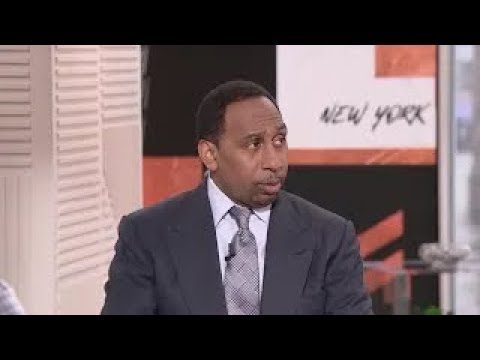
Cashman Under Fire: Yankees GM Fails to Meet Bronx Bombers’ Standard
The pressure cooker that is New York Yankees General Manager Brian Cashman’s job has reached a boiling point, with prominent voices questioning his performance despite his reputation as one of baseball’s elite.
While Cashman is widely acknowledged as an excellent GM, the argument is simple and stark: for the Yankees, “excellent” isn’t good enough. The standard in the Bronx is different, a relentless pursuit of championships fueled by a legacy of 27 World Series titles and the advantage of playing in a league without a salary cap. In the mecca of sports, New York City, with unparalleled resources and a global spotlight, there’s no excuse for not consistently fielding the best talent. This philosophy draws a parallel to the sustained dominance of the New England Patriots, a franchise that has set a benchmark for long-term success, suggesting the Yankees should aim for an even more enduring era of greatness.
The Red Sox Shadow Looms Large
The most glaring indictment against Cashman comes from within the division. Under his watch, the rival Boston Red Sox are on the cusp of their fourth World Series appearance this century, having already secured three titles. Max Kellerman, a vocal critic, emphasizes the unacceptability of a divisional foe tripling the Yankees’ championship count during Cashman’s tenure. “If you’re the GM of the New York Yankees, that means someone else is doing a better job than you, and I’m sorry for the Yankees more than the Patriots, the Cowboys, the Steelers, the Lakers, the Celtics – no one’s close to the Yankees. That is unacceptable, period,” Kellerman asserted.
Rotation Woes and the Pitching-Wins-Championships Mantra
Beyond the divisional rivalry, the immediate concern for the Yankees, and a point of contention for critics like Stephen A. Smith, is the team’s starting rotation. Smith argues that Cashman failed to adequately bolster the pitching staff, a critical oversight given the universally accepted truth that “pitching wins championships.” He points to the reigning World Series champion Houston Astros’ formidable rotation as a prime example of what’s needed to succeed when it matters most.
Specific pitching performances have drawn sharp criticism:
- “Several Reno, Mr. Inconsistency. One day a bum, the next…”
- “Don’t get me started with J.A. Happ, his five earned runs in two innings and an ERA are twenty-two. Ticked me off. Okay, that’s a problem.”
- Veteran CC Sabathia, while respected, is acknowledged as being “beyond his prime” at 37.
The perceived lack of a true ace is a significant issue. The failure to aggressively pursue and acquire top-tier talent like Jacob deGrom from the Mets, even at the cost of valuable prospects, is seen as a missed opportunity. “You could have had deGrom, you could have pursued deGrom heavier. You might not have gotten him, but you should have went all out to get Jacob deGrom from the New York Mets. You didn’t do it. You should have gave up some prospects to do it. You didn’t do it,” Smith stated.
Stanton’s Struggles and the Cost of Superstar Power
Even high-priced acquisitions haven’t been immune to scrutiny. Giancarlo Stanton, brought in with immense fanfare and a hefty contract, is facing criticism for his performance in critical situations. “Don’t get me started with Giancarlo Stanton. This is 2 for 51, 8 at-bats, 4 damn singles. Mister $25,000,000 for singles, that’s it. Against the Red Sox, and in critical situations, it’s sliced up dirty,” Smith lamented, highlighting a perceived lack of impact from the slugger.
The GM’s Balancing Act: Money vs. Prospects
Defending Cashman, the argument is made that the GM has successfully navigated the complexities of team building, assembling a strong lineup and an elite bullpen. The criticism, it’s argued, oversimplifies the role of a general manager, suggesting that simply spending money isn’t the sole solution. Cashman has been praised for his ability to acquire undervalued assets and make shrewd trades, rebuilding the team’s farm system in the process.
However, Kellerman counters that the Yankees’ standard demands more than just being competitive; it demands dominance. “Competitive? That’s for everyone else. There’s no competitive for the Yankees. Now, you’re missing my point.” He further elaborates that the Yankees must be smarter with their trades and system-building, not just wealthier. The core of the debate lies in the willingness to make the “critical trade” for a frontline starter, even if it means parting with prospects and potentially impacting the long-term sustainability of the farm system.
“There’s a tide in the affairs of men, which taken at the flood leads to great fortune; otherwise, you’re stuck. He doesn’t make the critical trade that will be painful in order to acquire the front line starter.”
The pursuit of aces like Chris Sale, Justin Verlander, Jacob deGrom, or Madison Bumgarner, while potentially costly in terms of prospects, is seen by critics as a necessary gamble for a team with the Yankees’ championship aspirations. The counterargument is that such moves can deplete the farm system, jeopardizing future success. Yet, the context of the current era is crucial. In 2018, with only one World Series title in the new millennium compared to the Red Sox’s three (and potentially four), the risk of giving up prospects for immediate impact becomes more justifiable.
What’s Next for the Bombers?
The debate highlights a fundamental question for the Yankees: how to balance the immediate need for a championship-caliber starting pitcher with the long-term health of the organization. While Cashman has built a competitive team with a strong offense and bullpen, the failure to acquire a dominant ace and the divisional success of the Red Sox place him under intense scrutiny. The consensus among the critics is clear: for the Yankees, anything less than a World Series title is a failure, and the current trajectory, under Cashman’s stewardship, is not meeting that ultimate standard. The looming question is whether Cashman can adjust his strategy to meet the unyielding expectations of the Bronx Bombers, or if the team will continue to fall short of its historic potential.
Source: Yankees GM Brian Cashman isn't doing a good enough job Max Kellerman First Take (YouTube)

Related Articles
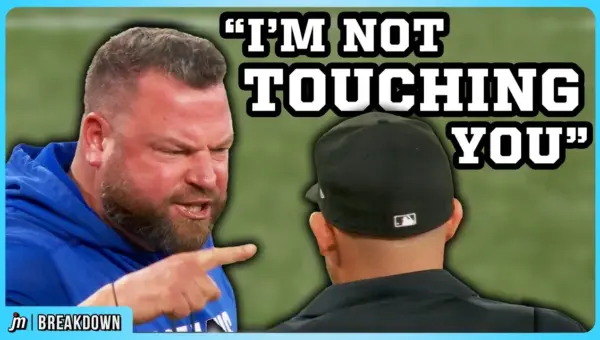
Schneider Ejected After Hitting Umpire in Face!
Toronto Blue Jays manager John Schneider was ejected after a heated argument over a balk call, which led to nose-to-brim contact with umpire Dan Bellino. The incident highlights the impact of new pitching rules and the intense scrutiny umpires face.
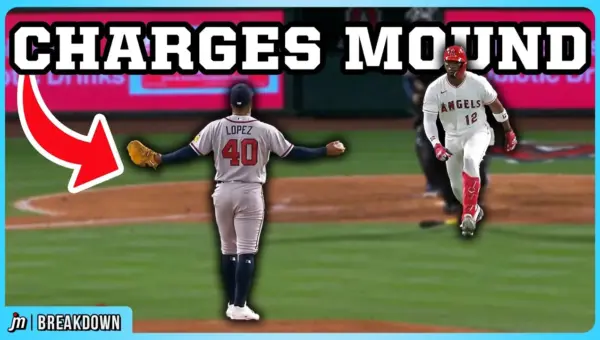
Brawl Erupts: Solair Charges Mound After Pitch Sparks Chaos
Jorge Solair charged the mound and a wild brawl ensued after pitcher Ronaldo Lopez hit him with a fastball. Both players were ejected, and later received seven-game suspensions, following the chaotic incident.
Umpire CB Bucknor’s Blunder Baffles Brewers, Rays
Umpire CB Bucknor's baffling call at first base, which he later questioned himself, led to a challenge and an overturned decision. The incident left players and coaches bewildered as the runner was clearly safe.