2026 Mazda CX-5: A Bold Redesign Divides Loyalists
Mazda's 2026 CX-5 undergoes a significant redesign, boasting enhanced interior space and refined exterior styling. However, the controversial removal of physical controls in favor of a large touchscreen has divided opinions, raising questions about the brand's commitment to driver engagement.

2026 Mazda CX-5: A Bold Redesign Divides Loyalists
The automotive landscape is constantly shifting, and Mazda’s latest move with the 2026 CX-5 redesign is a prime example. While the exterior boasts subtle yet appealing updates and interior space has been notably enhanced, the wholesale embrace of a touchscreen-dominated interface and the removal of physical controls are proving to be a significant point of contention for the CX-5’s dedicated fanbase. This comprehensive overhaul positions the new CX-5 as a vehicle grappling with the demands of modern tech integration versus the tactile, driver-focused experience that has long defined Mazda’s appeal.
Exterior Appeal and Practicality Gains
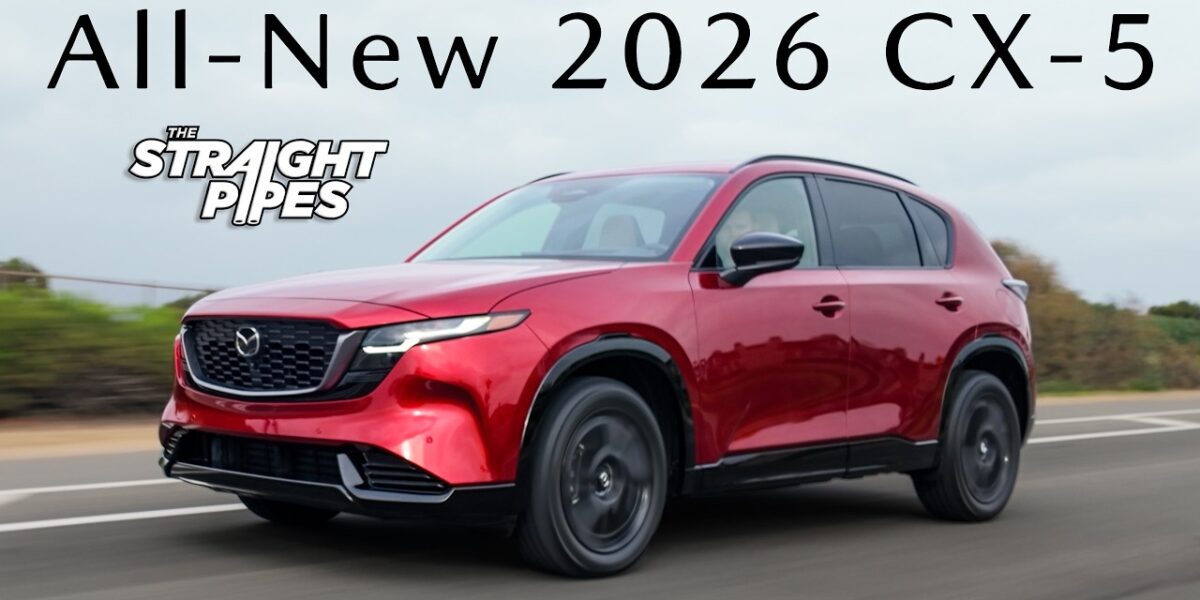
From the outside, the 2026 CX-5 presents a refined evolution. While subjective, the overall design is largely well-received, with clean body lines and a more modern front fascia. The blacked-out accents on the top trim, including fenders and lower body cladding, contribute to a sportier aesthetic, though concerns linger about their durability against scratches, especially during loading and unloading.
Lower trims offer matte finishes which may prove more practical. Mazda continues to offer popular paint colors like Crystal Soul Red Metallic, though the palette for this generation is described as less vibrant than some of its larger SUV siblings. A significant improvement lies in the increased dimensions; the CX-5 is now approximately 4 inches longer, translating to an extra two inches of trunk space and two inches more rear-seat legroom.
Rear door openings now swing wider, reaching a near 90-degree angle, making ingress and egress, particularly for child seats, considerably easier. Mazda claims this newfound space comfortably accommodates adults over six feet tall, a sentiment echoed by reviewers who found the rear seating significantly less cramped than in previous iterations.
Under the Hood: Adequate, Not Exciting
Powertrain-wise, the 2026 CX-5 launches with a naturally aspirated 2.5-liter four-cylinder engine producing 187 horsepower and 185 pound-feet of torque. Mazda has confirmed there will be no turbocharged option for this generation, a departure from the previous model which offered a more potent alternative. This engine is paired with a traditional six-speed automatic transmission, which, while functional and free of the lag sometimes found in CVTs, lacks the modern sophistication of some competitors’ eight-speed units.
While the CX-5 is described as adequately powered and the launch is smooth, the lack of a turbo option and the focus on efficiency over outright performance will undoubtedly disappoint enthusiasts who enjoyed the spirited nature of the previous turbo model. A hybrid powertrain is slated for a later release, though details remain scarce.
Interior: The Great Divide
The interior is where the most significant and controversial changes have been implemented. Mazda has largely eliminated physical buttons, replacing them with a large, central touchscreen that controls everything from climate functions to infotainment. The beloved rotary commander dial, a signature feature that allowed for safe, tactile control of the infotainment system, has been removed.
This decision has been met with widespread criticism from long-time Mazda enthusiasts who value the brand’s commitment to driver engagement and intuitive controls. The new system integrates Google services and offers voice command functionality, but reviewers found the implementation frustrating. Adjusting the volume, climate settings, or switching between applications like Apple CarPlay and Google Maps often requires multiple taps or voice commands, detracting from the driving experience.
The climate control panel, now a touch-sensitive bar, is particularly criticized for its lack of tactile feedback and the difficulty in making precise adjustments while driving. While the screen itself is fluid and responsive, with features like satellite view on Google Maps, the overall user experience is hampered by the absence of physical shortcuts.
The steering wheel also sees a redesign, with some likening the large airbag cover to that of a go-kart. While button placement for cruise control and other functions is generally well-executed, the volume controls remain a point of contention, with the touch-sensitive nature leading to accidental inputs. The instrument cluster, while modern and offering good resolution, adopts a BMW-like layout with fuel on the right and speed in the center or side, a departure from the more traditional tachometer-centric design.
Despite these criticisms, some interior elements do shine. The seats have been redesigned, offering a softer, more comfortable feel than the previous firm cushions. The availability of a lighter-colored headliner enhances the sense of spaciousness.
Materials throughout the cabin are generally high-quality, rivaling premium brands. However, even here, minor gripes emerge, such as the non-matching interior color schemes on certain trims and the oddly feeling electronic window switches.
Performance and Driving Dynamics
Mazda’s core strength, its renowned driving dynamics, appears to be largely intact. The suspension is praised for its refinement, and the steering remains sharp and engaging, providing a connected feel to the road.
Even with the comfort-oriented seats, the CX-5 still delivers a composed and enjoyable driving experience, proof of Mazda’s engineering prowess. Features like adaptive cruise control with eye-tracking and lane-keeping assist are now available, enhancing the car’s semi-autonomous capabilities, though many of these advanced features are reserved for the top trim level.
Value and Target Buyer
Pricing for the 2026 Mazda CX-5 starts at approximately $29,990 USD for the base trim, climbing to $38,990 USD for the top-tier S Premium Plus model. This positions the CX-5 competitively within the compact SUV segment, directly challenging rivals like the Toyota RAV4 and Honda CR-V. The significant changes, particularly the shift away from physical controls, may alienate existing CX-5 owners who appreciate the brand’s traditional approach.
These buyers might find themselves looking towards the CX-50, which retains more of the classic Mazda interior elements, or exploring other brands altogether. The new CX-5 seems to be targeting a broader audience that prioritizes large screens and integrated technology, potentially drawing in new customers who are less attached to traditional automotive interfaces. However, the lack of physical buttons could be a significant deterrent for many, questioning whether the updated CX-5 represents good value for those who prefer a more tactile driving experience.
Verdict
The 2026 Mazda CX-5 is a vehicle of contradictions. It excels in areas where Mazda has always been strong: refined driving dynamics, a comfortable and well-built interior, and practical improvements in space and accessibility. However, its wholesale adoption of a touchscreen-centric interior, at the expense of cherished physical controls and the rotary dial, is a major misstep for a brand that built its reputation on driver engagement.
While the technology is modern and fluid, its implementation feels forced and less intuitive than the systems it replaces. For potential buyers, the decision hinges on a critical question: Is the improved practicality and updated tech worth sacrificing the tactile feedback and driver-focused philosophy that made the CX-5 a darling of enthusiasts?
For loyalists, the answer may well be no, pushing them towards the CX-50 or even other manufacturers. The 2026 CX-5 is a bold gamble, and only time will tell if this radical interior redesign will pay off for Mazda.
Source: HUGE TOUCHSCREEN! NEW 2026 Mazda CX-5 Review (YouTube)

Related Articles

Toyota RAV4 Hybrid Dominates Mazda CX-5 in SUV Showdown
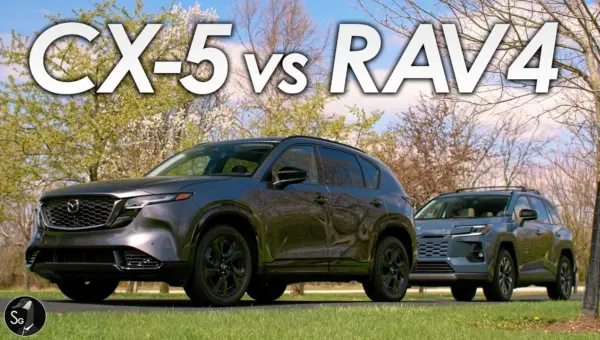
The 2026 Toyota RAV4 Hybrid proves its dominance over the Mazda CX-5, offering superior fuel economy, standard hybrid power, and better everyday practicality. While the CX-5 drives sportier, the RAV4 wins on value and long-term ownership.


Lotus Elan: The Front-Wheel Drive Oddity
The 1991 Lotus Elan M100 stands out as the brand's only front-wheel-drive sports car, featuring an Isuzu engine and a unique design. Despite its engineering quirks and surprisingly capable handling, it failed to achieve sales success due to its high price and niche appeal. This rare example is currently up for auction.


Porsche 911: The Unloved 996 vs. The Beloved 997
We compare the much-maligned Porsche 996 against its beloved successor, the 997. Discover why these two generations, separated by just two years, command vastly different prices and which one offers the better value for driving enthusiasts.