German Carnival Unleashes Scathing Political Satire, Targeting Trump, Putin, and Global Crises
Germany's annual Carnival parades, particularly in Düsseldorf, once again showcased their renowned political satire, with elaborate floats delivering sharp critiques of global leaders and pressing issues. Targets included former U.S. President Donald Trump and Russian President Vladimir Putin, alongside commentary on the war in Ukraine, the Epstein scandal, climate change, and domestic German concerns. These visually striking "Motivwagen" serve as a powerful form of public discourse, reflecting European sentiment on a turbulent world.

German Carnival Unleashes Scathing Political Satire, Targeting Trump, Putin, and Global Crises
Düsseldorf, Germany – As the vibrant spectacle of Germany’s annual Carnival parades swept through cities like Düsseldorf, it wasn’t just confetti and candy that filled the air. The legendary Rose Monday (Rosenmontag) processions once again served as a potent platform for biting political satire, with towering floats delivering unequivocal critiques of global leaders, geopolitical conflicts, and pressing societal issues. From lampooning former U.S. President Donald Trump and Russian President Vladimir Putin to highlighting the war in Ukraine and domestic German concerns, these elaborate artistic statements have captured international attention, offering a unique glimpse into European sentiment.
The Enduring Power of Satire: Germany’s Carnival Tradition
The tradition of political satire at German Carnival, particularly in the Rhineland cities of Cologne, Düsseldorf, and Mainz, dates back centuries. Far more than just a party, these parades are a deeply ingrained cultural institution where humor, irony, and often brutal honesty are wielded as tools of social commentary. The meticulously crafted “Motivwagen” (themed floats) are designed to provoke thought, spark discussion, and hold power accountable. This year, their messages resonated globally, with images of the floats quickly circulating across international media, particularly in the United States, illustrating Europe’s perspective on a turbulent world.
The floats are renowned for their artistic quality and often grotesque exaggeration, designed to leave no room for ambiguity regarding their message. “The fabrication is always just beautiful. You guys are really next level at the floats fabrication stuff and the costumes,” observed one American commentator, acknowledging the impressive craftsmanship behind these politically charged masterpieces.
Targeting Transatlantic Tensions: Trump and American Politics
A recurring and particularly pointed target of German Carnival satire has been former U.S. President Donald Trump. His “America First” policies, often perceived as isolationist and detrimental to transatlantic alliances, have frequently drawn the ire of European commentators and satirists. This year was no exception, with floats depicting Trump in highly critical, even shocking, scenarios.
- Trump and Putin Devouring Europa: One striking float depicted Trump and Putin together, grotesquely consuming a figure representing Europa, traditionally symbolized by a woman riding a bull. This powerful image harks back to the Greek myth of Europa and Zeus, often used to symbolize the origins and vulnerabilities of the European continent. The float’s depiction of Europa being “eaten from both sides” by these two leaders underscores a perceived dual threat to European unity and stability from both Russian aggression and an unpredictable American foreign policy.
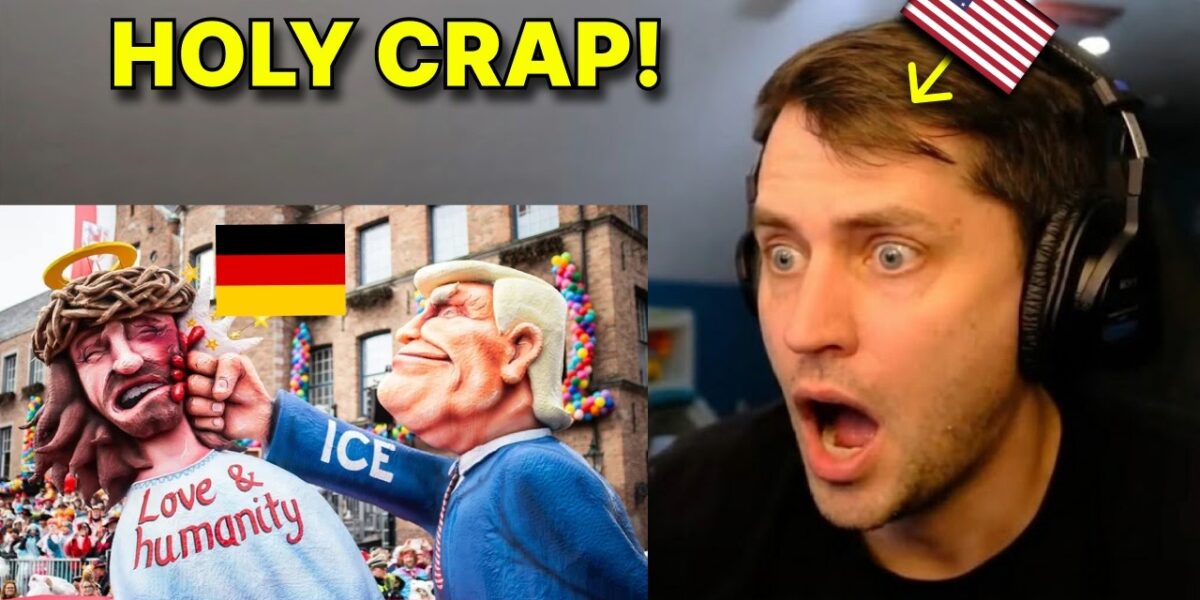
- Trump Punching Jesus: Perhaps one of the most provocative floats showed Trump punching a figure of Jesus. The float was adorned with clear symbolic labels: Trump’s sleeve bore the word “ice” (likely referring to coldness, greed, or perhaps even the U.S. Immigration and Customs Enforcement, though open to interpretation), while Jesus was labeled with “love and humanity.” This float offered an unambiguous critique of what many perceive as a stark contradiction between the Christian values often espoused by some of Trump’s supporters and the perceived harshness or lack of empathy in some of his policies and rhetoric. “No ambiguity about that one. It’s so true though. It is hilarious in that way, especially cuz the Republicans here in America have always been the party of Christianity, you know, and extremely ironic,” commented the American observer, highlighting the perceived hypocrisy.
These depictions reflect a broader European anxiety about the future of transatlantic relations and the potential for a return to policies that could undermine international cooperation and democratic norms.
Geopolitical Critiques: Russia, Ukraine, and European Security
The ongoing war in Ukraine and Russia’s role in global instability were central themes in this year’s parades, echoing the widespread concern and condemnation across Europe.
- Russia’s War Crimes in Ukraine: Multiple floats explicitly addressed Russia’s aggression. One float, featuring elements of the Ukrainian flag, bore direct messages like “Russia’s war crimes in Ukraine,” leaving no doubt about the artists’ stance. These floats serve as a public protest, keeping the humanitarian crisis and geopolitical implications of the conflict at the forefront of public consciousness.
- Putin’s Control Over the AFD: A particularly scathing float targeted the far-right Alternative for Germany (AfD) party, depicting Russian President Vladimir Putin remotely controlling AfD figures as if they were drones. This imagery powerfully critiques the AfD’s perceived pro-Russia stance and its alleged subservience to Moscow’s interests, particularly amidst the ongoing conflict in Ukraine. The float suggests that the AfD, which has faced accusations of undermining European unity and democratic values, is being manipulated by an external power to sow discord and weaken Germany from within. “He’s got the AFD freaking Putin’s controlling them and they’re he’s using them as a freaking drone probably in the freaking war, you know, to drop bombs. Oh my god, cuz there’s so much drone warfare. Damn,” remarked the American viewer, grasping the gravity of the satire.
These floats underscore Europe’s unwavering support for Ukraine and its deep concern over Russian expansionism, while also highlighting internal political divisions regarding foreign policy.
Unmasking Societal Ills: From Epstein to Climate Change
Beyond international politics, the Carnival floats also tackled a range of domestic and global societal issues, reflecting public sentiment on justice, environmental concerns, and social inequalities.
- The Epstein Scandal: A float addressing the Jeffrey Epstein scandal depicted figures impaled on horns, symbolizing the victims, while also hinting at the powerful individuals who allegedly protected the perpetrator. The float’s message resonated deeply: “Everyone protected the perpetrator. Everyone ignores the victims. Yeah. Still happening but the truth will prevail guys and it will come out and it is coming out and hopefully justice will be served.” This float serves as a powerful call for accountability and justice, echoing public frustration over the perceived impunity of powerful individuals.
- Climate Change: Environmental concerns were also present, with one float featuring a figure riding a dinosaur, likely symbolizing the impending doom or outdated approaches to climate change. Germany has been a leader in environmental policy, and public discourse around climate action remains robust.
- The Digital Age and Isolation: A thought-provoking float depicted people staring blankly at their phones, an image labeled “2026.” This float offered a stark commentary on the pervasive nature of digital technology and its potential for social isolation, prompting reflection on modern connectivity versus genuine human interaction. “Just seeing these people staring at their phones, dude. That’s 2026, that’s for sure. Jesus, look at their eyes,” noted the observer.
Domestic German Concerns and the Pirate Party
The parades also touched upon issues closer to home for German citizens, reflecting ongoing debates and challenges within the country.
- Rising Rents and Crushing Families: One particularly “gruesome” float depicted rising rents crushing families, highlighting a significant social issue in Germany where housing affordability is a growing concern, especially in urban areas.
- Pensioner Struggles: Another float humorously, yet poignantly, showed pensioners being towed up a hill by a baby, symbolizing the demographic challenges and the burden on younger generations to support an aging population.
- The Pirate Party: Multiple floats and participants were seen sporting pirate hats, indicating the presence and perhaps growing visibility of the Pirate Party. This minor political party in Germany focuses on issues like digital rights, civil liberties, and transparency, and their presence in the parade suggests an ongoing effort to engage with the public and promote their agenda.
Beyond Politics: A Spectacle of Joy and Generosity
While the political floats garner significant attention, the German Carnival parades are also a joyous celebration of community, creativity, and tradition. Interspersed with the biting satire are floats dedicated to fantasy, local culture, and pure spectacle. The sheer generosity of candy thrown to the crowds is a hallmark of the event, creating an atmosphere of shared delight.
“The amount of candy being thrown. It’s very generous, guys. Very generous,” the American commentator noted, emphasizing the festive and inclusive nature of the parades, which brings together people of all ages to celebrate and reflect.
Conclusion: Satire as a Mirror to Society
The German Carnival parades, particularly the Rose Monday processions, stand as a powerful testament to the role of satire in a democratic society. They are not merely entertainment but a vital form of public discourse, offering a visually striking and often humorous critique of power, injustice, and societal trends. By transforming complex political and social issues into larger-than-life, moving sculptures, the artists and organizers of Carnival provide a unique forum for expressing collective sentiment, sparking dialogue, and holding a mirror up to the world. As the floats make their way through the streets, they remind us that in the face of global challenges and political turmoil, humor and artistic expression remain potent tools for understanding, protest, and ultimately, change.
Source: American reacts to Germany TRASHES Trump at Carnival (YouTube)

Related Articles
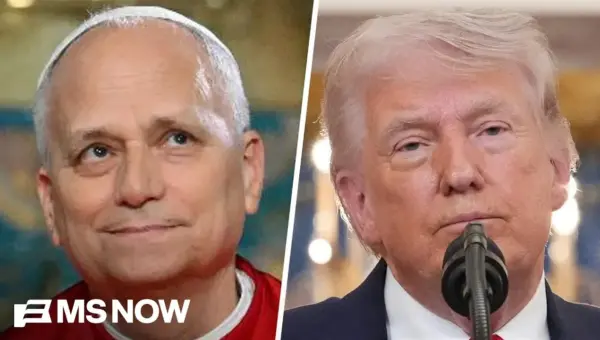
Trump’s Jesus Meme Sparks Outrage Among Religious Supporters
Donald Trump's sharing of a meme depicting him as Jesus Christ has ignited backlash from religious supporters, who also cite his feud with Pope Francis. This has led some to feel "duped," questioning his motives and fitness for leadership.


FBI Docs Contradict Melania’s Epstein Introduction Claims
Newly surfaced FBI documents challenge Melania Trump's recent claims about not being introduced to Donald Trump by Jeffrey Epstein. Witness testimony suggests Epstein facilitated the introduction, contradicting Melania's public statements and raising questions about her associations and those of figures like Paulo Zampoli.
Iran War Disliked, But Public Outrage Muted: Analysts Weigh In
Despite widespread disapproval of the Iran war, public protests remain muted in the US. Analysts cite fear of reprisal, the prolonged nature of anti-war movements, and America's energy independence as key factors. The conflict's economic impact and the lack of clear objectives continue to fuel public skepticism, though widespread suffering is not yet felt domestically.