The Silent Killer on American Roads: Why US Cars Are Proving More Dangerous Than European Counterparts
A deep dive into automotive safety reveals that American cars, particularly large SUVs and pickup trucks, are significantly more dangerous than European models. This danger stems from their size, weight, and blunt design, which pose heightened risks to other vehicles, pedestrians, and cyclists, a stark contrast to Europe's holistic safety standards. This alarming disparity highlights a critical need for public awareness and regulatory reform in the United States.


The Silent Killer on American Roads: Why US Cars Are Proving More Dangerous Than European Counterparts
A recent deep dive into automotive safety standards has unveiled a stark and concerning reality: American vehicles, particularly the ubiquitous large SUVs and pickup trucks, are significantly more dangerous than their European counterparts. This isn’t just about occupant safety within a vehicle; it’s about the profound threat these massive machines pose to other road users, including drivers in smaller cars, pedestrians, and cyclists.
The revelation, brought to light by a segment from the popular YouTube channel ‘Not Just Bikes,’ challenges conventional perceptions of vehicle safety, suggesting that the very design and regulatory philosophy behind many American cars contribute to higher rates of serious injury and fatality on US roads. For many Americans, the idea that their vehicles might be inherently more hazardous comes as a shock, prompting a critical examination of national safety priorities.
The Arms Race on Asphalt: Weight, Size, and Design
The core of the problem lies in the escalating size and weight of American vehicles. What began as a consumer preference for larger cars, often marketed for their perceived safety and utility, has morphed into what experts describe as an ‘arms race’ on the road. The transcript highlights how the extreme weight and stiff frames of American SUVs and pickup trucks make them disproportionately dangerous to other vehicles in a crash. In a collision, a heavier, more rigid vehicle imparts significantly more force onto a lighter, less rigid one, often leading to more severe outcomes for occupants of the smaller car.
This dynamic creates a perverse incentive: individuals feel compelled to buy larger vehicles themselves to feel safe, perpetuating a cycle that makes roads more dangerous for everyone. The average American car has grown considerably over the past few decades, a trend not mirrored in many European nations where urban environments and regulatory frameworks favor more compact and agile vehicles.
Lethal Design: The Threat to Vulnerable Road Users
Beyond collisions with other vehicles, the design of modern American trucks and SUVs poses a particularly grave threat to pedestrians and cyclists. The transcript points out that their blunt, vertical front ends, often designed more for aesthetics than safety, drastically increase the risk of severe injury or death in a collision. Unlike cars with sloped hoods that might allow a pedestrian to be thrown onto the hood, these larger vehicles are far more likely to knock a person backward, causing them to impact the ground or, tragically, be run over.
- Research indicates that people are 44% more likely to die when hit by an SUV or light truck compared to a car.
- For children, this risk escalates dramatically, with an 82% higher fatality rate.
- For children under 10, the risk is a staggering 130% higher.
A 2023 Belgian study further underscores this danger, finding that a pedestrian or cyclist hit by a pickup truck faced an almost 200% higher risk of fatal injury than if hit by a car. These figures are not mere statistics; they represent lives lost and families shattered, often due to vehicles that are increasingly common sights in American neighborhoods.
Beyond the Crash: Handling and Visibility Concerns
The dangers associated with large American vehicles extend beyond direct collisions. Their inherent design characteristics also contribute to a higher likelihood of accidents in the first place:
- Worse Handling: Due to their heavy weight and high center of gravity, SUVs and pickup trucks typically exhibit inferior handling compared to standard cars. This reduced agility can make evasive maneuvers more difficult, increasing crash potential.
- Longer Braking Distances: The sheer mass of these vehicles requires greater force and distance to come to a complete stop, a critical factor in preventing collisions, especially in unexpected situations.
- Increased Rollover Risk: The high center of gravity also makes these vehicles significantly more prone to rollovers, even at relatively low speeds. While manufacturers have strengthened vehicle pillars to protect occupants in a rollover, a side effect has been larger A-pillars, which further reduce driver visibility.
Perhaps one of the most insidious dangers is the issue of blind spots. The immense height and excessively large hoods of many modern trucks and SUVs create ‘insanely huge front blind spots.’ An NBC News investigation cited in the transcript shockingly revealed that nine children could sit in front of a typical American SUV and be completely invisible to the driver. This alarming lack of visibility contributes to a steep increase in ‘front over’ and ‘back over’ accidents, where individuals, often children, are hit or run over at slow speeds because the driver simply cannot see them.
A Tale of Two Standards: US vs. European Safety Regulations
The stark contrast in vehicle safety outcomes can largely be attributed to fundamentally different regulatory philosophies between the United States and Europe. The transcript highlights that EU safety standards for automobiles are significantly higher than in the US, both in terms of what is tested and who conducts the testing.
US automotive safety testing primarily focuses on occupant safety within the vehicle during typical crash scenarios. While the US does have strict rollover safety tests, this emphasis emerged as a direct response to the ‘manufactured problem’ of excessive rollover crashes resulting from the proliferation of top-heavy light trucks in the 1990s. The focus remains largely on protecting the vehicle’s occupants, with less consideration for the impact on others.
European safety testing, exemplified by organizations like Euro NCAP, adopts a far more holistic approach. Since 2020, Euro NCAP introduced the ‘mobile progressive deformable barrier test’ (MPDB) for front-end crashes. Crucially, this test involves crashing a vehicle against a moving trolley that replicates another car, assessing how well the tested vehicle shares crash energy. Vehicles found to be more dangerous to other vehicles lose points on their safety rating. This philosophy ensures that vehicles cannot achieve a high safety rating for their occupants by making the roads more dangerous for everyone else.
The practical implications are profound: a 2015 report found that a typical EU car on US roads would have approximately a 33% lower risk of serious injury than a typical US model. This data suggests that the US is, by its regulatory choices, implicitly accepting a significantly higher rate of serious injury.
Cultural Preferences, Economic Incentives, and Regulatory Gaps
The prevalence of these dangerous vehicles in the US is not accidental. It’s a complex interplay of cultural preferences, aggressive marketing, and regulatory loopholes. Many Americans are drawn to large trucks and SUVs for their imposing aesthetics, perceived power, and a sense of invulnerability on the road. The transcript notes that many owners of pickup trucks don’t even utilize the bed for hauling, indicating that size is often a stylistic choice rather than a functional necessity.
This consumer demand is met by manufacturers who find it profitable to produce and sell these larger vehicles, often benefiting from regulatory classifications that treat light trucks differently from passenger cars, historically allowing for less stringent fuel efficiency and safety standards. The consequence is a market flooded with vehicles that, while providing a sense of security for their drivers, are a menace to others.
The disparity is so great that many of these large American trucks are illegal in Europe, unable to pass their stringent safety regulations. However, the transcript reveals a concerning loophole: thousands of these trucks are reportedly imported into the EU each year, bypassing safety and emissions standards. Furthermore, recent trade talks with the US have raised alarms among road safety advocates in Europe, threatening to nullify vehicle safety regulations completely and potentially open European roads to these ‘stupid American trucks.’
A Call for Education and Stricter Regulations
The findings underscore a critical need for public education and significant policy reform in the United States. The average American motorist is largely unaware of the external dangers posed by their vehicles. As the transcript’s reactor expressed, the immediate thought is often about personal safety within the car, not the impact on others.
Experts and safety advocates are increasingly calling for a re-evaluation of US automotive safety standards to align them more closely with the comprehensive, holistic approach taken in Europe. This could involve:
- Implementing crash tests that assess a vehicle’s compatibility with others and its impact on vulnerable road users.
- Revisiting vehicle design guidelines to promote features that reduce harm to pedestrians and cyclists.
- Potentially introducing restrictions on vehicle size and weight for general consumer use, akin to how commercial vehicles require special licensing.
While some might view such measures as an infringement on personal freedom, the data overwhelmingly suggests that the current trajectory comes at an unacceptable cost in human lives. The ability to drive a ‘gigantic school bus around as a normal person’ is a rhetorical question that highlights the absurdity of allowing excessively large, dangerous vehicles without commensurate safety oversight.
The conversation around vehicle safety in the US needs to shift from a myopic focus on occupant protection to a broader understanding of road safety as a collective responsibility. Until then, American roads will continue to be a more perilous environment for all.
Source: American Reacts to Why European Cars Are SAFER Than US Cars (YouTube)

Related Articles

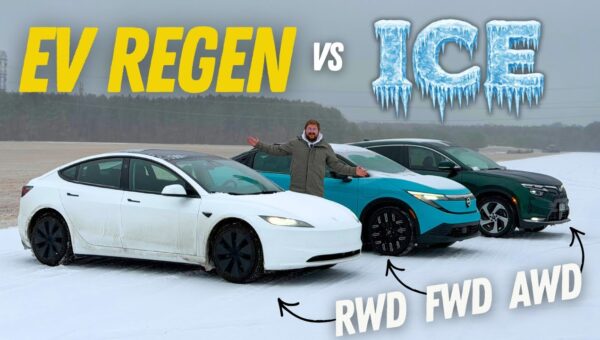
EV Regen on Ice: Is It Dangerous? We Tested!
We put RWD, FWD, and AWD EVs to the test on a frozen track to determine if regenerative braking is dangerous on ice. The results show modern EVs handle it with surprising capability, making manual adjustments often unnecessary.


DOJ’s Jan. 6 Move Sparks Outrage: ‘Reads Like The Onion’
The Department of Justice is facing backlash for reportedly seeking to erase convictions of Oath Keepers and Proud Boys leaders involved in the January 6th Capitol attack. Critics decry the move as undermining justice and acting as political theater. Simultaneously, the DOJ's continued investigation into Fed Chair Jerome Powell, despite judicial warnings, fuels concerns about the legal system being used for political aims.


Senator Tillis Demands Clarity on US Goals in Iran Conflict
Senator Thom Tillis is demanding more details from the White House about U.S. goals in the Iran conflict, citing a lack of information for senators and rising gas prices. He stressed that Congress needs specifics before approving significant funding requests.