Trump Iran Case Doubts Emerge on Nuclear Claims
New reporting suggests the Trump administration's justifications for action against Iran, particularly regarding its nuclear program, may be based on misrepresented information. Experts reportedly told MSNBC that a key Iranian reactor cited by the administration lacks the capacity to produce nuclear weapons, and the administration has yet to provide evidence to Congress.

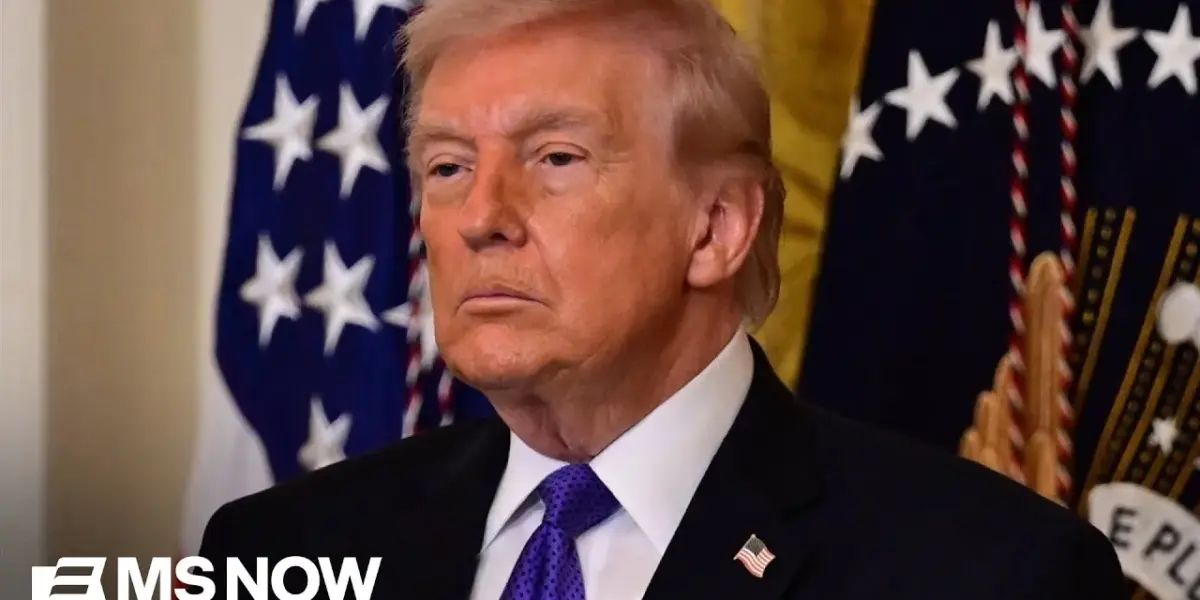
New Reporting Questions Justifications for Military Action Against Iran
Recent investigative reporting has cast significant doubt on the Trump administration’s stated reasons for escalating tensions with Iran, particularly concerning the nature and imminence of its nuclear program. Multiple nuclear scientists and nonproliferation experts have reportedly informed MSNBC that a key Iranian reactor, cited by the administration as a pathway to nuclear weapons, does not possess the capacity to produce a bomb. This revelation comes as the administration has yet to publicly or officially present evidence to Congress to substantiate its claims about Iran’s nuclear stockpiles.
Administration Claims Contradicted by Experts
Central to the administration’s justification for its actions was the assertion that Iran was stockpiling enriched uranium, specifically 60 percent and 20 percent enriched uranium. Reports indicate that Iran was willing to relinquish the 60 percent enriched uranium as part of nuclear negotiations. Officials claimed that 20 percent enriched uranium was being stockpiled at the Tehran Research Reactor, a civilian facility built by the U.S. In 1967 for electricity and medical isotopes, with the intent of building a nuclear weapon within three to four weeks.
However, according to MSNBC’s reporting, nuclear experts consulted stated that this particular reactor lacks the capacity to serve as an “easy conduit to a bomb.” These experts suggest that the administration’s claims may have been a misrepresentation, potentially by figures like Jared Kushner, to justify specific actions. The administration has reportedly not provided evidence of this alleged stockpiling at the Tehran facility, nor have they presented such evidence to Congress, despite multiple attempts to obtain it.
“Based off of our conversations with a great many nuclear experts, they say, number one, that this particular reactor doesn’t have that capacity and that this was a misrepresentation by Jared Kushner to justify these actions,” a source told MSNBC.
Lack of Technical Expertise in Negotiations
Further complicating the narrative is the reporting that key decisions and negotiations regarding Iran’s nuclear program were made by individuals without the necessary technical nuclear expertise. According to Vaughn Hilliard, MSNBC senior White House reporter, Steve Witkoff and Jared Kushner reportedly made decisions without the input of American nuclear technical experts. This lack of expertise has raised serious questions about the administration’s understanding of the details of the nuclear arrangement and its potential consequences.
Daryl Kimball, executive director of the Arms Control Association, commented on the importance of detail and time in nuclear nonproliferation discussions, noting that the administration “was not patient enough to apply either to this effort.” The reporting suggests that technical talks were intended to follow military strikes, a sequence that experts find perplexing, especially when negotiations, mediated by Oman, appeared to be progressing positively.
Legal and Moral Implications of Questionable Justifications
The lack of clear, evidence-based justifications for military action raises significant legal and moral questions. Rachel Van Landingham, a retired Air Force lieutenant colonel and professor of law, emphasized that for war to be lawful, evidence meeting specific criteria is required. “If we can’t trust what the administration is saying, how can the servicemen and Republican women who are dying in prosecution of this war, trust their entire chain of command that what they’re doing is not as lawful?” she questioned.
Van Landingham also highlighted the discrepancy between past administrations, like that of George W. Bush, which at least attempted to present justifications for military action, and the current approach, which appears to be foregoing even the pretense of convincing the public or Congress. The administration reportedly sent a memo to Congress under the War Powers Resolution that did not even mention an imminent threat, suggesting a departure from established legal and political norms.
Checks and Balances on Presidential Power
The article touches upon the checks and balances that are supposed to constrain presidential power, particularly concerning military engagements. While Congress may be asked to approve further funding for military actions, the legal authorities who must sign off on these actions are also crucial.
Normally, the Office of Legal Counsel at the Department of Justice, with input from the Department of Defense’s general counsel, would assess the legality of going to war under international and domestic law. This typically requires either an imminent threat of armed attack, a U.N. Security Council resolution, or an ongoing international armed conflict.
The reporting suggests that the justifications provided, such as the alleged imminent threat linked to nuclear weapons development, are not strongly supported by evidence. The targeting of specific individuals or regimes, while potentially significant, may not meet the threshold for an “imminent threat” under international law. The article implies that some legal advisors may be prioritizing the president’s directives over established legal frameworks, leading to a situation where “international law doesn’t matter.”
Looking Ahead: Transparency and Accountability
As the situation unfolds, the core questions remain: what are the true justifications for the administration’s actions regarding Iran, and what evidence supports these claims? The reporting from MSNBC, supported by insights from legal experts and nonproliferation specialists, suggests a significant gap between the administration’s pronouncements and the factual basis for its policy.
The demand for transparency and factual evidence is not just a matter of public trust but is also essential for the legitimacy of military action and the accountability of those who authorize it. The coming weeks will likely reveal whether Congress and the American public will demand greater clarity and evidence before committing further resources and lives to the conflict.
Source: Experts: Trump’s Iran case was made without nuclear specialists in the room (YouTube)

Related Articles


Trump, Putin Share Ukraine Worldview, Kuleba Claims
Ukrainian Foreign Minister Dmytro Kuleba claims former U.S. President Donald Trump and Russian President Vladimir Putin share a similar worldview. Both, he suggests, believe smaller nations should submit to the demands of greater powers. This perspective could significantly alter U.S. policy toward the Ukraine conflict.
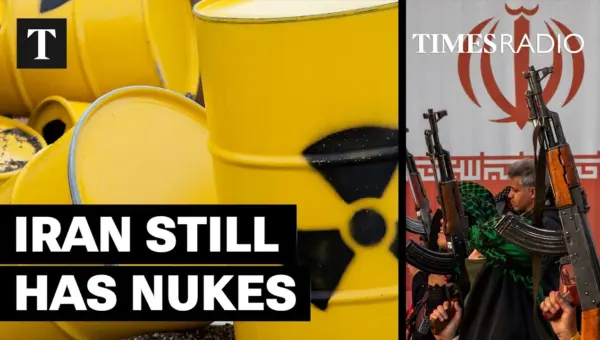
Iran’s Nuclear Program Not Obliterated Despite Attacks, Expert Warns
A U.S. nuclear expert believes Iran's nuclear program has not been destroyed by recent attacks, with the country still possessing enriched uranium and demanding the right to enrich more. This stance, driven by geopolitical concerns, makes a better nuclear deal than the 2015 agreement highly unlikely. Tensions also remain high with recent incidents involving shipping in the Gulf and a journalist's death in Lebanon.


Trump’s Iran Gamble: A Desperate Plea for a Different Path
Former President Trump's attempts to engage Iran are described as a desperate plea, with Iran strategically waiting for political shifts. This standoff has significant implications for global security and U.S. foreign policy. The upcoming elections will be a key moment to watch.