Russian Media Escalates Nuclear Threats Amidst War Failures
Russian state media is amplifying nuclear threats and fabricating stories about Ukraine obtaining nuclear weapons. Analysts suggest this is a tactic to distract from battlefield failures and sow fear.

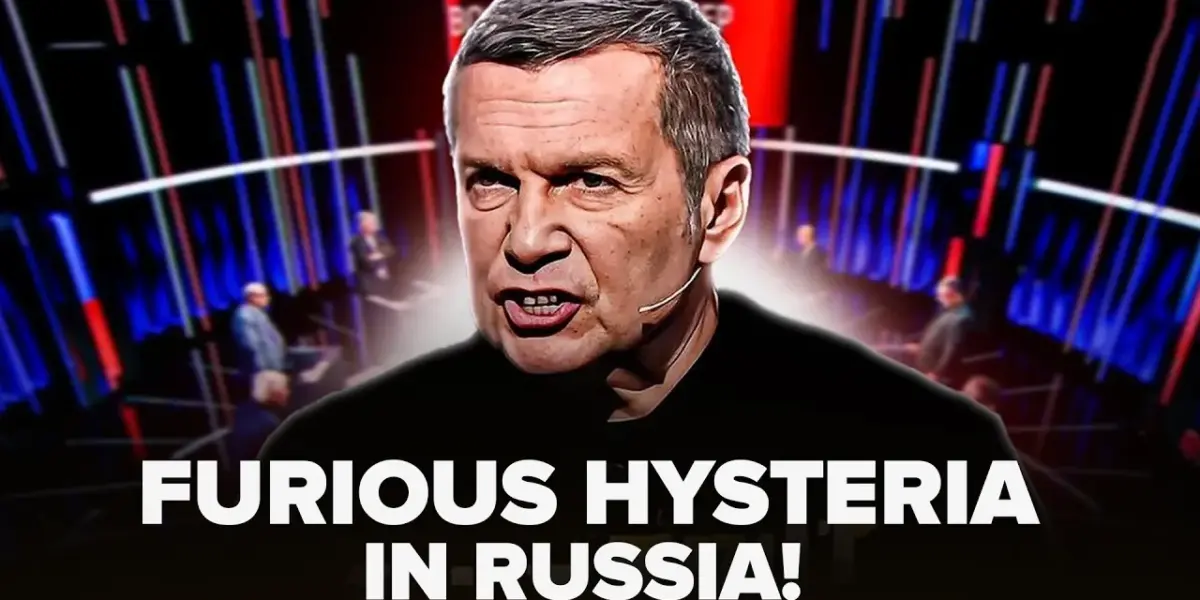
Russian State Media Amplifies Nuclear Rhetoric Amidst Battlefield Setbacks
In a dramatic escalation of rhetoric, Russian state media personalities are increasingly invoking nuclear threats, a move analysts suggest is a desperate attempt to deflect from mounting failures on the Ukrainian front lines and internal challenges. Prominent figures are not only hinting at the possibility of nuclear escalation but also fabricating narratives about Western nations supplying Ukraine with nuclear weapons, a claim widely dismissed as baseless propaganda.
Fabricated Nuclear Claims Aimed at Domestic and International Audiences
The recurring theme revolves around the unsubstantiated assertion that the United Kingdom and France are preparing to transfer nuclear weapons to Ukraine. This narrative, consistently pushed on Russian television, is interpreted by Western observers as a calculated effort to distract the Russian populace from battlefield setbacks and the prolonged absence of significant victories. “This story is just for Russian audiences to distract them from the real mess.
Setbacks on the front lines, four years of war with zero real victories, internal failures,” explains one analysis. The propaganda aims to paint a picture of Ukraine as a destabilizing force, thereby justifying Russia’s ongoing military actions.
“Wave a scary bomb on TV. Call it geopolitics and hope no one notice. It’s really just a very loud excuse for losing.”
This strategy, according to critics, is a transparent attempt to manage domestic perception and sow fear among Western nations. By creating an existential threat narrative, Moscow seeks to strengthen support for its war effort and potentially coerce Western powers into pressuring Ukraine towards concessions.
Escalation of Threats: From Nuclear Claims to Infrastructure Targeting
Beyond the nuclear rhetoric, Russian media figures are also openly discussing and advocating for strikes against critical Ukrainian infrastructure, including railway networks and train stations. Vladimir Solovyov, a prominent state TV host, has explicitly called for bombing railways and stations, suggesting the use of tactical nuclear weapons to create exclusion zones and halt supply lines. This rhetoric is seen as a direct threat and a potential precursor to further military escalation.
The rationale presented by Russian propagandists for these threats often centers on a distorted view of self-defense and retaliation. They claim that such actions are necessary responses to alleged Ukrainian strikes on Russian territory, such as in Belgorod. However, analysts counter that these are preemptive justifications for Russia’s own aggressive actions and a means to terrorize the Ukrainian population.
“If Ukraine obtains nuclear weapons, we do not know from whom or how. If that happens, Russia would have the right to distribute nuclear weapons to those countries it deems necessary. And I assure you that would be a catastrophe for them.”
The ‘Kubrick Style’ and a ‘Pariah State’ Scenario
Commentators draw parallels between the current Russian propaganda tactics and a perceived nihilistic “Kubrick style” of thinking, suggesting a mindset where the consequences for Russia, even becoming a global pariah, are deemed acceptable as long as the immediate objectives are met. This sentiment is encapsulated in the phrase, “After us, let the grass not grow,” implying a willingness to inflict widespread destruction regardless of the long-term repercussions for Russia itself.
The narrative posits that Russia, as a continental power, fears being dragged into conflicts by external actors, similar to historical precedents. The implication is that Russia perceives itself as being manipulated by Western powers and is reacting defensively, albeit through aggressive means. The fear is that this escalatory spiral could lead to a nuclear catastrophe, with Russian elites allegedly prioritizing their own short-term survival and bureaucratic interests over global stability.
Propaganda as a Tool to Justify Failures and Distract the Public
The broad consensus among analysts is that these extreme pronouncements serve as a sophisticated propaganda tool. By manufacturing external threats and sensationalizing potential escalations, the Kremlin aims to:
- Distract the Russian public from military failures and economic hardships.
- Unify the population against a perceived common enemy.
- Intimidate Western nations and undermine their support for Ukraine.
- Create a pretext for further military actions or a prolonged conflict.
The claims of Ukraine seeking nuclear weapons are particularly lambasted as absurd, given Ukraine’s non-nuclear status and the international non-proliferation regime. The narrative is seen as a projection of Russia’s own strategic dilemmas and a desperate attempt to regain the initiative in a conflict where it has not achieved its initial objectives.
Shifting Blame and Undermining Peace Efforts
Russian media consistently portrays European nations, particularly the UK, as actively prolonging the conflict and sabotaging peace processes. The narrative suggests that Western involvement, including potential troop deployments in Ukraine, is designed to prevent any resolution that does not align with Western interests. This framing attempts to absolve Russia of responsibility for initiating and perpetuating the war.
Conversely, the reality presented by Western observers is that Russia itself is unwilling to make meaningful compromises, seeking either Ukraine’s unconditional surrender or its transformation into a subservient state. The Russian propaganda machine, in this view, twists reality to cast the West as the aggressor and Russia as the victim, despite Russia’s ongoing invasion and destruction within Ukraine.
Future Outlook: Continued Propaganda and Potential Escalation
Looking ahead, analysts expect the barrage of nuclear threats and fabricated narratives to continue as long as Russia faces challenges on the battlefield. The effectiveness of this propaganda in influencing both domestic and international audiences remains a key question. The international community remains vigilant, calling for continued unity and skepticism towards Russian state media’s claims, emphasizing that de-escalation and a peaceful resolution depend on Russia’s willingness to cease its aggression.
Source: 😱Unhinged Solovyov Screams in the Studio! Turns to Ukraine and NATO With Wild Threats (YouTube)

Related Articles


Trump, Putin Share Ukraine Worldview, Kuleba Claims
Ukrainian Foreign Minister Dmytro Kuleba claims former U.S. President Donald Trump and Russian President Vladimir Putin share a similar worldview. Both, he suggests, believe smaller nations should submit to the demands of greater powers. This perspective could significantly alter U.S. policy toward the Ukraine conflict.


Trump’s Iran Gamble: A Desperate Plea for a Different Path
Former President Trump's attempts to engage Iran are described as a desperate plea, with Iran strategically waiting for political shifts. This standoff has significant implications for global security and U.S. foreign policy. The upcoming elections will be a key moment to watch.


Climate Change Threatens U.S. Military Base in Guam
A recent super typhoon hitting Guam highlights how climate change directly threatens U.S. military readiness in Asia. Guam, a vital American outpost, faces repeated severe weather events that disrupt operations and challenge long-term strategic planning. The lack of alternatives means the U.S. may need to rethink its entire approach to power projection in the region.