GM’s Electric Sierra EV: A Bold EV Truck for a Niche Audience
GM's electric GMC Sierra EV truck arrives with impressive range and tech, but targets a niche audience with a high price tag and some first-generation quirks. Is this ambitious EV truck worth the investment?

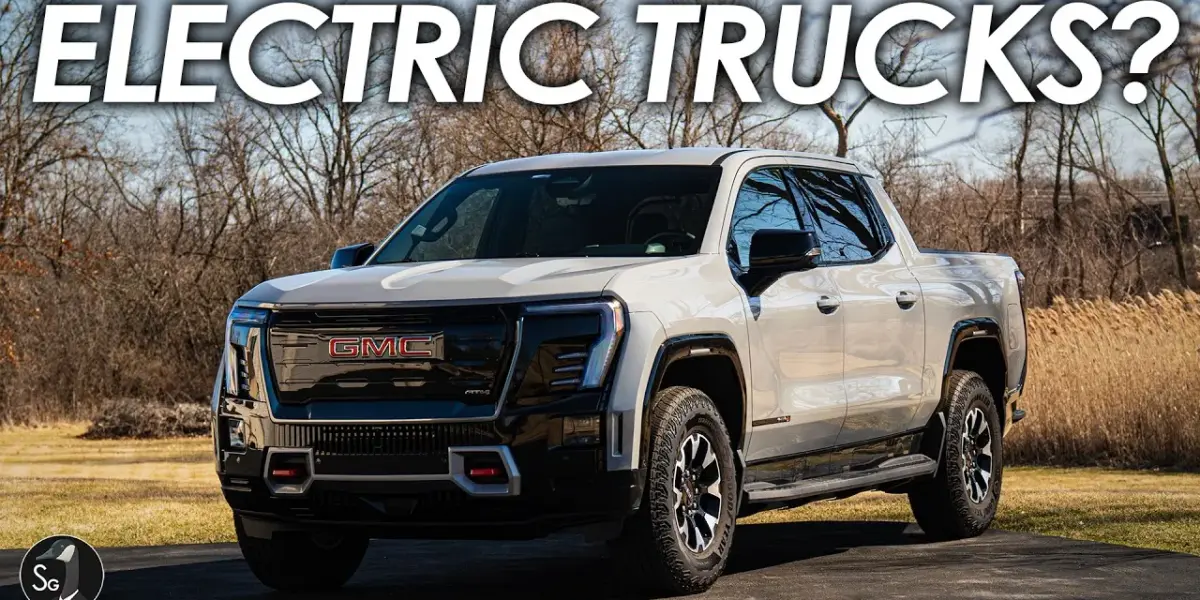
GM’s Electric Sierra EV: A Bold EV Truck for a Niche Audience
General Motors is making a significant push into the electric truck segment with offerings like the GMC Sierra EV and its sibling, the Chevrolet Silverado EV. While these vehicles represent a bold vision for the future of trucking, they are undeniably aimed at a very specific, technologically inclined buyer.
With pricing that can range from a substantial $65,000 to a staggering $100,000, these electric titans are not for the faint of heart or the budget-conscious. However, GM is sweetening the deal with substantial rebates, Costco incentives, and even 0% interest financing and attractive lease options on the Silverado EV, making it crucial for potential buyers to research current offers to significantly reduce the acquisition cost.
The used market also presents an appealing entry point. Much like other EVs, these trucks depreciate within their first year, with well-equipped models often available for around $65,000 to $70,000. This makes the prospect of owning a cutting-edge electric truck far more attainable for a wider, albeit still niche, group of enthusiasts.
Who is the Sierra EV For?
The target demographic for the Sierra EV is the forward-thinking, tech-savvy individual – the “tech bro” as it were. This buyer is eager to leverage the unique capabilities that an electric powertrain brings to a truck platform.
At the heart of the extended-range models lies a massive 200+ kWh battery pack, a veritable powerhouse equivalent to three Nissan Leafs. This necessitates a home charging solution; relying solely on DC fast charging for such a large battery is impractical for daily use, though it serves its purpose on road trips.
A key consideration for any EV truck owner is towing. Expect to see your range cut in half when towing heavy loads.
However, the Sierra EV’s impressive maximum range of over 450 miles on a full charge mitigates this concern for many, especially for those who primarily use the truck for local commuting or work. The integrated power outlets in the bed transform the Sierra EV into a mobile generator, capable of powering heavy-duty tools on a job site, providing power at a campsite, or even serving as a backup generator for a home during an outage.
The “camp mode” feature is another standout. It allows the climate control system to run quietly all night, providing a comfortable living space without disturbing the peace, turning the truck into a “camper royale.” This versatility, coupled with the quiet operation and advanced technology, appeals to an adventurous and modern user.
Performance and Drivability: A Tale of Two Worlds
On the road, the Sierra EV offers a driving experience unlike any traditional body-on-frame truck. Its platform is remarkably solid and refined, delivering a quiet and smooth ride. However, this refinement comes at the cost of significant weight, which is palpable.
The advanced electrical and mechanical systems, including the impressive rear-steering and “crab walk” functionality, aid maneuverability, effectively reducing the vehicle’s turning radius and making it surprisingly agile for its size. The “crab walk” feature, a result of the rear wheels turning at a steep angle, allows for exceptional diagonal movement, making tight parking situations and complex maneuvers significantly easier.
However, the Sierra EV is not a paragon of efficiency. Expect around 1.5 miles per kilowatt-hour, which is why the substantial battery pack is essential.
Under normal conditions, the extended-range pack should deliver approximately 300 to 350 miles, with the max pack pushing over 400 miles. Real-world range is highly variable, heavily influenced by temperature, tire choice, and driving style.
Ride quality is a mixed bag. While it handles larger, lower-frequency bumps with aplomb, it struggles with sharp, high-frequency impacts, such as small pavement imperfections. These jarring jolts are particularly noticeable in the front suspension, detracting from the overall refinement.
The steering also exhibits a peculiar vagueness, a slight “driftiness” that can make directional control feel less precise, especially in windy conditions or under acceleration. Wind noise is also more pronounced than in some other premium EVs.
Throttle calibration is smooth and predictable, making for easy driving. The brake blending, a common EV characteristic, is generally well-executed, seamlessly transitioning between regenerative and friction braking.
The unique left-paddle regen control, designed to offer near-complete braking force via regeneration, feels somewhat gimmicky and less intuitive than simply using the brake pedal. It’s an area where a second-generation product could offer significant refinement.
Interior and Technology: Innovation with Caveats
The interior of the Sierra EV is proof of modern automotive design, offering impressive refinement and ample passenger space, particularly in the rear. However, GM’s decision to omit Android Auto and Apple CarPlay connectivity in favor of its proprietary Android Automotive system with integrated Google Maps is a significant departure.
While this move allows GM to tightly control the user experience, integrate charging strategies, and facilitate over-the-air updates, it may alienate users deeply invested in their existing smartphone ecosystems. This is a deliberate choice to keep users within GM’s connected environment.
Value and Verdict: A Promising, Yet Imperfect, First Step
The GMC Sierra EV is undeniably a first-generation product, brimming with innovative technology and ambitious engineering. GM has invested heavily in this platform, bringing their best minds to bear. The result is a truck that offers unique capabilities and a glimpse into the future of electric mobility.
However, like many first-generation products, it requires refinement. Areas like ride quality over small imperfections, steering feel, and the integration of certain tech features could be significantly improved in subsequent iterations.
The substantial battery pack, while offering impressive range, also presents a potential long-term cost concern. Replacement of such a unit could range from $20,000 to $40,000, highlighting the importance of purchasing under warranty. The Sierra EV is best viewed as a technological showcase for a dedicated early adopter.
Its appeal lies in its cutting-edge features and the promise of future improvements. For those who embrace the technology and can leverage its unique capabilities, it offers an exciting, albeit expensive, proposition.
However, its long-term viability for the average truck buyer remains to be seen. It’s a vehicle that, for many, might be best experienced for a few years before transitioning to a more refined second-generation model, should GM commit to it.
Ultimately, the Sierra EV represents a bold, albeit niche, step forward for GM in the electric truck market. It’s a vehicle for those who want to be at the forefront of automotive technology, provided they have the budget and the understanding of its current limitations.
Source: GM Electric Trucks | Should They Exist (YouTube)

Related Articles

BMW M2 CS: Over $100K, But Does It Deliver Thrills?
The 2026 BMW M2 CS pushes past $100,000, offering significant performance upgrades over the standard M2. While it delivers thrilling track capabilities and a surprisingly comfortable ride, its steep price makes the regular M2 a more compelling value for most drivers.


Slate EV Truck: Review Delayed, Price Hiked
The Slate EV truck's highly anticipated review by Doug DeMuro is repeatedly being postponed, coinciding with significant price increases. This delay raises concerns about the vehicle's readiness and the manufacturer's confidence in its product amidst a competitive EV truck market.


Rivian R1T’s Shocking Speed Stuns Corvette Z06
The Rivian R1T, a powerful electric adventure truck, shockingly outpaced a Chevrolet Corvette Z06 in a drag race. With over 800 horsepower and the right settings, the R1T achieved a 10.6-second quarter-mile time, leaving the sports car behind.