Pentagon Designates Anthropic Supply Chain Risk: AI Giant Fights Back
The U.S. Department of Defense has designated AI firm Anthropic as a "supply chain risk," a move unprecedented for a U.S. company. This designation bans military use and impacts its $380 billion valuation, prompting Anthropic to sue and drawing support from major tech investors like Microsoft and Google. The military's continued reliance on Anthropic's AI for critical operations, however, highlights the complex challenges ahead.

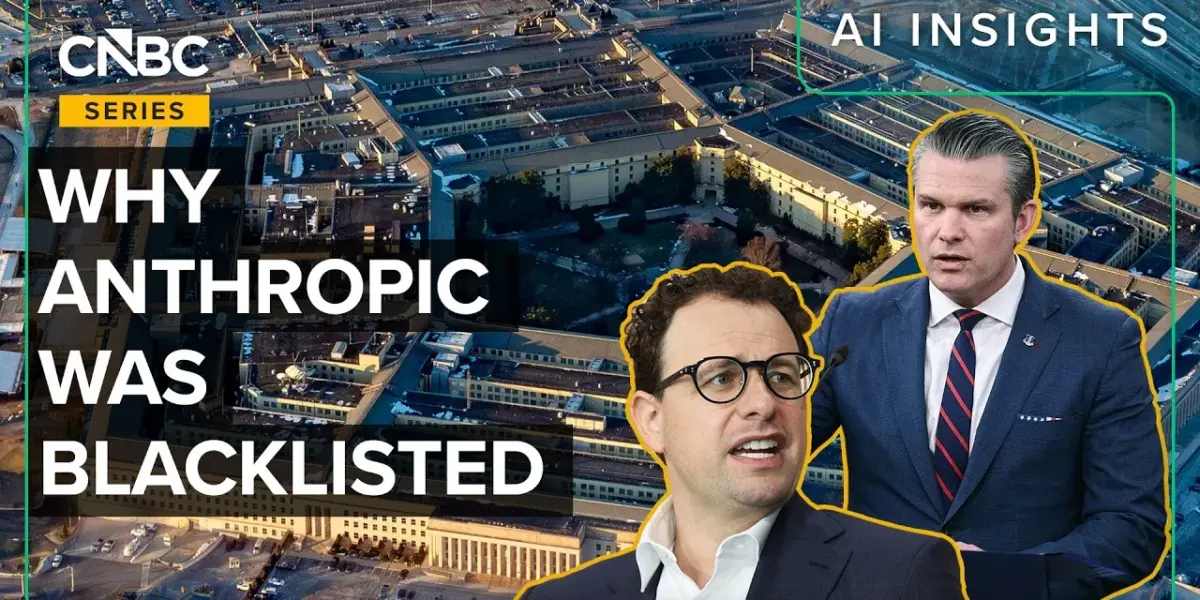
Pentagon Designates Anthropic Supply Chain Risk: AI Giant Fights Back
In an unprecedented move, the U.S. Department of Defense has officially designated artificial intelligence firm Anthropic as a “supply chain risk.” This designation, historically reserved for foreign entities posing national security threats such as Chinese and Russian companies accused of espionage like Huawei, ZTE, and Kaspersky, marks a new level of tension between an American tech company and the U.S. government.
The “supply chain risk” designation is a critical tool designed to prevent foreign companies from embedding malicious products, backdoors, or vulnerabilities into U.S. military systems. The immediate consequence for Anthropic is a ban on its models being used by the U.S. military and a requirement for defense contractors to certify that they are not utilizing Anthropic’s technology for any government-related projects.
Company Valuation and Investor Concerns
This development casts a shadow over Anthropic, a company reportedly valued at $380 billion and aiming for an initial public offering (IPO) within the next year. Investors are reportedly concerned about a potential “chilling effect” this designation could have on Anthropic’s substantial enterprise business, which operates outside the direct purview of the Department of Defense.
Anthropic CEO, in a statement, declared the company’s intention to fight the designation in court, deeming the administration’s action “not legally sound.”
Anthropic’s legal argument is expected to focus on the narrow scope of the relevant statute, asserting that it is intended to protect the U.S. government rather than penalize suppliers. The company contends that the designation should only apply to specific government contracts, not its broader commercial operations.
Legal Battles and Industry Support
Legal experts anticipate that Anthropic will likely prevail in court. The AI firm has stated it will file a lawsuit imminently, and many expect a judge to quickly grant a temporary injunction. The reasoning is that the designation is causing immediate and potentially fatal harm to Anthropic while the legal process unfolds, and the company has a strong case for being overturned.
In the interim, major tech players and investors in Anthropic have voiced support. Microsoft, a significant investor, has stated that its legal counsel determined Anthropic’s products can continue to be used by customers outside the Pentagon.
Amazon, through its AWS cloud services, has assured customers and partners that they can maintain their current usage, while assisting those with Department of Defense workloads in finding alternatives. Google has also affirmed its commitment to continuing to offer Anthropic’s AI technology to its clients, excluding defense-related work.
Rival’s Stance and Military Reliance
Even OpenAI CEO Sam Altman, a competitor to Anthropic, has publicly pushed back against the Pentagon’s designation. Altman stated that he does not believe the Pentagon should be using such measures against AI companies. He expressed trust in Anthropic as a company, acknowledging their focus on safety and their past support for U.S. Warfighters, despite their competitive landscape.
A senior Pentagon official, however, defended the decision, stating that the military cannot allow any vendor to restrict the lawful use of critical capabilities or put warfighters at risk by inserting themselves into the chain of command. This stance appears to contradict previous public statements from defense officials who have lauded Anthropic’s AI tools for their high performance and value to national security.
Contradictory Usage and Future Implications
Adding to the confusion, sources indicate that the U.S. military continues to utilize Anthropic’s AI models to support operations in Iran and previously in Venezuela. This dual narrative—Anthropic as both a security risk and a critical asset for military operations—highlights the complex and evolving role of AI in national security.
The Treasury Department has begun the process of phasing out the use of Anthropic’s Claude models, and President Trump announced a six-month timeline for the government to cease using Anthropic’s products. However, disentangling the military’s long-standing reliance on this technology is expected to be a significant challenge.
Anthropic was notably the first company to integrate its AI models into classified military networks. While initial terms of use included specific safeguards, the Pentagon sought to alter these contractual provisions.
Analysts from Piper Sandler noted in a recent report that Anthropic is deeply integrated within the military and intelligence communities. They emphasized that while replacing AI functions with new vendors is feasible, Anthropic’s pioneering role in operationalizing AI models for sensitive data environments means that onboarding and negotiating replacements will consume considerable time and resources that could otherwise fuel growth.
Personal Tensions and Path Forward
The dispute has also become personal, with administration officials reportedly referring to Anthropic CEO Dario Amodei as a “liar” with a “God complex.” In a leaked internal memo, Amodei reportedly criticized OpenAI’s Sam Altman for what he described as “dictator-style praise” of President Trump, though Amodei later issued an apology for his remarks. Despite these tensions, reports suggest that Anthropic and the Pentagon are actively seeking a resolution, with significant stakes for both parties involved.
Source: How Anthropic Became The First U.S. Company To Be Designated As A Supply Chain Risk (YouTube)

Related Articles


OpenAI Unveils ChatGPT Images 2.0 with Advanced Intelligence
OpenAI has launched ChatGPT Images 2.0, a major upgrade to its AI image generator. The new version features 'thinking mode' for complex prompts, improved photorealism, and enhanced text rendering in multiple languages. It's available now to all users.


Ex-MI6 Chief Slams “Scapegoat” Tactics in Mandelson Vetting Scandal
Former MI6 chief Sir Richard Dearlove has criticized the handling of Peter Mandelson's vetting process, suggesting Sir Oliver Robbins was made a scapegoat. Dearlove argued that national security concerns should have prevented the appointment, and Robbins should have refused to compromise.


Memo Reveals Secret Push for UFO Czar in Trump White House
A leaked memo from Luis Elizondo to President Trump reveals a proposal for a White House 'UFO Czar' to manage emerging technologies and UAP. The document highlights concerns over drones and the need for better government coordination. Despite bureaucratic hurdles, some within the government are reportedly taking these issues seriously.