Palantir’s Manifesto: Tech Giant Redefines Warfare and Global Power
Data analytics firm Palantir has released a manifesto calling for mandatory national service and arguing that AI will redefine warfare. The company's bold stance on technology, global order, and cultural values is sparking debate worldwide. Palantir's views suggest a future where software and AI are the new hard power, prompting discussions on the ethics and inevitability of autonomous weapons.

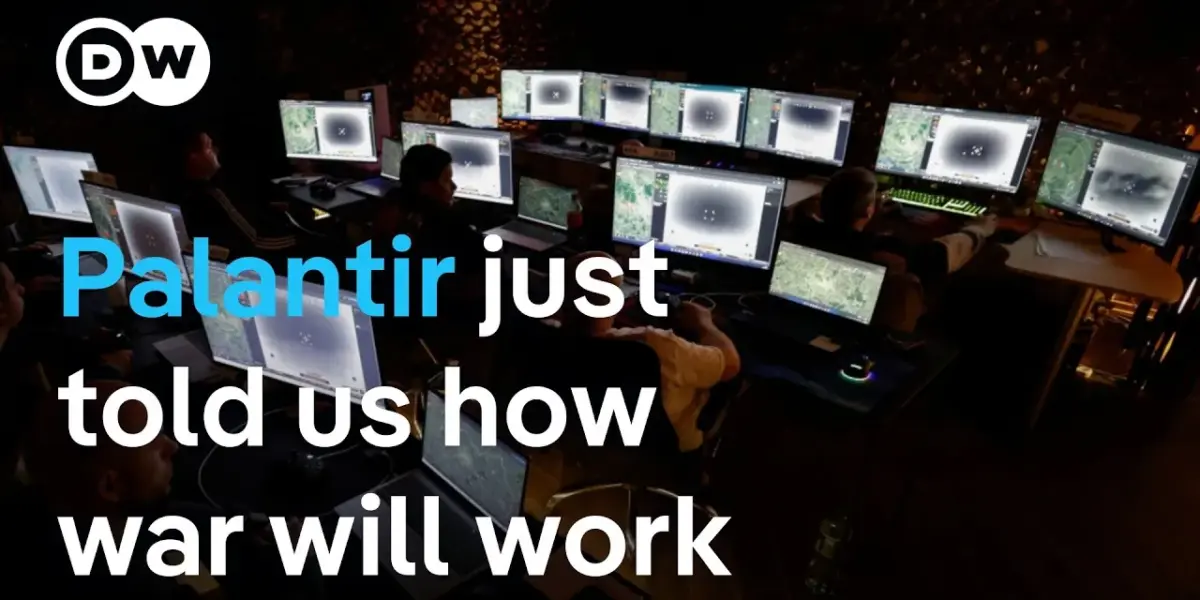
Palantir Issues Bold Manifesto on Future of Warfare
US data analytics company Palantir has released a striking 22-point manifesto on the social platform X, detailing its views on military service, global order, and the future of war. The Silicon Valley firm, known for its software used by governments and militaries to analyze vast amounts of data, presented a vision that includes mandatory national service and a reassessment of Germany and Japan’s post-World War II roles. The manifesto argues that the era of atomic power has ended, replaced by an age where software and artificial intelligence (AI) will define national strength.
The document heavily draws from an upcoming book by co-founder Alex Karp. Palantir presents AI-driven warfare as an unavoidable future, posing the critical question of who will develop these technologies and for what purposes. This stance comes from a company deeply involved in supporting high-stakes decision-making for defense and law enforcement agencies worldwide.
Palantir’s Role in Data and Decision-Making
Lucas Alenik, a senior research fellow at King’s College London, explained the nature of Palantir’s work. He clarified that the company is far from a simple data analytics firm; it is a technology-first organization that supports critical decision-making. This support can extend to battlefield activities like surveillance and targeting, as well as law enforcement actions.
Palantir’s software excels at transforming raw data into actionable insights. It connects disparate data points and can even assist in real-time decision processes. This capability makes the company a vital partner for governments and militaries seeking to understand and act upon complex information in critical situations.
AI Warfare: An Inevitable Future?
The manifesto’s assertion that AI weapons are a matter of ‘when, not if’ highlights a pressing global concern. Alenik noted that the discussion around lethal autonomous weapon systems has intensified due to AI’s rapidly advancing capabilities. Palantir’s argument is that nations must engage in this technological race rather than risk falling behind.
This perspective arises as other nations are actively developing AI for military use. The company believes that attempts to halt such development are futile. Humanity, according to Palantir, must accept that these changes are coming and focus on who controls this powerful technology.
Ethical Questions in AI-Driven Conflict
The rapid development of AI in warfare brings significant ethical challenges. A key question is the extent of autonomy that should be granted to machines in making life-or-death decisions. International humanitarian law, such as the Geneva Conventions, requires adherence to principles like proportionality and humanity, which can be difficult to ensure with autonomous systems.
Assessing the effects of force and ensuring no excessive power is used becomes increasingly complex on fast-moving, AI-influenced battlefields. The ability of human operators to intervene or make nuanced judgments in such environments is a major concern, raising questions about accountability and the very nature of warfare.
Controversial Views on Culture and National Service
Point 21 of the manifesto, suggesting that not all cultures are equal and that some are dysfunctional or regressive, has sparked significant debate. This viewpoint challenges the prevailing ideas of multiculturalism and cultural relativism, particularly in Europe. It directly confronts the notion that all cultures hold equal value and deserve equal criticism.
This stance is unusual for a technology company and appears to align with a particular political direction within the United States. It touches upon ongoing domestic debates about national identity and the principles that should bind a society together, potentially aiming to curry favor with certain political factions.
National Service and Shifting Global Alliances
Palantir also advocates for a return to universal national service, arguing that all citizens should share in the risks and costs of war. This proposal is particularly relevant in Europe, especially following Russia’s invasion of Ukraine, which has renewed discussions about military readiness and conscription.
While some debate the merits of conscription, models like Switzerland’s universal military draft and systems in Sweden and Finland demonstrate that various forms of national service can function effectively. In the current European geopolitical climate, such discussions are less controversial than they might have been in the past, reflecting a growing awareness of security challenges.
Looking Ahead: The Shifting Sands of Power
Palantir’s manifesto signals a significant moment where a major technology company is not just providing tools but actively shaping the discourse on global security and national strategy. The company’s bold statements on AI, international relations, and societal structure suggest a future where the lines between technology, policy, and power will continue to blur.
As nations grapple with the implications of AI in warfare and evolving geopolitical landscapes, Palantir’s vision offers a provocative glimpse into potential future directions. The global community will be watching closely to see how these ideas influence policy and technological development in the coming years, especially as debates around national service and cultural values intensify across the West.
Source: Palantir’s manifesto: How tech is trying to redefine war and power (YouTube)

Related Articles
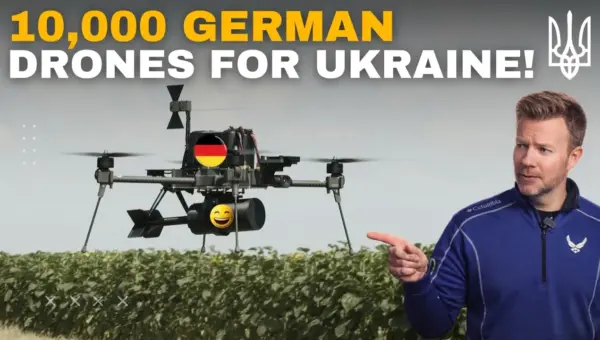
Ukraine, Germany Launch Drone Mass Production
Ukraine and Germany have launched Quantum Frontline Industries (QFI) to mass-produce the Linsa tactical drone, aiming for over 10,000 units annually. This initiative shifts Ukraine's war effort towards industrial-scale drone warfare, creating a more stable supply chain independent of foreign aid.
Russia Mimics Ukraine’s Drone Tactics, Falls Short
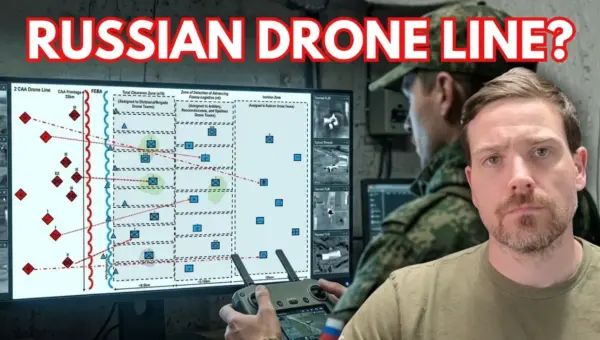
Russia has attempted to replicate Ukraine's successful drone warfare tactics by creating its own "drone wall." However, analysis suggests these efforts have fallen short, with Ukraine maintaining a technological and tactical edge. The conflict highlights the rapid evolution of drone warfare and the ongoing race for innovation.

Ukraine Deploys Robot Ground Force to Capture Position
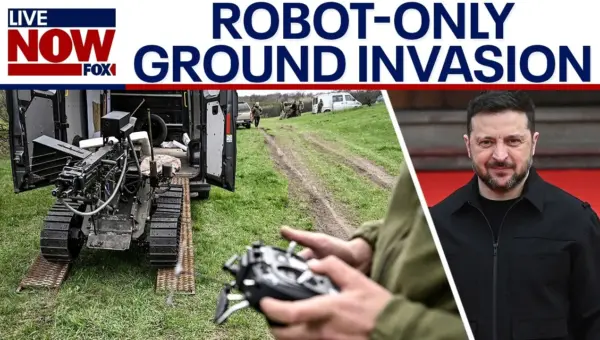
Ukraine has successfully captured a Russian position using an exclusively unmanned ground force, marking a first in the war. President Zelensky highlighted the operation, where ground robots and drones took the position without any Ukrainian casualties. This technological advancement signals a potential shift in battlefield dynamics.