Furby’s Flawed Future: A Toy’s Bold, Botched Ambitions
Furby's creator deliberately avoided making it a robot dog or cat, fearing it would be a lesser imitation of real pets. This decision, while admirable, highlights the challenges of replicating familiar experiences with technology, a lesson echoed by early robotic pets like Sony's AIBO.

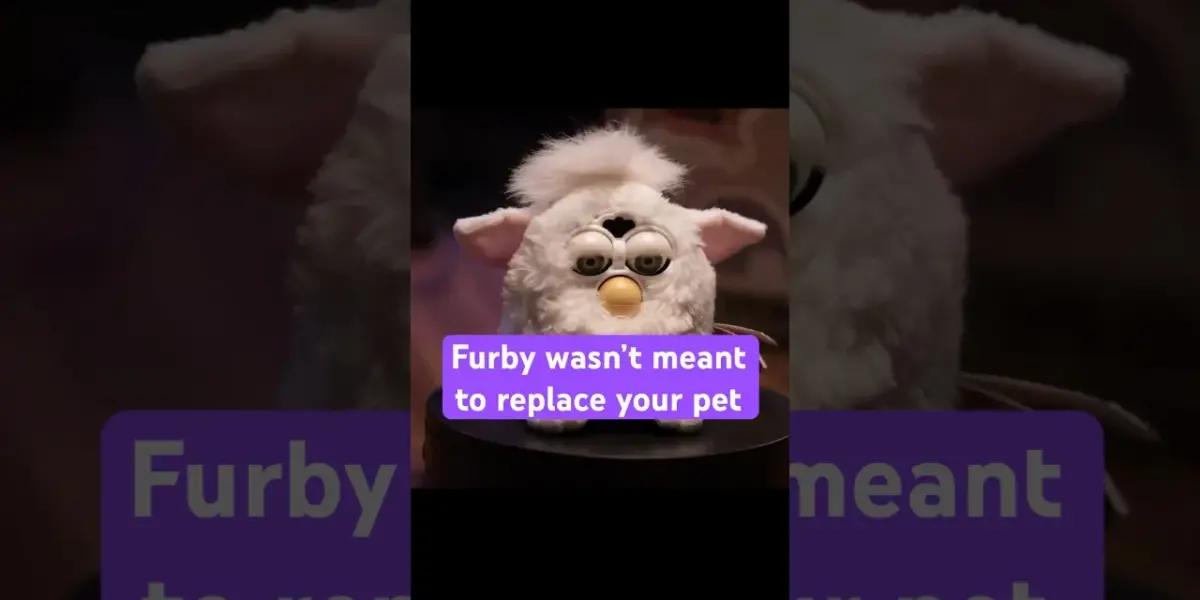
Furby’s Bold Ambitions Fell Flat, But Why?
In the ever-evolving landscape of electronic toys, few have sparked as much debate and fascination as Furby. While the iconic robotic creature captured imaginations in the late 90s, its underlying design philosophy, as revealed in a recent deep dive, highlights a fascinating cautionary tale of ambition versus execution.
The core of the discussion revolves around Furby’s creator, Dave, and his deliberate decision *not* to model the toy after popular pets like cats or dogs. This wasn’t a matter of technical limitation, but a conscious ethical stance, a desire to avoid competing with the genuine companionship offered by real animals.
An Admirable Stance, But a Missed Opportunity?
Dave’s reasoning was refreshingly altruistic: “There are dogs and cats in shelters and I want you to have one of them, not my robot toy.” This sentiment, while admirable, stands in stark contrast to the direction taken by competitors. Just a year later, Sony entered the market with AIBO, the robotic dog, suggesting a different consumer desire – a technological approximation of a beloved pet. Dave’s perspective was that creating a robot dog or cat was inherently flawed.
Why? Because everyone understands what a real dog or cat *should* be like. A robot attempting to replicate that would inevitably fall short, offering a “lesser version of an experience they understood.” This, he believed, would lead to disappointment.
The IBO Parallel: A Lesson in Expectation
This brings us to the much-discussed Sony AIBO. The transcript highlights AIBO as a prime example of Dave’s concern. The robot *wanted* to be a dog, it aspired to that role, but it ultimately “wasn’t and it just didn’t quite hit the same way.” The expectation was there, the desire to replicate a familiar, cherished companion, but the reality of the technology at the time meant it couldn’t deliver.
It was a technically impressive feat, but it couldn’t replace the emotional connection and intuitive behaviors of a real pet. This is precisely the trap Dave sought to avoid with Furby.
Furby: An Unidentified, But Uniquely Itself
Instead of chasing the familiar, Furby embraced its own unique identity. “Whatever the hell Furby is, it is.” This statement highlights the toy’s departure from established archetypes. It wasn’t trying to be a pet; it was trying to be Furby.
This allowed it to carve out its own niche, free from the direct comparison that would have doomed a robotic dog or cat. Its appeal lay in its novelty, its peculiar language (Furbish), its blinking eyes, and its surprisingly interactive nature for its time. It was alien, it was quirky, and that was its strength.
The Legacy of a Flawed Genius
While Furby’s design choice to avoid direct pet replication might seem like a missed opportunity in hindsight, especially with the advancements in robotics since, it was arguably the right move for its era. The technology simply wasn’t there to convincingly replicate a dog or cat without feeling like a pale imitation. By creating something entirely new, Furby sidestepped direct criticism and instead generated wonder and curiosity.
It became a cultural phenomenon not because it was a perfect robot dog, but because it was a perfectly *Furby* – a unique entity that defied easy categorization. The lesson learned from Furby and its contemporaries is that sometimes, forging your own path, even if it seems unconventional, is more successful than trying to perfectly replicate the known.
Who Should Care?
Fans of retro technology, toy collectors, and anyone interested in the history of artificial intelligence and robotics in consumer products will find this discussion particularly engaging. It offers a fascinating glimpse into the design philosophies and ethical considerations that shaped early interactive toys, providing context for the robots and AI companions we see today. It’s a story about innovation, intention, and the enduring power of a truly original idea.
Source: Our latest episode of Version History on Furby is available on @VersionHistoryPodcast (YouTube)

Related Articles


Market Sees Historic Rally: Experts Advise Staying Invested
The stock market is experiencing a historic rally with significant returns, leading experts to advise investors to stay invested. Key sectors like AI infrastructure, semiconductors, industrials, and healthcare are showing strong growth potential. Investors should focus on companies with high demand and strategic market positioning.

OpenAI Hints at GPT-5.5’s Smarter, Faster AI Future
OpenAI's upcoming AI model, possibly GPT-5.5 "Spud," is set to offer significant improvements in understanding, speed, and problem-solving after a two-year development cycle. Early previews suggest enhanced capabilities in coding, reasoning, and native multimodality, aiming to make AI a more autonomous digital worker.


Iran’s AI-Powered ‘Slopaganda’ War Targets Americans Online
Iran is employing advanced AI to create and spread 'slopaganda,' using internet culture to influence American views on global conflicts. This digital strategy bypasses traditional media, reaching younger audiences directly through memes and fake videos. Experts warn that this approach exploits information gaps and highlights a need for better U.S. online communication strategies.