US War with Iran: Families Mourn, School Strike Sparks Outrage
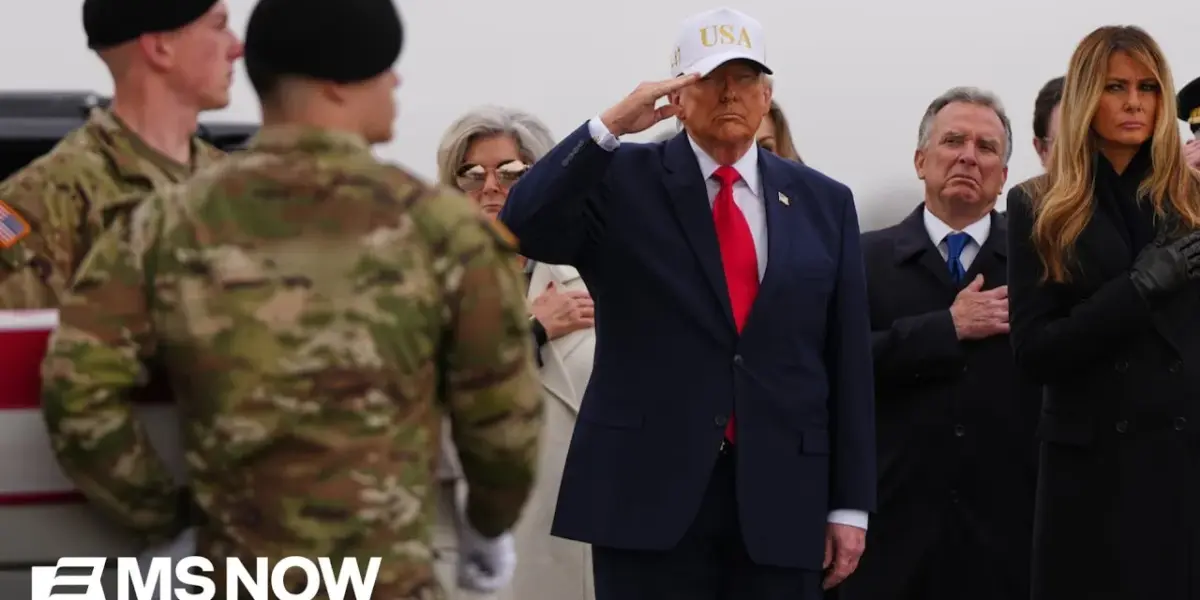
President Trump attended a ceremony for fallen U.S. soldiers amidst the escalating war with Iran. Meanwhile, a strike on an Iranian elementary school killing over 175 people, many children, has sparked outrage and conflicting reports regarding responsibility, with U.S. military investigations suggesting American forces may be involved.

US War with Iran: Families Mourn, School Strike Sparks Outrage
President Trump attended a dignified transfer of remains ceremony for six American soldiers killed in the opening days of the conflict with Iran, a war that has already exacted a heavy human toll on civilians in the region. The ceremony underscored the stark reality of the escalating conflict, even as disturbing questions emerge about a strike on an elementary school in southern Iran that claimed the lives of at least 175 people, many of them children.
US President Addresses School Strike Amidst War
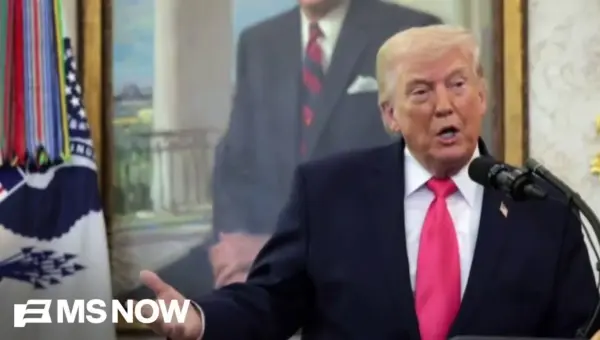
During a flight on Air Force One, President Trump was questioned about the elementary school strike. “Did the United States bomb a girls’ elementary school in southern Iran on the first day of the war and kill [civilians]?” he was asked.
The President responded, “No, based on what I’ve seen, that was done by Iran.” When pressed if the United States was still investigating, he stated, “Still investigating? But the only side that targets civilians is Iran.” He further elaborated, suggesting the strike was carried out by Iran due to the inaccuracy of their munitions.
“The only side that targets civilians is Iran. We think it was done by Iran because they’re very inaccurate as you know with their munitions. They have no accuracy whatsoever.”
– President Trump
However, this assertion was immediately challenged by reporting from Reuters and statements from U.S. officials who indicated that a U.S. military investigation suggested American forces might be responsible for the strike. This discrepancy highlights the fog of war and the difficulty in establishing facts amidst intense conflict.
Investigative Reporter Details Ground Reality in Iran
Nilo Tabrizi, an investigative reporter covering Iran, shared the profound challenges of reporting from the ground. “I would love to have constant communications with my loved ones, with my family, with my sources. But there has been a complete connectivity blackout.
So it’s been really difficult even just to make sure people are okay, let alone to do this type of reporting,” she explained. This lack of communication severely hampers efforts to verify events and ensure the safety of those affected.
Satellite Imagery Contradicts Official Claims
Tabrizi also presented evidence that contradicts the administration’s initial claims regarding the school bombing. “The satellite imagery is not showing that so far,” she stated.
“What we’ve seen with satellite imagery is that this complex was struck multiple times. Munitions experts I’ve spoken to said that this looks like the work of a precision guided missile, and, you know, a missile like that wouldn’t fall out of the sky in that way.” The visual evidence, according to experts, suggests a level of precision inconsistent with Iran’s alleged capabilities and more indicative of advanced weaponry.
The Human Cost of War and Morale of Service Members
Paul Reikhoff, a veterans affairs and political analyst, emphasized the profound impact of such events on the morale of U.S. Service members. “Even if they were not directly involved, if you are fighting for the United States and you’re not getting clarity about what the objective is here in this war, and you are hearing that maybe your own side bombed a school, maybe deliberately bombed a school. We don’t really know.
What does that do to the morale, to the sense of moral injury perhaps of our service members? It hurts.” He added, “Truth is the first casualty of war. And Trump is going to wage war on the truth.”
Divided Diaspora and Shifting Narratives
The conflict has also created deep divisions within the Iranian diaspora. Tabrizi described how the news of the war and the strike on the school has played out among expatriate communities.
“Even just looking at the Minab school strike, that was a place where we were seeing information wars happening in the diaspora. Some people very forcefully right out came and said that this was obviously the work of Iran, Iran targets civilians, and they said that without the information necessarily being provided.” She noted that while some welcomed the idea of toppling the Iranian regime, the killing of children and the involvement of the U.S. and Israel have created significant internal conflict and anguish.
“For so many Iranians inside the country, outside the country, they want stability and peace. And I think some people think the best way to do that is by war. And I think we’re seeing the human cost of that play out right now.”
– Nilo Tabrizi
Tabrizi shared a poignant observation from individuals within Iran: “Even people I’ve been speaking to in Iran have said to me, you know, we wanted Khamenei to go. It was very clear he had to go. He is who signed off ultimately on the death orders of the massacre that we saw just a few weeks ago.
But would we have wanted him to stand trial? Yes.
But maybe this was the only way he was going to go. And I thought that was a really poignant thing that this is, you know, even in the country, people are saying this was maybe the only way out.”
Lack of Transparency and Trust in Wartime
Reikhoff criticized the administration’s lack of transparency regarding the war and the circumstances of American casualties. “It shows that our bases in the region aren’t necessarily ready for this type of war. And the planning element wasn’t there.
But so far, they they don’t seem to be giving any information about the circumstances. I mean, that’s on brand for the Trump administration, and it’s also part of their strategy.
They haven’t been transparent about anything from Doge to ICE to now, maybe the most we need them to be transparent about is casualties of war, right? And intentions of war and evidence around war.”
The Critical Role of Journalism and On-the-Ground Reporting
Both analysts stressed the vital importance of independent journalism and on-the-ground reporting in navigating the complex information landscape of the war. “We’re in this really, really dark and deep quagmire where we can’t trust the Iranian regime, and the world can’t trust investigative journalism will be critical and boots on the ground from the Iranian perspective, the human beings on the ground reporting will be so critical to pierce through that and get us whatever truth we can. It’s a very important point,” Reikhoff concluded.
Looking Ahead
As the conflict continues, the focus remains on the escalating human cost, the pursuit of truth surrounding the school strike, and the impact on international relations and domestic morale. The coming days will be critical in determining the veracity of claims made by all parties involved and in understanding the long-term consequences of this devastating war.
Source: ‘The human cost of war’ (YouTube)

Related Articles
Trump Struggles to End Iran War Amid Shifting Tactics
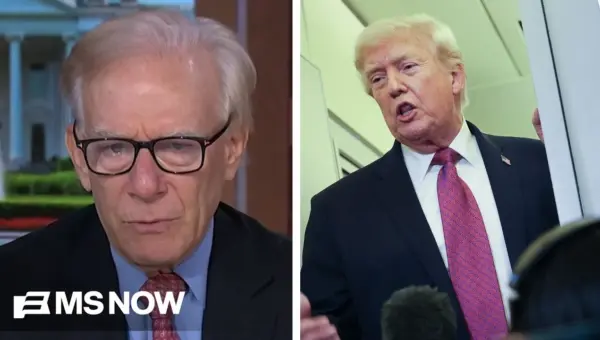
Tensions between the U.S. and Iran escalate as a fragile ceasefire comes under pressure, marked by accusations of violations and the seizure of an Iranian cargo ship. President Trump faces challenges in ending the conflict, with public opinion leaning against U.S. involvement and Iran reportedly feeling emboldened.
Poll: Trump Approval Drops Amid Iran War Concerns
New polling indicates President Trump's approval rating has fallen to 37 percent as a significant majority of Americans disapprove of his handling of the war in Iran. The economy remains the top concern for voters, though confusion persists regarding the rationale behind the conflict with Iran. This lack of public support contrasts with historical doctrines for engaging in military action.


Trump’s Grip Weakens Amidst Economic Woes and Global Tensions
Reportedly, Donald Trump's support is waning due to the war in Iran and the rising cost of living. Congressional candidate Saikat Chakrabarti discussed these issues and the role of progressive Democrats in the upcoming midterms. Voters are increasingly concerned about their financial stability and global security.