US Mideast War Fuels Putin’s European Energy Chokehold
A US-led conflict in the Middle East has closed the Strait of Hormuz, creating an energy crisis that empowers Vladimir Putin to put Europe in a chokehold. Despite claims of decoupling, Europe's continued reliance on Russian LNG, coupled with limited alternatives, leaves it vulnerable to escalating prices and potential de-industrialization.

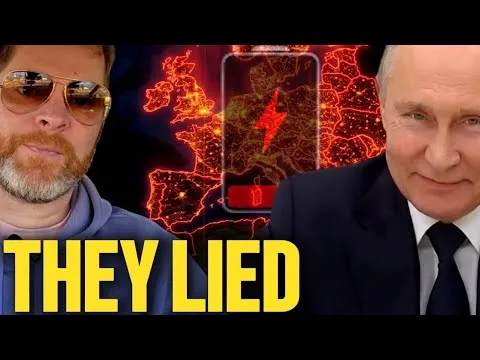
US Mideast War Fuels Putin’s European Energy Chokehold
The global economic and geopolitical landscape has undergone a fundamental shift following the United States’ initiation of a new conflict in Iran. The resulting closure of the Strait of Hormuz has sent ripples across the world, impacting nearly every nation. While NATO allies have strived to insulate themselves from the fallout, this disruption has inadvertently created a strategic opening for Vladimir Putin to exert significant pressure on Europe, effectively placing the continent in an energy “chokehold.” This analysis digs into the intricate web of energy dependencies, political maneuvering, and economic consequences stemming from this complex situation.
A Shifting Energy Landscape
In the wake of the conflict in Iran and the subsequent closure of the Strait of Hormuz, global energy markets have been thrown into disarray. European nations, in particular, have found themselves in a precarious position. Despite public pronouncements of decoupling from Russian energy, the reality on the ground is far more nuanced and, according to some analyses, deeply concerning.
The narrative presented to the European public often suggests a complete severance of ties with Russian energy. However, the transcript highlights a critical detail: while direct pipeline flows may have been curtailed, Europe has quietly increased its reliance on seaborne liquefied natural gas (LNG) from Russia.
This subtle shift means that, while physical pipelines may be disconnected, the energy grid remains indirectly linked to Russian supply. Astonishingly, during a recent tracking period, the European Union reportedly paid more for Russian LNG than it had contributed to supporting Ukraine’s war effort.
European Dependence: A Closer Look
While some European countries have made significant strides in reducing their reliance on Russian energy, a substantial portion of the continent remains heavily dependent. The transcript points to specific examples:
- France: Despite efforts to diversify, France has become a top importer of Russian fuel, increasing its LNG imports from Russia by 18% month-on-month as winter months began.
- Spain: Spain has seen an even more dramatic rise, increasing its intake of Russian LNG by 27%.
- Belgium: Belgium is a crucial transshipment hub, further complicating the picture of energy independence.
- Slovakia and Hungary: These nations remain almost entirely reliant on Russia for their fuel, with 95% of their energy still sourced from Russian supplies.
Given the interconnected nature of the EU’s economy, any strain on one member state’s energy supply inevitably affects the entire bloc. When countries like France increase their LNG purchases to maintain their power grids, the effects are felt across Europe, including in cities like Berlin.
The Hormuz Factor and Limited Alternatives
The closure of the Strait of Hormuz, a critical chokepoint for global oil and gas shipments, has severely limited Europe’s options for alternative energy sources. The transcript outlines the challenges:
- Scandinavia: While Norway is often cited as a potential alternative, its pipelines are already operating at maximum capacity, leaving little room for increased supply.
- Middle East: Traditional suppliers like Qatar and Saudi Arabia are inaccessible due to the Hormuz closure.
- Nigeria: Insufficient infrastructure makes it impossible for Nigeria to compensate for lost Russian supply.
- United States: US ports are reportedly at full capacity, with no additional LNG available for export to Europe in the short term.
- Canada: Canada lacks the necessary infrastructure, such as ports and pipelines, to directly ship energy to Europe. Existing infrastructure primarily serves Pacific markets, and while projects are underway, short-term solutions are unavailable.
This confluence of factors creates what the transcript describes as Putin’s “opportunity” to place Europe in a strategic chokehold, a situation exacerbated by US and Israeli actions in the Middle East.
The Dire Implications for Europe
The prospect of reduced Russian energy supplies, even by a conservative estimate of 30%, paints a grim picture for Europe. The continent’s ability to heat homes and power industries is directly threatened. The transcript emphasizes that geographical fiction and political promises cannot substitute for tangible energy resources.
In a worst-case scenario, if the Strait of Hormuz remains closed and Russia curtails its energy exports, Europe could face an unprecedented energy crisis. The available alternatives are insufficient to bridge the gap, forcing European nations into a bidding war for scarce resources on the spot market. This would inevitably lead to:
- Soaring Fuel Costs: Energy prices would skyrocket, disproportionately affecting the working and middle classes.
- Global Energy Inequality: Wealthier European nations outbidding poorer countries for energy supplies could lead to rolling blackouts and severe shortages in nations like India, Pakistan, and Bangladesh.
- De-industrialization: The slowdown in manufacturing and industry due to energy shortages could lead to widespread job losses and economic distress. Sectors like fertilizer production, glass manufacturing, and chemical refining might be forced to power down. This could result in a temporary de-industrialization of parts of Europe.
- Inflation and Devaluation: To secure alternative energy supplies and subsidize soaring costs, EU nations might resort to printing more money, leading to inflation and a devaluation of the Euro, mirroring economic challenges faced elsewhere.
An Economic World War
The situation underscores a broader trend: the interconnected global market creates vulnerabilities that aggressive actors can exploit. Russia, with established buyers in Asia and South America and benefiting from global fuel shortages, stands to gain financially from this crisis, while Europe faces instability. The transcript frames this not just as an energy crisis, but as a form of “economic world war,” where trade and economic policies can be as damaging as conventional warfare.
The United States’ involvement in Middle Eastern conflicts, without fully accounting for the consequences for its allies or the opportunities it creates for geopolitical rivals like Russia and China, is seen as a critical factor. The current global energy system is operating at maximum capacity, with little surplus. Any disruption, therefore, has immediate and severe repercussions.
Why This Matters
This analysis is crucial because it highlights the complex interplay between geopolitical conflict, energy security, and economic stability. The events described demonstrate how decisions made in one part of the world can have profound and destabilizing effects globally.
For Europe, the immediate future hinges on the resolution of the conflict in Iran and the reopening of key shipping routes, as well as Russia’s strategic decisions regarding its energy exports. The potential for widespread economic hardship, social unrest, and a significant geopolitical realignment makes this a critical juncture.
The Future Outlook
The current trajectory suggests a period of intense economic pressure for Europe. The reliance on seaborne LNG, while a temporary solution, carries significant costs and risks.
The long-term outlook depends on Europe’s ability to accelerate its transition to renewable energy sources, diversify its energy suppliers beyond traditional Russian and Middle Eastern routes, and strengthen its own energy infrastructure. However, in the short to medium term, the continent remains vulnerable to external pressures, particularly from actors like Russia who can leverage energy as a geopolitical weapon.
The situation is a clear reminder of the fragility of global supply chains and the need for strategic foresight in international relations. The decisions made today by global powers, particularly the United States in its foreign policy and conflict engagement, will continue to shape the economic and political landscape for years to come.
Source: Putin's Chokehold: America's New War Just Bankrupted the European Union (YouTube)

Related Articles

Trump’s Iran Diplomacy Falters as Vance Faces Setbacks
Vice President JD Vance's planned trip to Pakistan for Iran negotiations has been postponed amid confusion and conflicting reports. This setback highlights challenges in the Trump administration's foreign policy and internal political dynamics.

Russia’s Belarus Buildup: A Feint to Distract or Real Threat?
Satellite imagery reveals Belarus building military infrastructure near the Ukrainian border, sparking fears of a new Russian invasion. Analysts debate if this is a genuine threat to Kyiv or a calculated feint designed to pressure Ukraine and divert resources. Russia has a history of using such tactics to gain strategic advantages without direct conflict.


Internet Blackout Tanks Putin’s Approval Ratings
New approval ratings show a significant drop for Vladimir Putin, tied to widespread internet disruptions in Russia. The data indicates public frustration over loss of online access is greater than concerns about the war in Ukraine. This digital blackout presents a unique challenge to the Kremlin.