China Surges in Space Race, Challenging US Dominance
China's rapid advancements in space, including lunar sample returns and its own space station, are challenging U.S. dominance. With significant investment and strategic planning, China is closing the gap, prompting calls for increased U.S. focus on its commercial space sector to maintain leadership.

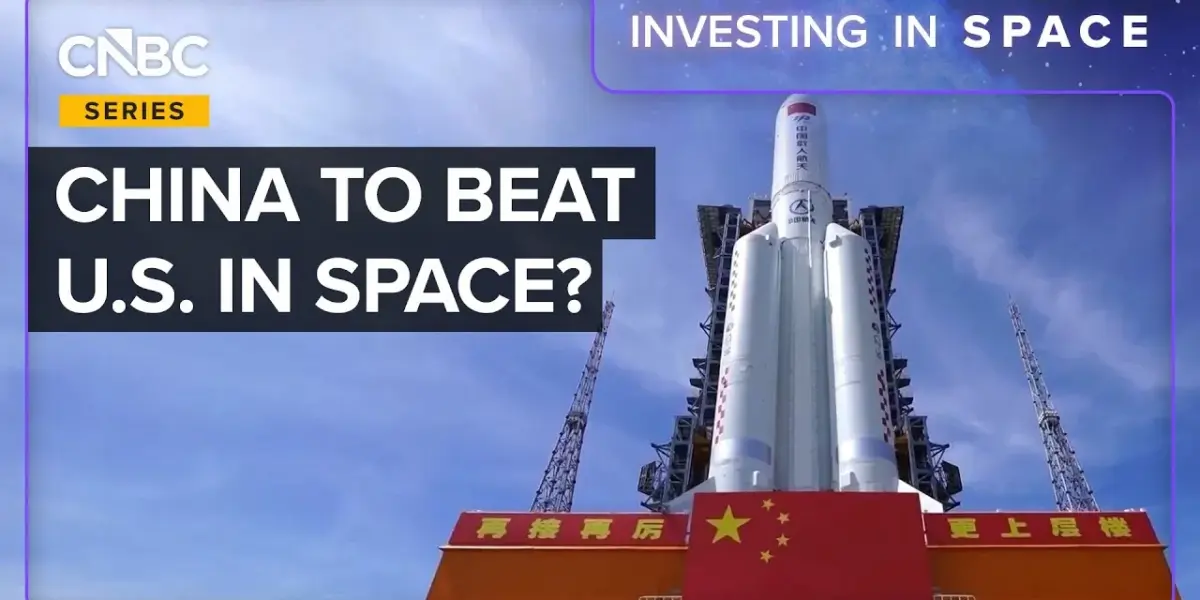
China’s Ambitious Space Program Challenges U.S. leadership
In a dramatic escalation of its space ambitions, China has achieved a series of groundbreaking milestones, including landing a rover on Mars, completing its own low Earth orbit space station, and successfully retrieving samples from the far side of the Moon. These achievements, coupled with a stated national goal to leverage space and artificial intelligence for global leadership, are prompting warnings from U.S. Experts and lawmakers that the United States risks ceding its long-held dominance in space if it fails to act decisively.
A New Era of Competition
The narrative emerging from the space sector is clear: a new space race is underway, with stakes described as “higher than ever.” While the United States retains its position as the global leader in space capabilities, boasting the strongest commercial space industry and launch infrastructure, China’s rapid advancement since 2014 is undeniable. This acceleration is largely attributed to a pivotal regulatory shift, colloquially known as Document 60, which opened China’s space ecosystem to significant private investment and ownership.
This policy change has fueled a dramatic surge in investment. Chinese commercial space sector funding, a mix of private and government sources, reportedly jumped from $340 million in 2015 to an estimated $3.81 billion by 2025.
Over the past decade, China’s total expenditure on civil, military, and commercial space initiatives is estimated to exceed $104 billion. While U.S. Spending in the equivalent period has been substantially higher, China’s consistent increase in its space budget signals a determined progression toward its objective of becoming the preeminent power in space science.
China’s Expanding Space Infrastructure
China’s space sector operates through a robust network supported by local governments, universities, state-owned enterprises, and private companies. This collaborative model has led to the establishment of numerous space activity hubs across the country, integrating rocket and satellite manufacturing, launch sites, and research institutions.
Tiangong: A Symbol of Independence
A key achievement is the Tiangong space station, meaning “Heavenly Palace,” which was launched in 2021. Tiangong has continuously hosted rotating crews and scientific experiments.
The development of its own low Earth orbit station was spurred by China’s exclusion from the International Space Station (ISS) in 2011, following a U.S. Congressional act citing security concerns. This situation raises the prospect that as the ISS is decommissioned, potentially in 2030, China could be the sole nation with human presence in orbit, unless U.S. Commercial replacements are operational.
The U.S. is seeking to extend the ISS’s operational life to 2032, with a NASA authorization bill recently approved by a Senate committee, pending full congressional approval. NASA is also actively backing several commercial projects, including Axiom Space’s Axiom Station, Orbital Reef (led by Blue Origin), and Starlab (led by Voyager Technologies), intended to ensure continuity in human spaceflight capabilities.
Lunar and Martian Ambitions
Beyond low Earth orbit, China has set ambitious goals for lunar and Martian exploration. The nation aims to land astronauts on the Moon by 2030 and plans to return samples from Mars by 2031, with the associated launch vehicle scheduled for 2028.
In contrast, the U.S. Artemis program, targeting a lunar landing, is slated for 2028 but has encountered delays. To accelerate its progress, the U.S. is increasing its launch cadence and incorporating test missions for lunar landers in low Earth orbit prior to the 2028 landing attempts.
China’s methodical approach to achieving its space milestones, often meeting its self-imposed timelines, is a significant concern for U.S. Strategists, particularly as U.S. Programs face delays. To support its lunar aspirations, China is heavily investing in rocket development, with over a dozen private manufacturers working on advanced systems. Notable among these are a reusable rocket equivalent to SpaceX’s Falcon 9, the Long March-10 for lunar missions, and the Long March-9, a super heavy-lift vehicle intended to rival SpaceX’s Starship.
Global Reach and Competition
China is also expanding its satellite infrastructure, notably completing its Beidou global navigation satellite system in 2020, directly competing with the U.S. GPS. Thousands of internet satellites are under development, poised to challenge SpaceX’s Starlink constellation.
This expansion extends beyond technological prowess, integrating into China’s Belt and Road Initiative as a tool for expanding economic influence and reach. China is not only exporting satellite technology but also building ground stations and comprehensive facilities in countries like Egypt and Pakistan, integrating them into its sphere through standards and services offered by Beidou.
Diplomatic and Military Implications
In the diplomatic arena, China and Russia are collaborating on the International Lunar Research Station, which currently includes 13 member states, standing in contrast to the U.S.-led Artemis Accords with 56 signatories, excluding China and Russia. The strategic importance of space extends to national defense and economic stability.
Satellite-derived data is crucial for industries ranging from finance to agriculture, while also providing essential military capabilities such as communications, navigation, and missile warning systems. The U.S. Space Force, though a small portion of the defense budget, provides critical capabilities.
The use of commercial satellite systems like Starlink in conflicts, such as in Ukraine, highlights their indispensable role in modern warfare for communication and drone operations. However, this reliance also presents vulnerabilities. Potential adversaries are observing these developments, enhancing their own intelligence, surveillance, reconnaissance (ISR), and satellite communication capabilities to counter U.S. forces at greater distances.
Market Impact and Investor Considerations
The intensifying space race presents both opportunities and challenges for investors. The sector is characterized by rapid technological advancement, significant government investment, and burgeoning commercial activity.
Key Areas for Investors
- Launch Services: Companies developing and operating launch vehicles, particularly those focusing on reusability and increased launch cadence, are critical.
- Satellite Technology: Investment in satellite manufacturing, constellation deployment (navigation, internet, Earth observation), and associated software and data services is crucial.
- Space Infrastructure: The development of space stations, lunar bases, and deep space exploration technologies represents long-term growth potential.
- Commercialization of Space: As governments increasingly rely on commercial capabilities, companies providing services like in-orbit servicing, space debris removal, and resource utilization will become more important.
Strategic Imperatives for the U.S.
To maintain its edge, experts suggest the U.S. Needs to invest in spaceports, streamline commercial launch licensing, and allocate sufficient radio spectrum for satellite operations. A long-term commitment to NASA’s budget, allowing it to procure commercial capabilities rather than solely focusing on in-house development, is also deemed essential. Ultimately, the nation that fosters the strongest commercial space industrial base is likely to lead in this new era of space competition.
The current space race is less about symbolic achievements and more about building a robust, sustainable commercial space economy. The nation that excels in this industrial capacity will define the future of space exploration and utilization.
Source: China Is Creeping On U.S. Space Dominance. Can The U.S. Stay Ahead? (YouTube)

Related Articles


Moon Missions Race for Resources, Not Just Science
Humanity's return to the Moon is driven by a new space race focused on political competition and the potential for valuable resource extraction, rather than solely scientific discovery. Programs like NASA's Artemis highlight this shift, preparing for long-term lunar bases and future Mars missions by studying human health in space.


New Moon Age Dawns: Artemis II Fuels Future Space Race
Artemis II's successful return marks humanity's farthest journey from Earth in over 50 years, reigniting lunar exploration. The mission highlights engineering triumphs and sets the stage for future Moon bases, resource utilization, and a new era of space competition.


Artemis II Splashdown Signals US Space Race Dominance
The Artemis II mission's precise splashdown highlights NASA's space exploration leadership and the U.S. commitment to returning to the Moon. This success reinforces America's position in a renewed global space race.