Lavrov Links Ukraine War to Middle East Conflict
Russian Foreign Minister Sergey Lavrov has linked the Ukraine war to Middle East tensions, criticizing U.S. involvement. Meanwhile, northern European nations are preparing evacuation plans amidst escalating global conflicts. In a separate development, Ukraine is set to assist the U.S. in countering Iranian drones in the Middle East.

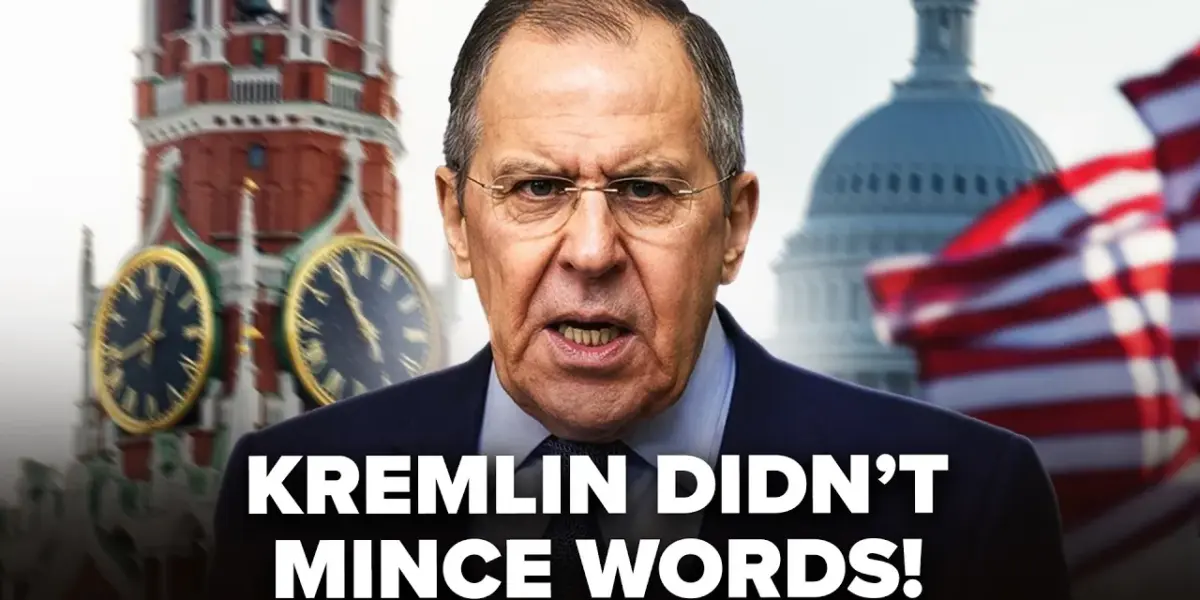
Lavrov Links Ukraine War to Middle East Conflict, Criticizes US
Russian Foreign Minister Sergey Lavrov has publicly linked the ongoing war in Ukraine to escalating tensions in the Middle East, particularly the conflict involving the United States and Iran. In a recent statement, Lavrov accused Washington and Israel of attempting to involve Gulf states in a conflict, drawing a parallel to what he alleged was the West’s role in drawing Ukraine into war with Russia. This rhetoric, analyzed by the Institute for the Study of War (ISW), suggests a broader Kremlin strategy to criticize the U.S. and potentially lay the groundwork for future negotiations over Ukraine.
Other Russian officials have echoed this narrative. Dmitri Polyanski, Deputy Ambassador of Russia to the UN, criticized the U.S. For discussing peace while engaging in military operations. Meanwhile, Russian lawmaker Alexey Zhuravlev questioned the U.S.’s impartiality as a mediator in the Ukraine conflict.
The ISW report indicates that Moscow has historically sought to delay negotiations regarding Ukraine while avoiding actions that could provoke harsher U.S. sanctions. Concurrently, Russia has aimed to maintain its relationships with partners like Iran. However, the escalating rhetoric against the U.S. Following operations against Iran suggests this balancing act is becoming increasingly difficult for the Kremlin.
“All those suffering from U.S. and Israeli aggression are our strategic partners. We maintain dialogue with them and will do everything possible to work with other peaceloving members of the international community, including in the UN Security Council and the General Assembly to foster an atmosphere that will make this operation completely impossible.”
– Sergey Lavrov, Russian Foreign Minister
Lavrov further stated that countries affected by U.S. and Israeli actions are strategic partners of Russia. He emphasized Moscow’s commitment to dialogue and collaborative efforts with the “peace-loving majority” of the international community, including within the UN, to prevent such military operations.
Following these pronouncements, Russia appealed to the United Nations, calling for discussions on international security and condemning what it termed Western military aggression. This positioning comes despite Russia’s full-scale invasion of Ukraine and its continued attacks on Ukrainian cities, as the Kremlin attempts to portray itself as a global defender of international law and stability.
Northern Europe Prepares for War Escalation
As the conflict in Ukraine persists and fighting intensifies across the Middle East, several northern European and Baltic nations, along with Germany and Poland, are developing joint plans for civilian evacuation. A memorandum of cooperation, announced by Sweden’s Ministry of Defense, aims to prepare for scenarios where populations may need to temporarily relocate to neighboring countries.
Discussions are underway regarding practical aspects of cross-border evacuations, including planning, border procedures, designated evacuation corridors, and reception systems for displaced individuals. Special consideration is being given to protecting vulnerable groups.
Officials cite the experience of Russia’s war against Ukraine as a critical lesson, highlighting the importance of having such contingency plans readily available. These plans are seen as vital for enabling countries to maintain their defense capabilities while ensuring civilian safety. The cooperation highlights the mutual security dependence among NATO members and neighbors in the region.
Ukraine to Assist U.S. In Countering Drones in Middle East
Ukraine has reportedly received a request from the United States for assistance in countering Iranian Shahed drones in the Middle East. According to Reuters, citing sources familiar with the matter, Ukrainian personnel could join efforts to protect American bases in the region within days. Ukrainian President Volodymyr Zelensky confirmed the request, stating that he had instructed the necessary capabilities and the presence of Ukrainian specialists to be ensured.
Sources indicate that preparations for the mission are already in progress, with Ukrainian specialists potentially aiding in the protection of U.S. military facilities and personnel across several Middle Eastern countries. Ukraine has accumulated significant experience in combating Shahed drones, which Russia frequently deploys in attacks against Ukrainian cities, since the full-scale invasion began. U.S. President Joe Biden has expressed readiness to accept assistance from partners in defending against these Iranian-made drones.
Hungary-Ukraine Tensions Escalate Over Oil Dispute and Asset Seizure
A significant political crisis is rapidly unfolding between Ukraine and Hungary, escalating from a dispute over Russian oil transit to broader implications involving European Union funding for Ukraine and the seizure of Ukrainian assets in Budapest.
Oil Pipeline Dispute Fuels Political Conflict
The conflict originated with issues surrounding the Druzhba pipeline, which transports Russian oil to Hungary and Slovakia. Following damage to infrastructure from Russian strikes, oil transit was halted. Budapest and Bratislava exerted pressure on Kyiv, alleging delays in restoring the pipeline’s operation.
Hungarian Prime Minister Viktor Orbán publicly stated that Hungary would employ political and financial leverage to compel Ukraine to reopen the route. Hungary also linked this dispute to its decision to block a €90 billion EU financial package intended for Ukraine.
In response, President Zelensky declared his personal opposition to restoring the oil route, citing principles that transcend financial considerations. He suggested that Orbán’s actions were influenced by Hungary’s domestic political situation ahead of upcoming elections and noted that the pipeline could technically be repaired within approximately six weeks.
“To be honest, I wouldn’t restore it. This is my position. I expressed it to the European leaders, to those who called me and asked about it.
I also expressed it to the leadership of the European Union because this is Russian oil and there are certain principles that have no price. They kill us and we have to give oil to Orban because he cannot win elections without it.”
– Volodymyr Zelensky, President of Ukraine
Seizure of Ukrainian Assets and Personnel
The dispute intensified further when Hungarian authorities seized two armored vehicles belonging to Ukraine’s state-owned Oshchadbank. The vehicles were reportedly transporting approximately $40 million, €35 million, and 9 kilograms of gold from Austria to Ukraine as part of a routine interbank operation between Raiffeisenbank and Oshchadbank. The vehicles are believed to be held at a secure facility controlled by Hungarian security services in Budapest.
Ukraine has issued an official diplomatic note to Budapest demanding the immediate release of its citizens and the return of the seized assets. Ukrainian Foreign Minister Dmytro Kuleba described the incident as an effective hostage-taking and an act of state terrorism. This event gained additional political weight shortly before its occurrence, as Hungarian Foreign Minister Péter Szijjártó was meeting with Russian President Vladimir Putin in Moscow.
Hungarian officials, including Prime Minister Orbán, have asserted that Hungary will not be blackmailed or threatened by Ukraine and will not allow Hungarian funds to be sent to Ukraine, nor will Hungary be drawn into the war. The situation intertwines complex issues, including Russian energy, Hungarian domestic politics, EU funding, Budapest’s ties with Moscow, and the physical seizure of Ukrainian citizens and assets. The resolution of this crisis may depend on future political developments, particularly after Hungary’s general elections scheduled for April.
Fox News Misattributes Ukrainian Drone as American Technology
American television network Fox News has been criticized for misidentifying a Ukrainian interceptor drone as an American development during a segment discussing U.S. Technological advantages against Iran. The broadcast featured footage of a Ukrainian drone intercepting Russian Shahed drones, with studio commentary describing it as an example of U.S. Technology.
However, the footage clearly displayed the name of the developer, “Wild Hornets.” A Fox News drone expert discussed the role of American artificial intelligence in modern warfare, highlighting how U.S. Technologies enable faster threat responses and are already deployed in combat drone systems. In reality, the footage showcased the “Sting” interceptor drone, developed by engineers at Wild Hornets and utilized by Ukrainian air defense units to neutralize Shahed drones.
Wild Hornets later issued a statement clarifying the origin of the technology. The company expressed gratitude if their achievements could be properly credited, emphasizing that the demonstrated success was the result of hard work by their engineers in collaboration with Ukrainian soldiers.
Source: ⚡️Lavrov publicly addressed Ukraine! His new statement about the war is spreading everywhere (YouTube)

Related Articles
Ukraine’s Drone War Shifts Battlefield Dynamics
Ukraine's strategic shift to drone warfare is reshaping the battlefield as Western aid dwindles. The nation's innovation in this area forces Russian adaptation and challenges Moscow's objectives. Observers note Russia's resilience despite high casualties, while Ukraine's drone advancements offer potential for future technology transfer.


Gen Z Poll Reveals Stark Divide on Israel-Palestine Conflict
A new NBC News poll reveals a significant generational split on the Israel-Palestine conflict, with three-quarters of Gen Z sympathizing more with Palestinians. Overall, adults are evenly divided, but partisan and age differences are pronounced. The poll also highlights ongoing public concerns about inflation and the handling of the war in Iran.
Putin Faces Unprecedented Pressure Amidst Ukraine War
President Putin is reportedly under unprecedented stress due to the ongoing war in Ukraine. The conflict has resulted in a massive refugee crisis and significant Russian casualties, marking one of Europe's largest wars since World War II. International sanctions and military aid continue to shape the geopolitical landscape.