Rubio’s Logic Falters, Undermining Trump’s War Justification
Senator Marco Rubio's recent justifications for military action in the Middle East have been widely criticized as illogical, forcing the administration into damage control. His remarks, and President Trump's subsequent admission of acting on a "hunch," raise serious questions about the basis of U.S. foreign policy decisions.

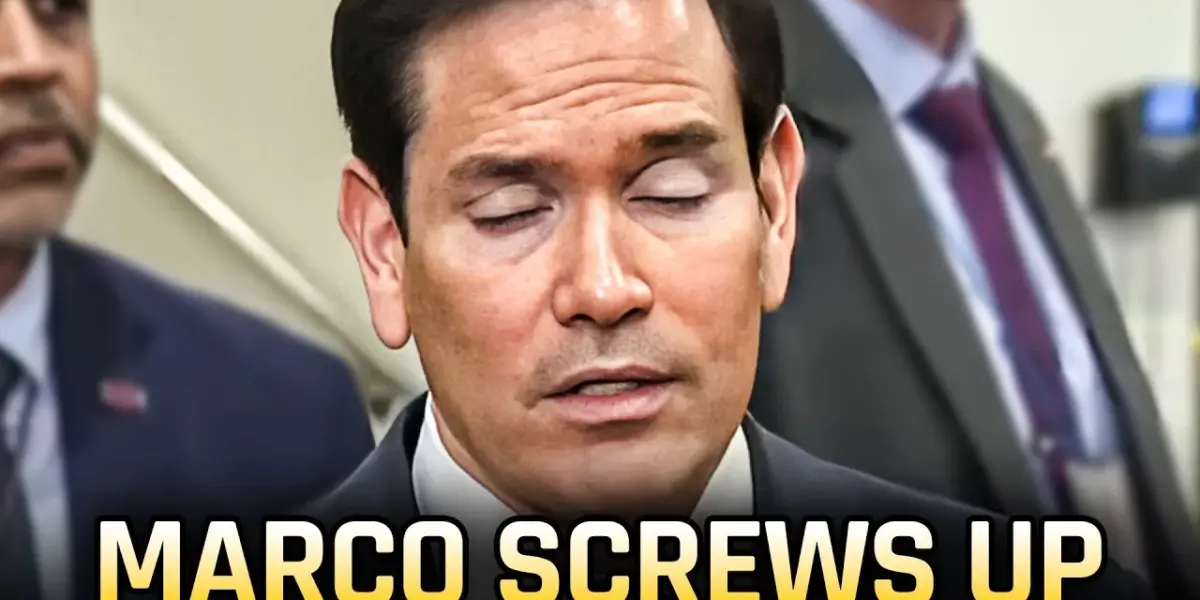
Rubio’s Logic Falters, Undermining Trump’s War Justification
In the complex and often opaque world of foreign policy, clear communication and consistent messaging are paramount. Yet, recent statements by Senator Marco Rubio, a key figure in the current administration’s foreign policy apparatus, have cast a shadow of doubt over the official narrative surrounding recent military actions in the Middle East.
His remarks, characterized by critics as illogical and based on conjecture rather than intelligence, have forced the administration into a defensive posture, attempting to clarify and backtrack from his pronouncements. This situation not only highlights potential fissures within the administration but also raises serious questions about the foundations upon which critical foreign policy decisions are being made.
The “Preemptive Strike” Rationale Unravels
Following a weekend of military operations in the Middle East, Senator Marco Rubio appeared on Capitol Hill to articulate the administration’s justification for the attacks. His explanation, however, has become a focal point of controversy. Rubio stated, “It was abundantly clear that if Iran came under attack by anyone, they were going to respond and respond against the United States.
We know there was going to be an Israeli action. We knew that would precipitate an attack against American forces. And we knew that if we didn’t preemptively go after them before they launched those attacks, we would suffer higher casualties.”
This reasoning, as interpreted by many, suggests a convoluted logic: Iran would retaliate against any attack, regardless of the aggressor, and specifically against the U.S. If Israel initiated action. Therefore, to avoid being attacked in retaliation for an Israeli strike, the U.S. Itself needed to strike first.
Critics have derided this as the “dumbest logic ever,” arguing it is based on a “hunch” rather than concrete military intelligence. The implication is that the U.S. Preemptively attacked Iran not due to an imminent threat, but to avoid the consequences of an anticipated Israeli action, a justification that seems to place the onus of U.S. military engagement on the actions of an ally.
Trump’s Own Admission: A Gut Feeling?
The fallout from Rubio’s statements was immediate, with the administration scrambling to control the narrative. Donald Trump, when questioned about Rubio’s comments, offered a perspective that seemed to align with the “hunch” theory. Trump stated, “No, I might have forced their hand.
We were having negotiations with these lunatics and it was my opinion that they were going to attack first. They were going to attack.
If we didn’t do it, they were going to attack first. I felt strongly about that.”
This admission, that the decision to act was based on his “opinion” and a strong feeling that Iran was about to attack, further fuels the criticism that the administration is not acting on verifiable intelligence but on subjective intuition. The juxtaposition of Trump’s earlier pronouncements about facts not caring about feelings with this admission highlights a perceived hypocrisy. The notion that major military actions, with potentially devastating consequences, can be initiated based on a “bad feeling” is deeply concerning to those who advocate for a more evidence-based foreign policy.
Rubio’s Retreat and Damage Control
As the administration grappled with the implications of Rubio’s and Trump’s statements, Senator Rubio himself appeared to backtrack. When pressed by a reporter who referenced his earlier comments about Israel’s impending strike being the catalyst, Rubio initially denied the premise, questioning the reporter’s presence and the accuracy of their recollection. This defensive maneuver was met with further confusion, as the reporter asserted they were the one who asked the question and Rubio had indeed responded.
The administration’s subsequent efforts to salvage the situation fell to UN Ambassador Mike Waltz. Waltz attempted to clarify Rubio’s remarks, suggesting they were taken out of context and were in response to a “narrow operational question.” This explanation, essentially an attempt to distance the administration from Rubio’s specific wording, implies that Rubio does not speak for the broader policy or that his statements were poorly phrased. The implication that Rubio is being sidelined or treated as a “little special guy” who is too “dumb to talk to people” reflects a potentially significant internal dynamic, where damage control has become a necessary follow-up to a key figure’s public statements.
Historical Context and the “Dumbest Person” Accusation
The critique of Marco Rubio’s intelligence and communication skills is not new. For years, he has been a target of sharp criticism, with some commentators labeling him the “dumbest person in the United States Senate.” While such pronouncements are often hyperbole intended to provoke, they underscore a consistent perception of Rubio as someone whose public statements can be easily undermined or misinterpreted, particularly in high-stakes foreign policy discussions. The current situation, where his remarks have necessitated extensive damage control, appears to validate these long-standing criticisms for his detractors.
The decision to involve individuals perceived as less than stellar communicators in critical foreign policy roles raises questions about the administration’s vetting process and strategic communication. When the justification for military action is based on logic that appears flawed or on feelings rather than facts, and when key figures struggle to articulate a coherent narrative, the credibility of the entire operation is jeopardized.
Why This Matters
The events surrounding Marco Rubio’s statements are significant for several reasons. Firstly, they expose a potential lack of strategic coherence within the administration’s foreign policy decision-making.
If the rationale for military engagement is based on subjective assessments and prone to contradictory explanations, it erodes trust both domestically and internationally. Allies may question the reliability of U.S. policy, and adversaries may find opportunities to exploit perceived divisions or weaknesses.
Secondly, the reliance on “hunches” or “feelings” rather than robust intelligence for initiating military action sets a dangerous precedent. International law and norms generally require a clear and present danger to justify preemptive strikes. Basing such actions on personal opinions, however strongly felt, moves away from established protocols and risks escalating conflicts based on miscalculation or incomplete information.
Thirdly, the public spectacle of a key official’s statements being disavowed or recontextualized by others within the administration reflects poorly on the government’s ability to manage complex geopolitical situations. It suggests internal discord or a lack of discipline in communication, which can be interpreted as a sign of weakness by adversaries.
Implications, Trends, and Future Outlook
The trend towards personalized foreign policy, where decisions are driven by the instincts and opinions of leaders rather than institutional expertise and verified intelligence, is a growing concern. This approach, often championed by populist leaders, can lead to unpredictable and volatile international relations. The incident with Rubio and Trump is a case study in the potential pitfalls of such a strategy.
Looking ahead, the administration faces the challenge of rebuilding credibility and demonstrating a more consistent and transparent approach to foreign policy. This will likely involve a greater emphasis on intelligence-driven decision-making and more disciplined communication strategies. The effectiveness of future military actions and diplomatic efforts will hinge on the ability to present a united front with clear, defensible justifications.
Ultimately, the incident highlights the critical importance of clear, logical, and evidence-based reasoning in matters of war and peace. When the foundations of such decisions appear shaky, the consequences can be far-reaching, impacting not only regional stability but also the global perception of American leadership and its commitment to a rules-based international order.
Source: Marco Rubio Just Ruined Everything For Trump (YouTube)

Related Articles

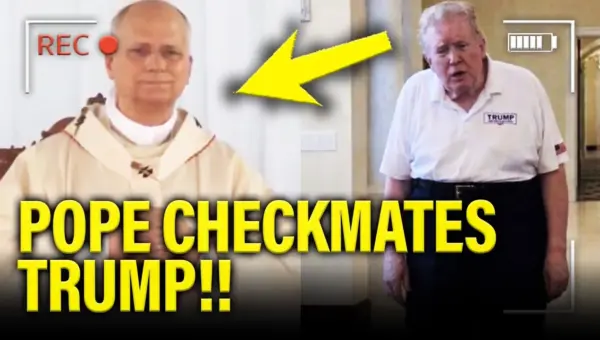
Pope Rebukes Trump’s ‘War Criminals’ Amid Global Tour
Pope Leo XIV's recent statements against war have drawn sharp criticism from Donald Trump and his allies, sparking a debate over faith and politics. Polls indicate the Pope is significantly more popular than Trump, particularly among Catholics, suggesting the attacks may backfire.
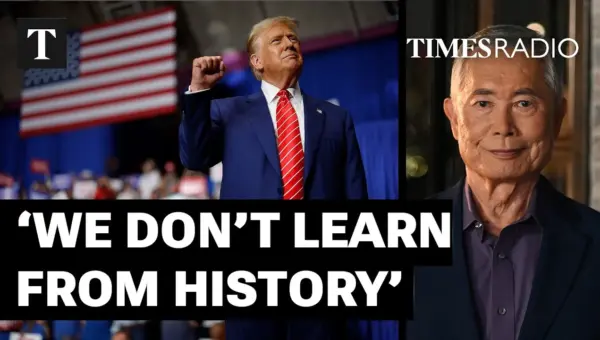
George Takei: Trump Is a ‘Menace to the World’
Actor George Takei has strongly criticized Donald Trump, labeling him a "fascist president" and a "menace to the whole world." Takei drew parallels between current American politics and the hysteria leading to Japanese American internment during WWII, emphasizing the dangers of repeating history. He also reflected on Star Trek's role in promoting social progress and his own journey as an activist.
Trump’s Chaotic Diplomacy Fuels Iran Tensions
Conflicting reports and last-minute changes surrounding JD Vance's role in Iran negotiations highlight the Trump administration's chaotic foreign policy. This pattern of escalating threats followed by claims of progress raises questions about U.S. credibility and the path toward stability.