Jobs Report Shock: Labor Force Plummets to Post-COVID Lows
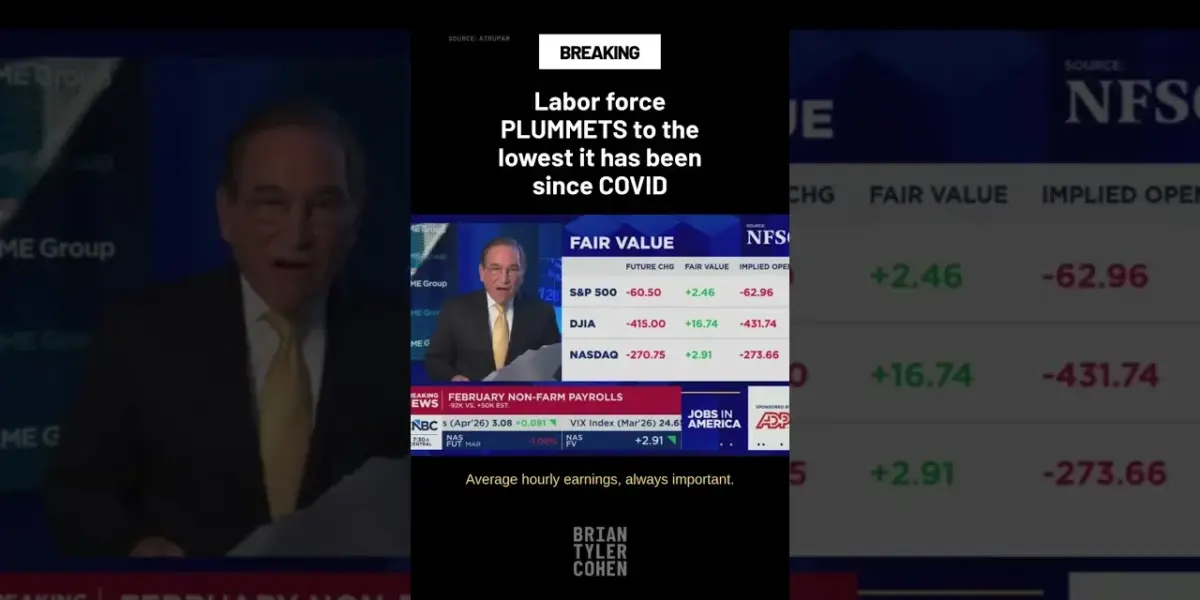
A shocking jobs report reveals non-farm payrolls plummeted by 92,000, pushing the labor force participation rate to its lowest point since late 2021. This downturn raises concerns about the economy's trajectory.

Jobs Report Shock: Labor Force Plummets to Post-COVID Lows
The latest jobs report has delivered a jolt to economic observers, revealing a significant contraction in the labor force that has reached its lowest point since the early days of the COVID-19 pandemic. The headline figure of non-farm payrolls showing a decline of 92,000 jobs, a stark contrast to previous expectations, has sent ripples through the financial markets and raised questions about the underlying health of the economy.
A Grim Payroll Picture
The reported figure of -92,000 for non-farm payrolls is not just a disappointment; it’s a dramatic downturn. This figure is significantly worse than the anticipated numbers and represents a substantial downgrade from previous months.
The previous month’s payrolls were revised downward from 130,000 to 126,000, compounding the negative sentiment. To put this into perspective, the current figure is comparable to the -185,000 seen in December 2020, a period of intense economic uncertainty during the pandemic.
The revisions over the past two months now show a cumulative deficit of -69,000 jobs. This suggests that the reported figures are not isolated incidents but potentially indicative of a broader trend of labor market cooling.
Wages and Hours: A Mixed Bag
Amidst the grim payroll numbers, there are a few brighter spots, though they do little to offset the overall negative picture. Average hourly earnings showed a modest increase of 4/10ths of a percent, slightly exceeding expectations.
This uptick in wage growth is the best seen since March 2025, when earnings rose by 5/10ths of a percent. On a year-over-year basis, earnings are up 3.8%, also a tenth of a percent better than anticipated and the strongest performance since November 2025.
However, the positive signal from wages is tempered by the stagnant weekly hours worked, which remained at 34.3, precisely as expected. While stable hours can be seen as a positive, they don’t indicate an expansion in the demand for labor that would typically accompany robust job growth.
Unemployment Rate Tick Upward
Adding to the concerns, the unemployment rate has edged up by one tick to 4.4%, surpassing the expected rate of 4.3%. This increase is notable as it brings the unemployment rate to levels not seen since the end of the previous year.
To find a higher unemployment rate, one would have to look back to November 2025, when it stood at 4.5%. While a one-tenth of a percent increase might seem minor, in the context of a declining labor force participation, it signals a potential weakening in the job market’s ability to absorb available workers.
Labor Force Participation Hits Post-COVID Low
The most alarming figure in the report is the significant drop in labor force participation, which has fallen to 62.0%. This is a substantial decline from the expected 62.5% and represents the weakest participation rate seen since November 2021, when it was 61.9%.
The labor force participation rate measures the percentage of the working-age population that is either employed or actively seeking employment. A drop in this metric suggests that a considerable number of individuals have stopped looking for work, either due to discouragement, retirement, or other factors.
This decline is particularly concerning because it means that even if the number of employed people were to remain constant, a lower participation rate would artificially lower the unemployment rate. The fact that the unemployment rate has still managed to tick upwards despite this drop in participation highlights the severity of the job market’s contraction.
Why This Matters
This jobs report presents a complex and concerning economic picture. The sharp decline in non-farm payrolls and the significant drop in labor force participation are serious indicators of potential economic headwinds. While wage growth has shown some resilience, it is overshadowed by the contraction in job creation and the shrinking pool of actively seeking workers.
Implications and Future Outlook
The implications of this report are far-reaching. A shrinking labor force and negative job growth could signal a slowdown in consumer spending, reduced business investment, and potentially, a broader economic recession. Policymakers, particularly the central bank, will be closely scrutinizing these figures.
The data could influence decisions regarding interest rates and other monetary policy tools. If the trend continues, it might necessitate a shift in economic strategy to stimulate job growth and encourage labor force participation.
The current situation could be influenced by several factors. Persistent inflation may have eroded purchasing power, leading some to withdraw from the workforce. Technological advancements could also be displacing workers faster than new jobs are created.
Demographic shifts, such as an aging population, naturally lead to a decline in participation rates over time. The report’s findings suggest that these factors, or a combination thereof, are having a more pronounced effect than previously understood.
Historical Context
The period following the initial shock of the COVID-19 pandemic saw unprecedented government stimulus and a rapid rebound in the labor market. However, the economic landscape has been volatile since then, marked by supply chain disruptions, geopolitical tensions, and persistent inflation. This report, with its return to levels seen during the acute phase of the pandemic’s economic fallout, suggests that the economy may be entering a new, more challenging chapter.
The historical context of the 2020-2021 period, characterized by widespread job losses and then a swift recovery fueled by stimulus, provides a backdrop against which to assess the current downturn. The current figures suggest that the recovery may be stalling, and the labor market is facing renewed pressures that could reverse some of the gains made in recent years.
Conclusion
The February jobs report paints a concerning picture of a labor market contracting significantly. The plunge in non-farm payrolls and the historic low in labor force participation demand serious attention.
While wage growth offers a sliver of optimism, it cannot mask the underlying weakness revealed in this critical economic data. The coming months will be crucial in determining whether this is a temporary blip or the beginning of a sustained period of economic contraction.
Source: Labor force PLUMMETS to the lowest it has been since COVID (YouTube)

Related Articles

GOP Strategist Slams Trump’s Economy Remarks as ‘Dangerous’
A top GOP strategist has labeled former President Trump's recent economic commentary as "politically dangerous," arguing it ignores voters' real-life struggles with inflation and high costs. The remarks come amid growing concerns about a disconnect between political messaging and public sentiment on the economy.

Voters Regret Trump Choice as Economy Hits Record Lows
Americans are feeling more pessimistic about the economy than ever before, with the consumer sentiment index hitting a historic low. This widespread feeling of economic distress is being linked by some to Donald Trump's policies and leadership, suggesting a potential shift in voter sentiment.

Ex-GOP Spokesman Asks: When Will Republicans Dump Trump?
A former Republican spokesman questions when the party will reach its limit with Donald Trump, suggesting voters will leave when their daily lives are directly impacted. He points to economic struggles and a disconnect between Trump's "America First" message and his actions as key factors. The article explores how voter apathy, driven by financial concerns, could affect election outcomes.