Global Alliances Crumble as Trump Faces Unprecedented Backlash
Global alliances are reportedly fracturing as nations question U.S. foreign policy and military actions. Reports highlight European dissent, Ukraine's unexpected role in aiding U.S. defenses, and complex economic maneuvers impacting Russia and Iran. The situation points to a volatile geopolitical landscape with significant global implications.

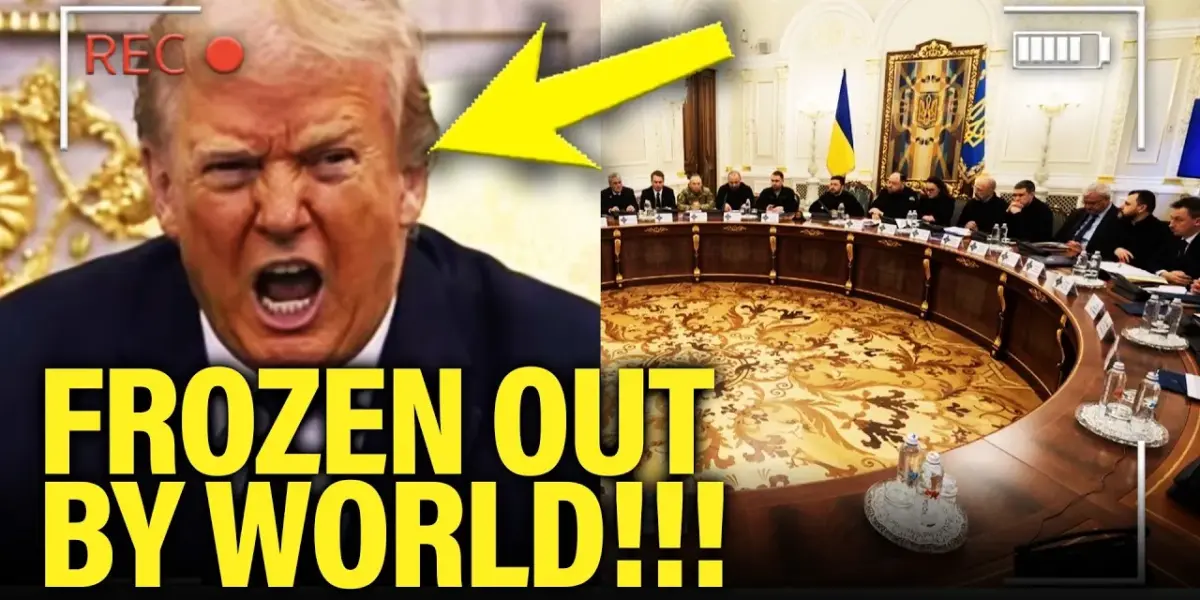
Global Alliances Crumble as Trump Faces Unprecedented Backlash
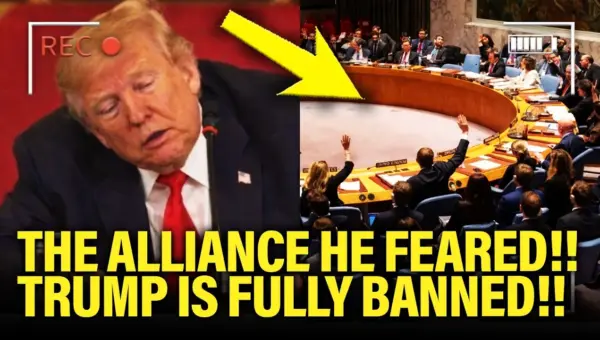
The geopolitical landscape appears to be in a state of significant flux, with reports indicating a growing international dissent against the policies and actions attributed to a “Trump regime.” What was once presented as a united front against perceived adversaries is now showing signs of fracture, as key allies begin to question and even withdraw their support. This shift, if sustained, could represent a critical turning point in international relations, challenging established alliances and diplomatic norms.
A Shifting Tide in European Support
Recent developments suggest a notable change in the stance of several European nations regarding conflicts in the Middle East. Initially, Spain stood as a solitary voice within the EU, criticizing an “attack” involving the United States and Israel against Iran as a violation of international law.
However, this position seems to have gained traction, with France, Slovenia, the United Kingdom, Canada, and most recently, Italy, reportedly joining in expressing concerns or questioning the legality of certain military actions. This apparent “dam breaking” of appeasement, as one observer put it, signifies a growing unease with the prevailing international strategy and a potential reassertion of independent foreign policy stances.
Questions of Air Supremacy and Strategic Missteps
Amidst these diplomatic shifts, questions are being raised about the efficacy and honesty of military claims. Despite assertions of achieving “air superiority” over Iran, sources like The War Zone editor-in-chief Tyler Rogoway suggest that full air supremacy has not been attained. Instead, there are claims of only “localized air superiority,” with Iranian mobile air defense systems posing persistent risks.
The transition from long-range strikes to more direct attacks, while increasing target engagement, is said to heighten operational risks for aircraft and pilots. Reports suggest that U.S. Air defenses may struggle to intercept a significant number of Iranian one-way drones, a capability that seemingly caught the “Trump regime” unprepared, leading to an unexpected request for assistance from Ukraine.
Ukraine’s Unexpected Role and Trump’s Stance
In a curious turn of events, Ukrainian President Volodymyr Zelenskyy has reportedly agreed to provide unspecified “necessary means” and specialists to assist the U.S. and its allies in countering Iranian drones in the Middle East. This request for aid from Ukraine, a nation itself heavily reliant on international support, highlights the perceived limitations of current U.S. Defensive capabilities.
However, this act of assistance is juxtaposed with a critical public statement from Donald Trump, who, in an interview with Politico, described Zelenskyy as an “obstacle to peace” with Russia, suggesting the Ukrainian leader is not showing sufficient willingness to negotiate. Trump reportedly believes Putin is ready for a deal, but Zelenskyy is not, positioning the Ukrainian president as the impediment to ending the conflict in Eastern Europe.
Economic Maneuvers and Russian Oil
Further complicating the geopolitical chessboard, recent U.S. Treasury decisions have reportedly eased oil sanctions on Russia, permitting Indian refineries to purchase significant quantities of Russian crude. This move, occurring shortly after the request for Ukrainian drone defense assistance, has been framed as a substantial “win” for Russia.
The new rules allow for the purchase of oil already loaded onto tankers before a specific date, extending the window for such transactions until early April. This decision is seen as indirectly strengthening Russia’s economic capacity, which in turn could influence its broader geopolitical objectives, including its alliance with Iran.
Hungary’s Provocative Actions and Orban’s Alignment
Adding another layer of complexity, Hungary, under the leadership of Viktor Orbán, has been accused of provocative actions against Ukraine. Reports detail Hungary taking seven Ukrainian hostages and allegedly seizing $80 million in Ukrainian funds, actions decried by Ukraine’s Foreign Minister as “state terrorism and racketeering.” These events follow a visit by high-ranking Russian military officials to Hungary.
Orbán, a figure described as a Trump ally, is facing a domestic election and is alleged to be attempting to provoke conflict with Ukraine to consolidate power. His rhetoric, which reportedly mirrors “Trumpian Putin language,” frames Ukraine’s actions as a “blockade” of oil flow through the Friendship Pipeline, a narrative that Ukraine contends is a result of Russian sabotage and a direct threat to its own defense against Russian aggression.
A World of Interconnected Conflicts
The current global situation, as depicted, is one of widespread, interconnected conflicts. Beyond the Russia-Ukraine war and the U.S.-Israel actions in Iran, the analysis points to ongoing conflicts in Afghanistan and Pakistan, potential proxy wars, U.S. Involvement in Ecuador, and a U.S. Blockade of Cuba, with Trump reportedly signaling Cuba as a potential future target. The narrative also touches upon the suppression of information regarding Iranian strikes in Middle Eastern nations, with authorities reportedly arresting citizens for filming and disseminating details of these attacks, labeling them as “disinformation.”
Iran’s Resolve and Strategic Implications
Despite facing significant military pressure, Iran’s Revolutionary Guard Corps spokesperson has declared readiness for a “long war” and warned of “painful strikes.” The assertion is that Iran’s new weapons and innovations have not yet been deployed at scale, suggesting a capacity for future escalation. The ongoing conflict has also disrupted critical shipping routes, including the Strait of Hormuz, impacting global energy markets and causing financial strain on Gulf states, potentially leading them to reassess their investment pledges to the U.S. The reported U.S. Strikes on what appears to be an Iranian school complex, resulting in numerous child casualties, raises grave humanitarian concerns and questions about the justification and conduct of the war.
Contradictory Policies and a Leader’s Self-Assessment
The analysis highlights a perceived lack of strategic coherence in the actions attributed to the “Trump regime.” This includes the contradictory stances of begging Zelenskyy for assistance while simultaneously criticizing him, and facilitating Russian oil sales to India, which could indirectly fund Iran, a state engaged in conflict with U.S. Interests. This is contrasted with Donald Trump’s self-assessment of his performance, reportedly rating it a “15” on a scale of 0 to 10, and his engagement with online content like “Call of Duty montages” and “Gladiator” videos to represent the ongoing conflicts. The piece concludes by noting Iran’s defiant stance, with its foreign minister reportedly stating readiness for a U.S. Invasion and expressing no interest in negotiations, citing past negative experiences.
Why This Matters
The information presented raises critical questions about the stability of international alliances, the transparency of military operations, and the effectiveness of diplomatic strategies in an increasingly volatile world. The reported erosion of support for U.S. policy among key allies, coupled with internal contradictions in diplomatic and military actions, could lead to a more fragmented and unpredictable global order.
The economic repercussions of disrupted trade routes and sanctions policies, as well as the human cost of ongoing conflicts, highlight the urgent need for clear, consistent, and ethically grounded foreign policy decisions. The narrative also highlights the potential for misinformation and the importance of verifiable information in understanding and responding to complex international crises.
Implications, Trends, and Future Outlook
The implications of these developments are far-reaching. A fracturing of alliances could embolden adversaries and create power vacuums. The reliance on unconventional sources for military aid, such as Ukraine assisting the U.S., signals a potential shift in global power dynamics.
The economic consequences of disrupted energy markets and the financial strain on nations involved in or supporting conflicts could lead to significant global economic adjustments. Trends toward increased regional proxy conflicts and the potential for direct confrontation between major powers remain significant concerns.
The future outlook suggests a period of heightened uncertainty, where diplomatic resolutions may be harder to achieve, and the risk of broader conflict could increase. The effectiveness of international institutions in mediating these disputes will be severely tested.
Historical Context and Background
The current geopolitical tensions can be viewed through the lens of historical patterns of shifting alliances, great power competition, and the complex interplay of economic interests and national security concerns. The post-World War II era saw the establishment of a U.S.-led international order with strong alliances. However, the rise of new global powers, evolving threats, and shifts in domestic political landscapes within major nations have continuously challenged this order.
The current situation echoes historical periods where perceived overreach or strategic miscalculations by dominant powers have led to a rebalancing of global influence and the formation of new alignments. The use of economic tools, such as sanctions and oil markets, as instruments of foreign policy also has deep historical roots, often leading to unintended consequences and geopolitical realignments.
Source: All HELL BREAKS LOOSE as Trump GETS CHECKMATED by WORLD!!! (YouTube)

Related Articles

Mayor Mamdani Delivers on Promises, Tackles Budget Woes
Mayor Zohran Mamdani outlined progress on his campaign promises, including universal childcare and faster buses, during his first 100 days. He is addressing a $5.4 billion budget shortfall through progressive taxation and plans for city-run grocery stores. Mamdani also discussed his productive relationship with President Trump and his commitment to New York City.

El-Sayed Blasts Trump’s Iran War: “How the Hell Did We Get Here?”
Progressive Senate candidate Abdul El-Sayed is challenging the status quo in Michigan with sharp critiques of U.S. foreign policy and the healthcare system. He questions the rationale behind the Iran conflict and advocates for Medicare for All, aiming to engage voters often left out of traditional politics.
Global Leaders Shun Trump, Forge New Alliances Abroad
World leaders are increasingly excluding Donald Trump from international conferences, signaling a global pushback against his movement. Nations are exploring new alliances and security frameworks independent of the U.S., driven by concerns over American reliability and the rise of right-wing ideologies.