Trump’s Iran Gambit Backfires, Igniting Regional Chaos
Donald Trump's Iran policy appears to be backfiring spectacularly, igniting regional chaos and escalating attacks across the Middle East. The alleged lack of a coherent plan is leading to dangerous miscalculations and a volatile geopolitical landscape.

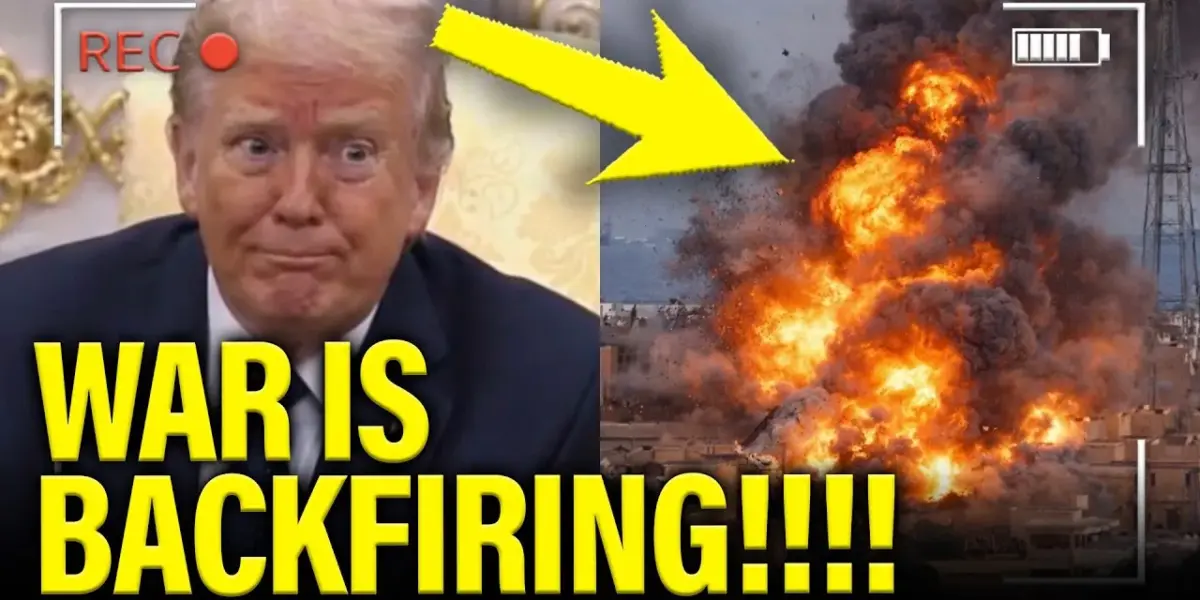
Trump’s Iran Gambit Backfires, Igniting Regional Chaos
The geopolitical landscape is in turmoil as a conflict ostensibly initiated by the Trump administration against Iran appears to be spiraling beyond control. Recent developments, including Iran’s selection of a new, more hardline Ayatollah and escalating attacks across the Middle East, suggest a significant miscalculation with potentially devastating consequences.
A Crisis of Control: The Ayatollah Succession
A key moment in this escalating crisis is Iran’s apparent selection of Montjaba, the son of the recently deceased Ayatollah, as his successor. This move has drawn an unusually direct and aggressive response from Donald Trump, who, in an interview with Axios, declared the selection “unacceptable” and asserted that he, Trump, must be involved in the appointment process. Trump’s assertion that “any selection of Iranians new Ayatollah must be made by Donald Trump” is a remarkable display of perceived authority, drawing parallels to his alleged involvement in the situation with Venezuela’s Delcy Rodriguez.
“Kamani’s son is a lightweight,” Trump reportedly stated, expressing a desire for someone who will “bring harmony and peace to Iran.” This statement, however, has been met with sharp criticism. The assertion that a foreign leader should dictate Iran’s internal religious and political succession is seen by many as not only arrogant but dangerously provocative.
The argument is that such pronouncements are likely to further radicalize the Iranian populace, estimated at 300 million Shiites, rather than pacify them. The irony is not lost on observers that Trump’s actions, including the killing of the previous Ayatollah, may have inadvertently elevated a more extreme figure and solidified public support for the regime.
A Region Under Fire: Escalating Attacks
The conflict is not confined to rhetoric. The region is witnessing a significant escalation in hostilities. Explosions have been reported in Abu Dhabi, United Arab Emirates, amidst a new wave of ballistic missile and drone strikes attributed to Iran.
Footage has emerged showing Iranian ballistic missiles impacting a petroleum company refinery in Bahrain, causing substantial fires. Additional footage depicts Iranian ballistic missiles flying over Jordan, and there are reports of an attack on an airport in Azerbaijan.
Adding to the inflamed rhetoric, a senior Iranian cleric, Ayatollah Javadi Amolei, has publicly called for the “shedding of Zionist blood and the shedding of Trump’s blood” on state television. Meanwhile, Iran’s Foreign Minister, Araghchi, has refuted claims of an impending ceasefire, stating, “Iran is not agreeing to a ceasefire. Stop putting out false information.”
Controversial Actions and Accusations
The narrative of aggression is further complicated by accusations against the United States. Iranian officials are pointing to a “submarine attack” off the coast of Sri Lanka, where a US torpedo reportedly struck an unarmed Iranian naval ship participating in joint exercises with India. The US Navy was reportedly invited to these exercises but declined.
Reports suggest that the ship, identified as the ‘Dena’, was participating in a parade where, as a condition of participation, it was not to be armed. The US stance is that the vessel was a “fair target” in the context of war, a justification that is being widely questioned.
The Kurdish Predicament: A Forced Alliance?
Compounding the complexity, reports indicate that the Trump administration is attempting to coerce and threaten Kurdish groups into launching a ground invasion of Iran. This strategy appears to be a desperate attempt to create a proxy conflict.
However, the Kurdish groups, having allegedly been betrayed by the US in the past, are reportedly reluctant to engage in such a dangerous maneuver. They are said to have been given an ultimatum: align with Iran or with the US and invade.
The situation has become even more convoluted with reports that Trump allegedly leaked information to the press, falsely suggesting that the Kurds were invading Iran. This tactic, if true, would be designed to provoke Iran into striking the Kurds, thereby forcing their full engagement in the conflict and potentially drawing them deeper into a war they are hesitant to join.
The War Debate: Semantics vs. Reality
Despite the evident reality of escalating hostilities, there is a significant semantic debate surrounding the classification of the ongoing events. While Trump officials and some Republican lawmakers in Congress refer to the situation as a “special military operation” – a term notably used by Russia to describe its invasion of Ukraine – others are more direct. Senator Langford has acknowledged that the US is “literally at war with Iran right now,” emphasizing the need for homeland security funding.
Conversely, other officials and representatives are deliberately avoiding the term “war.” Arguments are being made that “combat operations,” “conflict,” or “significant military operations” are more accurate descriptors, particularly as Congress has not formally authorized a declaration of war. This linguistic maneuvering appears to be an attempt to circumvent the War Powers Resolution, which requires congressional approval for sustained military engagement.
Economic Fallout and Presidential Distraction
The economic consequences of this escalating conflict are already palpable. The Strait of Hormuz is effectively closed, leading to skyrocketing oil prices and significant increases in gasoline costs for consumers. While the nation grapples with these immediate economic pressures, the focus on President Trump’s public activities has shifted.
Instead of addressing the unfolding crisis, Trump has reportedly been preoccupied with posts concerning pardons for former NFL stars, the Fine Arts Commission, and what is described as a “fascist looking photo” of soldiers with his image on the Justice Department building. He has been sharing outdated articles, including one from February 19, 2026, regarding mortgage rates, and touting a fabricated $18 trillion investment figure.
The administration’s response to the economic fallout has been characterized as “flailing.” Proposed solutions, such as a one-year holiday on federal excise taxes for gas, are seen as desperate measures in the face of rising prices. Critics argue that these actions are a direct consequence of “terrible decisions” that risk turning the presidency into a “lame duck” with severely diminished approval ratings, albeit a development some see as beneficial for the republic.
Regional Outcry and Strategic Doubts
The conflict has also elicited strong condemnation from regional players. Emirati billionaire Khalif Ahmed al-Habur has publicly questioned Trump’s authority to drag the region into war, asking on what basis such a “dangerous decision” was made and whether collateral damage was calculated.
He points out that the countries of the Gulf Cooperation Council and other Arab nations, which have invested billions in peace initiatives, are now being placed at the heart of a danger they did not choose. The billionaire questions the fate of these peace initiatives and whether the funding intended for stability is instead being used to fuel a war that endangers the region.
The Unintended Consequences: Radicalization and Martyrdom
Analysis suggests that the administration’s strategy has had the opposite of the intended effect. Instead of weakening Iran, the actions taken have seemingly radicalized and mobilized its population.
The killing of the previous Ayatollah, far from being a strategic victory, has led to his being viewed as a martyr, potentially enabling his more extreme son to consolidate power. This outcome directly contradicts the stated goal of fostering peace and stability.
Why This Matters
The current situation represents a critical juncture in international relations. The apparent lack of a coherent plan, the aggressive rhetoric, the escalation of military actions, and the questionable strategic decisions all point towards a volatile and unpredictable future. The implications extend far beyond the immediate region, impacting global energy markets, international diplomacy, and the very definition of conflict in the 21st century.
The reliance on semantic evasion to avoid accountability for war-like actions is a worrying trend. The potential for a foreign leader to exert influence over the internal affairs of sovereign nations, particularly in matters of religious leadership, sets a dangerous precedent.
Implications, Trends, and Future Outlook
The trend observed is one of escalating confrontation, driven by a combination of perceived strategic necessity and potentially misguided unilateral action. The future outlook is one of continued instability, with the possibility of wider conflict a persistent threat. The economic repercussions will likely be felt globally, impacting inflation and energy security.
Diplomatic channels appear strained, and the reliance on military solutions over dialogue could lead to a prolonged period of tension. The normalization of conflict without formal declarations of war or clear congressional oversight is a significant concern for democratic governance.
Historical Context and Background
The current tensions are deeply rooted in decades of complex geopolitical history between the United States and Iran, including the 1953 coup, the 1979 revolution, the Iran-Iraq War, and subsequent periods of sanctions and proxy conflicts. The Trump administration’s “maximum pressure” campaign following the US withdrawal from the Joint Comprehensive Plan of Action (JCPOA) in 2018 significantly heightened these tensions. The killing of Qasem Soleimani in early 2020 was a major escalation, and the current events appear to be a continuation and exacerbation of that policy, albeit with new and potentially more destabilizing elements, such as the direct interference in Ayatollah succession and the alleged manipulation of Kurdish forces.
Source: 🚨Trump LOSES ALL CONTROL as WAR BACKFIRES!! (YouTube)

Related Articles
Russia Admits Economic Woes Amidst Election Push
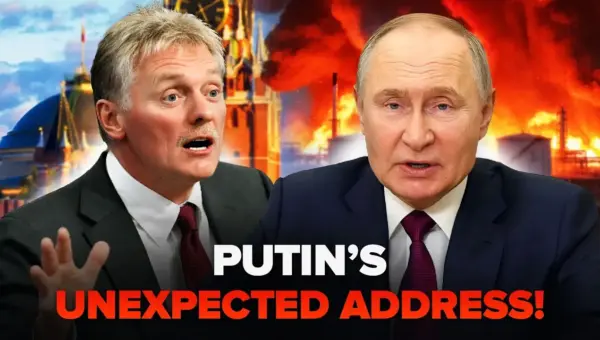
Russia's leadership has acknowledged significant economic challenges, with GDP declining for two consecutive months. President Putin has called for detailed reports on the economic situation. This comes as deputies are being sent to regions to engage with citizens ahead of elections.

Detroit’s War Machine: Automakers Rejoin Arms Race
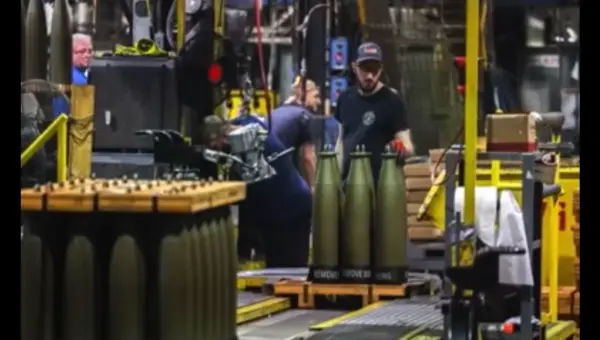
The U.S. Pentagon is in talks with major automakers like General Motors and Ford about shifting production to weapons and munitions. This move echoes World War II-era mobilization and aims to replenish dwindling stockpiles amid global conflicts.
Ceasefire Fragile: Israel, Hezbollah Trade Blows Before Truce
Israel and Hezbollah exchanged strikes just before a 10-day ceasefire began, highlighting deep mistrust. Residents on both sides expressed mixed feelings, with some hoping for normalcy and others fearing the conflict's return. The truce offers a critical window for diplomatic talks.