Miller’s War Rhetoric Echoes Bush, Alienates Americans
Stephen Miller's return to hawkish rhetoric, echoing George W. Bush's "with us or with the terrorists" line, is met with public weariness, not support. The analysis critiques the lack of a coherent plan, the reliance on historical grievances, and the human cost of escalating military actions, suggesting a betrayal of Trump's anti-war promises.

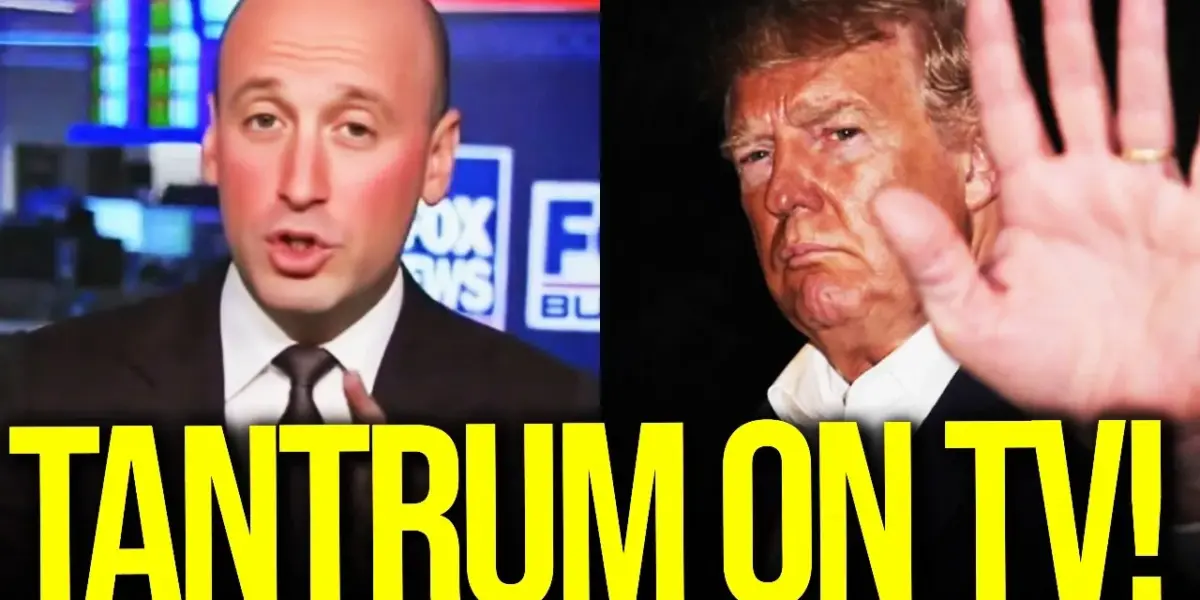
Miller’s War Rhetoric Echoes Bush, Alienates Americans
In a political landscape often defined by echo chambers and predictable talking points, the recent pronouncements of Stephen Miller, former deputy chief of staff under Donald Trump, stand out for their aggressive defense of military intervention and their striking similarity to the rhetoric employed two decades prior. The assertion that one is either “with us or with the terrorists,” a phrase famously articulated by President George W.
Bush to justify the invasion of Iraq, is being re-circulated by Miller and his allies. This tactic, it appears, is intended to pressure the American public into supporting further military engagements in the Middle East, but the analysis presented suggests this strategy is increasingly falling flat.
The Fading Power of Shaming
The core argument is that the American public is no longer susceptible to the same kind of shame-based persuasion that was effective in the mid-2000s. The prolonged experience with “endless wars” has fostered a weariness and a skepticism towards justifications for military action.
While the author expresses support for self-determination and sovereign borders, as seen in Ukraine and Palestine, they draw a sharp distinction between these struggles and the United States initiating strikes abroad and then expecting public approval. This has been labeled a “new low” for the current administration, characterized by officials appearing on television to admonish citizens who do not back their military actions.
Stephen Miller: The Unwavering Defender
A central thesis of the analysis is that Stephen Miller’s stance on military action is not contingent on the specifics of the situation. The piece posits that Miller would defend any military engagement, regardless of its target or justification, even if it involved controversial or extreme actions.
Examples cited include hypothetical invasions of Canada or bombing allies, or even the killing of American citizens, which the author claims has already occurred with individuals targeted by ICE being labeled “domestic terrorists” by Miller. This portrayal paints Miller as a staunch ideologue, committed to defending the most extreme policies he helps to craft, regardless of factual accuracy or public sentiment.
The Trump Doctrine and Historical Grievances
The analysis dissects Miller’s defense of the “Trump doctrine,” which he presents not as isolationism but as a commitment to using American military might to protect U.S. Interests and defend American lives. Miller invokes historical grievances against Iran, including the 1979 hostage crisis and attacks on U.S. Marines and CIA personnel, as justification for current actions.
The author critiques this, arguing that Donald Trump’s populist, “America First” campaign was based on a promise to end, not start, new wars. The use of long-past events to justify contemporary military intervention is seen as a betrayal of that promise and a “hoodwink” of the American people, who desire a say in foreign policy decisions.
“The United States striking other countries, then having our officials go on TV to yell at the American people because we don’t support the strikes is a new low for this administration.”
A Lack of Plan and Contradictory Messaging
A significant concern raised is the apparent absence of a coherent plan for post-strike scenarios. Drawing parallels to past interventions in Libya (under Gaddafi) and Iraq (under Saddam Hussein), the author argues that simply removing a leader without a strategy for establishing stable institutions has historically led to worse outcomes.
The current administration is accused of repeating this mistake, with no clear transition plan. This perceived lack of foresight is compounded by internal contradictions within the administration, with figures like Marco Rubio and Donald Trump offering conflicting statements, and even other senators appearing uncertain about the definition of “war.” This confusion and lack of a clear strategy are presented as deeply worrying.
The Human Cost of Policy
The analysis pivots to the human cost of these policies, highlighting the tragic death of 20-year-old Declan Cody, a U.S. Army Reserve member killed in Kuwait. The profound grief of his family is a clear reminder of the real-world consequences of military action.
This personal tragedy is contrasted with what is described as the dismissive attitude of Defense Secretary Pete Hegseth, who downplayed the significance of a few drones getting through and resulting casualties, framing the press’s reporting as an attempt to make the president look bad. The author condemns this response as “despicable” and “dismissive,” emphasizing that the deaths of service members are not minor incidents to be glossed over.
Rhetoric vs. Reality: The “Woke Pentagon” Myth
Stephen Miller’s characterization of the military as a “woke Pentagon” fighting with “hands tied behind its back” is dismissed as incoherent and nonsensical. The author suggests Miller is merely stringing together buzzwords without substance.
The reality, as presented, is a Pentagon that is struggling with its own internal messaging and communication, as exemplified by Hegseth’s controversial remarks. The analysis questions the very meaning of fighting “politically correct” or a “woke Pentagon,” suggesting it’s a distraction from the core issues of policy and execution.
Geopolitical Maneuvering and Unintended Consequences
The piece digs into the geopolitical dynamics at play, suggesting that the recent actions were not solely a U.S. Initiative but were heavily influenced by Israel’s long-standing desire to strike Iran. According to the analysis, Israel, emboldened by its conflict in Gaza, presented the U.S. With a choice: act together or risk being drawn in later.
The author posits that Trump’s initial plan was to replicate the Venezuela model – removing the leader and installing a successor – but this was overruled by Israeli Prime Minister Netanyahu, who desired a more comprehensive removal of leadership. This led to the U.S. Being “dog walked” by Netanyahu and pulled into a conflict with a narrative that did not align with Trump’s stated anti-war platform.
Conclusion: A Call for Transparency and Planning
Ultimately, the analysis concludes that the public’s weariness with endless wars, coupled with a lack of transparency and coherent planning from the administration, makes the current approach unsustainable and potentially disastrous. The tragic death of Declan Cody is a poignant symbol of the human cost of such policies. The piece calls for a more honest and transparent foreign policy, one that involves public input and a clear understanding of the potential consequences, rather than relying on historical grievances and divisive rhetoric.
Source: Stephen Miller BLOWS UP as Americans REVOLT (YouTube)

Related Articles

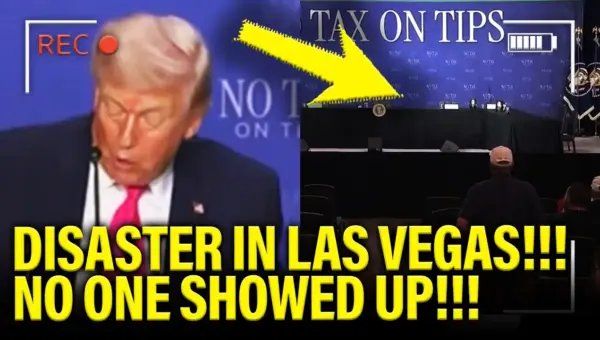
Trump’s Vegas Speech: A Tiny Crowd, Big Gaffes Emerge
Donald Trump's Las Vegas speech faced criticism for a small turnout and his unfamiliarity with common terms like "corner store." He also made questionable claims about the economy and foreign policy, while engaging in personal attacks. This event highlights his campaign's reliance on past narratives and controversial rhetoric.
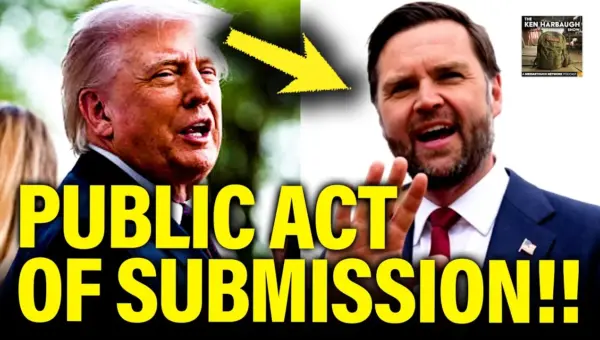
Trump’s Power Play: Humiliating Allies to Cement Control
Donald Trump's strategy of publicly pressuring allies like JD Vance and criticizing figures like the Pope is analyzed as a method to ensure absolute loyalty. This tactic aims to consolidate power by forcing public displays of subservience and preventing any perception of challenge to his authority.

Trump’s Lawsuit Backfires, Exposing Epstein Ties
Donald Trump's lawsuit against the Wall Street Journal over a letter to Jeffrey Epstein has been dismissed, but his decision to refile may backfire. The refiled case could force Trump into a deposition, exposing his controversial ties to Epstein.