GOP Faces Reckoning as Epstein Files Ignite Bipartisan Scrutiny
A bipartisan subpoena for Pam Bondi in the Epstein case signals a potential shift in Republican loyalties. As unanswered questions mount and the party grapples with internal divisions and critiques of its leadership, the political landscape faces significant upheaval.


GOP Faces Reckoning as Epstein Files Ignite Bipartisan Scrutiny
A recent development in the ongoing fallout from the Jeffrey Epstein scandal has sent shockwaves through the political landscape, with a bipartisan subpoena issued by the House Oversight Committee for former Florida Attorney General Pam Bondi. This move, spearheaded by both Democrats and Republicans, signals a potential shift in how the Epstein case and its associated figures are being handled, particularly within the Republican party.
A Bipartisan Push for Answers
The subpoena for Pam Bondi marks a significant moment, as it involves a high-profile political figure with documented ties to Epstein. The fact that the subpoena garnered support from a number of conservative Republicans, including Representatives Nancy Mace and Lauren Boebert, is particularly noteworthy. These individuals, often staunchly aligned with former President Donald Trump, are publicly stating that “enough is enough” regarding what they perceive as cover-ups and a reluctance to fully disclose information related to the Epstein files, especially when it involves Trump.
This bipartisan effort suggests a growing impatience with the status quo. For years, discussions surrounding the Epstein case have often been mired in partisan division, with Republicans frequently defending Trump administration officials and Democrats pushing for greater transparency.
However, the current situation appears to be different. The widespread Republican support for Bondi’s subpoena indicates that the usual partisan defenses may not hold, especially as the questions surrounding the Epstein files become more pointed and harder to ignore.
Unanswered Questions Plague the Epstein Files
The core of the controversy lies in the lingering questions about the Epstein case. Key among these are:
- Where are the remaining millions of Epstein’s files?
- Why have the names of Epstein’s co-conspirators been redacted?
- Why is information related to Donald Trump being redacted?
- Why has information concerning Trump administration officials, such as Howard Lutnick and Kevin Warsh, been obscured?
These are not obscure technicalities; they are fundamental questions that resonate with the public and demand clear answers. The involvement of prominent figures, some with direct links to the Trump administration, raises concerns about potential conflicts of interest and a deliberate effort to shield certain individuals from scrutiny. The transcript highlights instances of officials like Howard Lutnick, who claimed to be disgusted by Epstein upon meeting him, yet later took his children to Epstein’s island and engaged in business dealings.
Erosion of Republican Support for Trump on Epstein
The willingness of some conservative Republicans to move against figures potentially linked to Trump on the Epstein issue reflects a broader trend. The analysis suggests a steady erosion of Republicans’ willingness to blindly support Trump on this sensitive matter.
This is compounded by the fact that many of these same Republicans campaigned on issues of transparency and accountability, particularly concerning the Epstein scandal. Their current constituents, who were led to believe these issues were paramount, are now seeing their elected officials engage in behavior that appears to contradict their campaign promises.
Adding to the pressure, even far-right figures and media personalities, such as Alex Jones and Nick Fuentes, have reportedly expressed disappointment with Trump regarding his handling of the Epstein files and foreign policy decisions. This indicates that discontent is not confined to liberal circles but is also emerging from within Trump’s own base, suggesting a potential weakening of his hold on certain segments of the Republican party.
Broader Implications for the Republican Party
The scrutiny over the Epstein files is occurring against a backdrop of increasing challenges for the Trump-aligned Republican party. The transcript points to a pattern of Trump campaigning on populist promises – infrastructure, healthcare, tax cuts for the middle class – but ultimately delivering policies that disproportionately benefit the wealthy, such as tax cuts for millionaires and billionaires. This disconnect between campaign rhetoric and governing actions is a recurring theme that appears to be alienating voters.
The administration’s approach to foreign policy, including the initiation of new conflicts, has drawn criticism. The analogy drawn between Trump’s campaign promises and his actual governance suggests a fundamental disconnect that may be impacting his support. The argument is made that Trump has never governed in a manner that truly reflects his populist platform, leading to a sense of betrayal among his supporters.
Scrutiny Extends Beyond Epstein to Administration Incompetence
The challenges facing the administration are not limited to the Epstein scandal. The hearing involving Homeland Security Secretary Kirstjen Nielsen, and specifically her evasive answers regarding a relationship with a subordinate, Corey Lewandowski, highlights broader concerns about judgment and competence within the executive branch. Nielsen’s lengthy, circuitous response to a simple “no” question drew parallels to Bill Clinton’s infamous denial, suggesting a pattern of avoiding direct answers under pressure.
The transcript notes that Lewandowski’s role as a “special government employee” appears to be exploited to circumvent regulations, raising questions about ethical conduct and oversight. The fact that even Republican members of Congress are losing patience with such situations suggests that the administration’s baggage – including alleged indiscretions, general incompetence, and controversial policy decisions – is becoming an untenable burden for the party, especially with midterm elections on the horizon.
Texas Senate Race as a Bellwether
The ongoing primary runoff in the Texas Senate race between Ken Paxton and John Cornyn is presented as a significant indicator of the Republican party’s direction. The fact that neither candidate secured over 50% of the vote, forcing a costly and prolonged runoff, points to internal divisions.
Trump’s potential endorsement of John Cornyn, an establishment Republican, over Ken Paxton, an avowed MAGA candidate, is seen as particularly telling. If Trump endorses Cornyn, it could be interpreted as an admission that the MAGA brand is losing its potency and that even Trump recognizes the need to rely on more traditional Republican candidates to win general elections.
The controversy surrounding Ken Paxton, who faces impeachment and multiple accusations of corruption, further complicates the picture. The analysis suggests that in the MAGA Republican party, a history of scandal and corruption does not necessarily disqualify a candidate but may even be a prerequisite for success, a point humorously illustrated by the potential comparison of Pam Bondi’s hypothetical hearing to Ken Paxton’s ongoing legal battles.
Critique of Defense Secretary’s Media Handling
The segment also addresses the handling of military casualties and the subsequent media response. Defense Secretary Pete Hegseth’s apparent frustration with media coverage of service member deaths, framing it as the press attempting to make the president look bad, is strongly criticized. The argument is made that reporting on the deaths of American service members is not a partisan attack but a matter of public interest and accountability, especially when the circumstances of their deaths, such as being housed in inadequately protected structures, raise serious questions about operational security and leadership.
The comparison to past Republican-led investigations, such as the Benghazi hearings, is used to highlight what is perceived as a double standard. While Republicans aggressively pursued investigations into the Benghazi attack, leading to multiple probes and extensive reports, there is now a perceived defensiveness and victimhood narrative when similar scrutiny is applied to current military casualties. The criticism is that current officials are more focused on denouncing the media than on addressing the root causes of casualties and ensuring the safety of service members.
Why This Matters
The convergence of the Epstein scandal’s renewed scrutiny, the internal party dynamics of the Republican party, and the administration’s handling of both domestic and foreign policy issues creates a critical juncture. The bipartisan subpoena for Pam Bondi is more than just an inquiry into past associations; it represents a potential turning point where issues of transparency and accountability are beginning to override partisan loyalties for some Republicans. This could signal a broader shift in the party’s willingness to confront uncomfortable truths, even those linked to former President Trump.
The analysis of Trump’s governing record versus his campaign promises, coupled with the increasing scrutiny of his administration’s competence and ethical standards, suggests that the MAGA brand may be facing challenges from within its own ranks and from its core supporters. The Texas Senate race is a microcosm of these internal struggles, potentially indicating a future where establishment Republicans might regain prominence if the MAGA movement proves to be a liability in general elections.
The intense criticism of the Defense Secretary’s public statements and the Pentagon’s media access policies underscores a growing concern about how sensitive national security issues are being managed and communicated. The demand for transparency in reporting military casualties and the accountability for their circumstances are vital for public trust and for ensuring the well-being of those serving. The ongoing narratives suggest a pattern of prioritizing political optics and defense of the administration over genuine engagement with critical public concerns.
Implications, Trends, and Future Outlook
The current political climate, as depicted in the transcript, points towards several key trends. Firstly, the Epstein case is far from over and continues to be a potent tool for demanding accountability, with bipartisan support potentially amplifying its impact.
Secondly, the Republican party is grappling with internal divisions, particularly concerning the enduring influence of Donald Trump and the viability of the MAGA brand in broader electoral contests. The disconnect between Trump’s populist rhetoric and his policy outcomes is a significant factor in this internal debate.
Thirdly, there is a growing public and media appetite for scrutinizing the competence and ethical conduct of administration officials, extending beyond specific scandals to encompass broader patterns of behavior. The perceived lack of transparency in military briefings and the handling of casualties suggest a potential vulnerability for the administration. The upcoming elections will likely serve as a crucial test of these trends, determining whether voters reward or punish the current political direction and the figures associated with it.
The future outlook suggests a continued period of political turbulence. The ability of the administration and its allies to weather these storms will depend on their capacity to address the substantive questions being raised, demonstrate genuine accountability, and perhaps most importantly, rebuild trust with a public increasingly skeptical of political promises and performance. The narrative of “professional victims” and the “fake news” accusations, while serving to rally a base, may prove insufficient in the face of persistent demands for verifiable answers and ethical governance.
Historical Context and Background
The Jeffrey Epstein scandal itself has a long and disturbing history, involving allegations of sex trafficking and abuse that spanned decades and implicated numerous powerful individuals across various sectors, including politics, business, and entertainment. The initial legal proceedings and subsequent plea deal in 2008, followed by his arrest in 2019 on sex trafficking charges and his death in custody before trial, have fueled ongoing public demand for full disclosure. The release of court documents, including the unsealed names of individuals associated with Epstein, has reignited interest and scrutiny.
The political climate in which these events are unfolding is also shaped by the presidency of Donald Trump, whose tenure was marked by a populist appeal, a contentious relationship with the media, and frequent accusations of ethical breaches and conflicts of interest. The transcript’s references to past administrations, like Bill Clinton’s “I did not have sexual relations with that woman” moment, and the extensive Republican investigations into Benghazi, provide context for how political scandals and media scrutiny have been handled historically. The current situation can be seen as a continuation and evolution of these long-standing dynamics, amplified by social media and a hyper-partisan news environment.
“The fact that we had so many Republicans sign on to this effort suggests that if she thinks she’s going to go there and get coddled by these Republicans and allow it to devolve into the usual D versus our food fight, it doesn’t strike me that that’s going to be super easy, especially considering the fact that the questions that are still outstanding are so obvious and so egregious.”
Source: OMG: Pam Bondi thrown UNDER THE BUS in SHOCK move (YouTube)

Related Articles
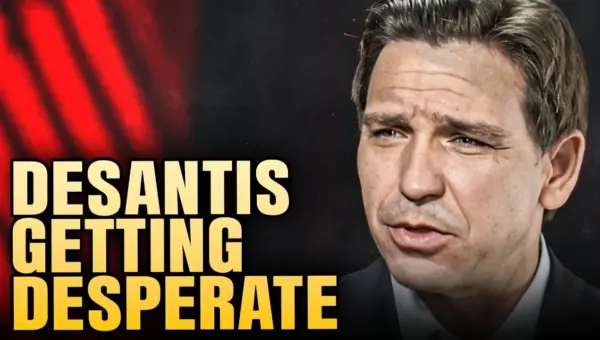
DeSantis’s Strange Comeback Bid: A Food Show Fiasco
Ron DeSantis's post-presidential campaign comeback attempt has taken an unusual turn with his online food series, "Diners, Drive-ins, and DeSantis." The governor is trying to rebrand himself as more relatable after his failed presidential bid.


Trump’s Pardon Promises Signal a Troubling Future
Reports indicate Donald Trump has promised widespread presidential pardons for his staff and associates in a potential second term. While his administration downplays these remarks as jokes, the broad power of the pardon raises concerns about accountability and the rule of law.


NYPD Officers Brutalize Innocent Man in Botched Bust
Shocking video shows NYPD officers violently beating Timothy Brown in a mistaken identity drug bust. Despite being cuffed, Brown was punched and had his head slammed on a counter. The community is demanding justice and prosecution for the officers involved.