McCaul: Trump Must Explain Iran War Justification
Texas Congressman Michael McCaul is calling on President Trump to clearly explain the justification for U.S. military involvement in Iran. McCaul emphasized the need for transparency regarding the "imminent threat" and the administration's strategic objectives beyond the initial military operation.

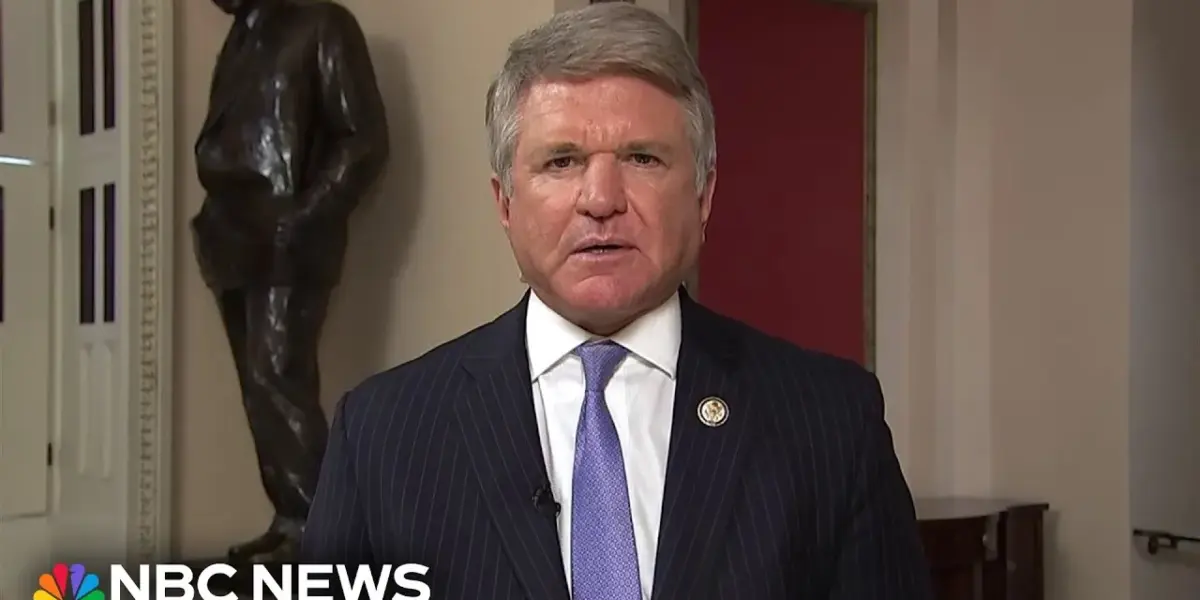
McCaul Urges Clarity on U.S. Military Action in Iran
WASHINGTON D.C. – As the Trump administration’s military engagement in Iran intensifies, a key Republican lawmaker is calling for greater transparency and a clearer justification for the escalating conflict. Representative Michael McCaul of Texas, Chairman Emeritus of the House Foreign Affairs and House Homeland Security Committees, stated that President Trump must adequately explain the rationale behind the U.S. Involvement, particularly the timing and the nature of the perceived threat.
Debating the “Imminent Threat”
The central question surrounding the recent U.S. military actions, referred to by some within the administration as a “war,” revolves around the justification of an “imminent threat.” Administration officials have offered varying explanations, with some suggesting that Iran’s potential actions in retaliation for an attack would directly endanger the United States. Others have indicated a belief that Iran was preparing to launch an attack first.
However, Congressman McCaul expressed a nuanced view, acknowledging the long-standing adversarial relationship between the U.S. and Iran since the 1979 revolution. “There’s been an imminent threat since 1979, when the Ayatollah came into power,” McCaul stated.
“And ever since that time, for over five decades, we’d have terror events attacking Americans. They are the biggest roadblock to peace in the Middle East.”
When pressed on the distinction between a long-standing threat and an immediate one, McCaul pointed to Iran’s continued development of nuclear weapons systems, ballistic missiles, and intercontinental ballistic missile (ICBM) capabilities. “They were rebuilding their nuclear weapons systems, their ballistic missiles and their ICBM capability that could hit the United States of America,” he explained. He also suggested that the timing of the operation may have been influenced by an opportunity to target Iranian leadership during a convened meeting.
War Powers Act and Congressional Notification
The classification of the U.S. military action has also been a point of discussion. While House Speaker Mike Johnson has stated the U.S. is not currently at war, McCaul clarified the procedural implications under the War Powers Act. “It does trigger notification under the War Powers Act when you have a conflict in hostile territory, which that’s what this is,” he said.
McCaul confirmed that the administration has notified Congress, initiating a 60-day clock under the Act. If the operation is not concluded within this timeframe, Congressional authorization will be required.
McCaul emphasized the importance of cooperation between the executive and legislative branches on matters of war. “When it comes to war powers, I think it’s always better for the administration to work with Congress to get the side of the American people supportive of this,” he advised. He also touched upon the difficulties in updating the 2001 Authorization for Use of Military Force (AUMF) to include contemporary threats from Iran and its proxies, noting a lack of bipartisan support for such measures.
Public Opinion and Strategic Objectives
Recent polling data indicates a mixed public reception to the U.S. military involvement in Iran, with a majority disapproving. McCaul believes that President Trump needs to articulate the administration’s objectives more clearly to the American public.
“I think he needs to explain it, and I think he needs to put his best messengers out there, explain what is really happening,” McCaul urged. “And I think also what are the objectives here?”
He suggested that while the American people support the idea of ending the current Iranian regime and freeing the Iranian people from oppression, they do not support an open-ended conflict. “What they don’t support is an unending, bogged down war in the Middle East,” McCaul stated. He stressed that the administration must clarify that the military objective is time-bound, with a stated goal of completion within five weeks, and that the aim is not nation-building or placing troops in harm’s way.
The Path Forward: Beyond Military Action
Looking beyond the immediate military operation, McCaul highlighted the critical need for a clear “Phase Two” strategy. “What happens after that? We don’t want to get bogged down, and we don’t want to have to nation build after this,” he said.
He underscored that the long-term solution for Iran’s future rests with its people, but that the U.S. can provide support through leadership, weapons, and communication. However, he noted that the specifics of this post-military phase are currently unclear.
Texas Politics and Senate Race
The discussion also briefly touched upon domestic politics, specifically the results of the Texas primaries. McCaul expressed concern about the prolonged nature of the Republican Senate primary, particularly for his friend John Cornyn. He indicated that President Trump might soon endorse a candidate to consolidate support and avoid a costly, drawn-out intra-party battle, suggesting it could help prevent the party from spending resources fighting internally.
Conclusion: Awaiting Clarity
As the situation in Iran develops and the 60-day clock under the War Powers Act begins to tick, the focus remains on the Trump administration’s ability to clearly articulate its strategy and objectives. Congressman McCaul’s call for explanation highlights the critical need for public and congressional understanding of the justifications for U.S. military involvement and the long-term vision for regional stability. The coming weeks will be crucial in determining whether the administration can effectively communicate its rationale and secure broader support for its actions.
Source: Rep. Michael McCaul says Trump needs to ‘explain’ U.S. military involvement in Iran (YouTube)

Related Articles

Trump Culls Judges Over Israel Criticism Rulings
President Trump has fired six immigration judges, including two who refused to deport students for criticizing Israel. This action raises concerns about judicial independence and the potential for political influence in legal decisions.


Strait of Hormuz Reopens, Easing Global Oil Fears
The Strait of Hormuz has reopened, potentially easing global economic pressures and lowering oil prices. Meanwhile, singer D4vd has been arrested on suspicion of murder, with new details emerging about the case. A broader investigation is underway into the suspicious deaths and disappearances of 11 scientists involved in sensitive US research.

Trump’s Iran Claims Ignite Crisis, Sparking Emergency Talks
Reports detail an emergency meeting convened by Donald Trump following Iran's denial of his claims about a trade deal. Iran has threatened to close the Strait of Hormuz, escalating tensions. Analysis suggests military pressure is unlikely to yield concessions from Iran, potentially leading to further confrontation.