Greens Face Uphill Battle in German “Stronghold” State
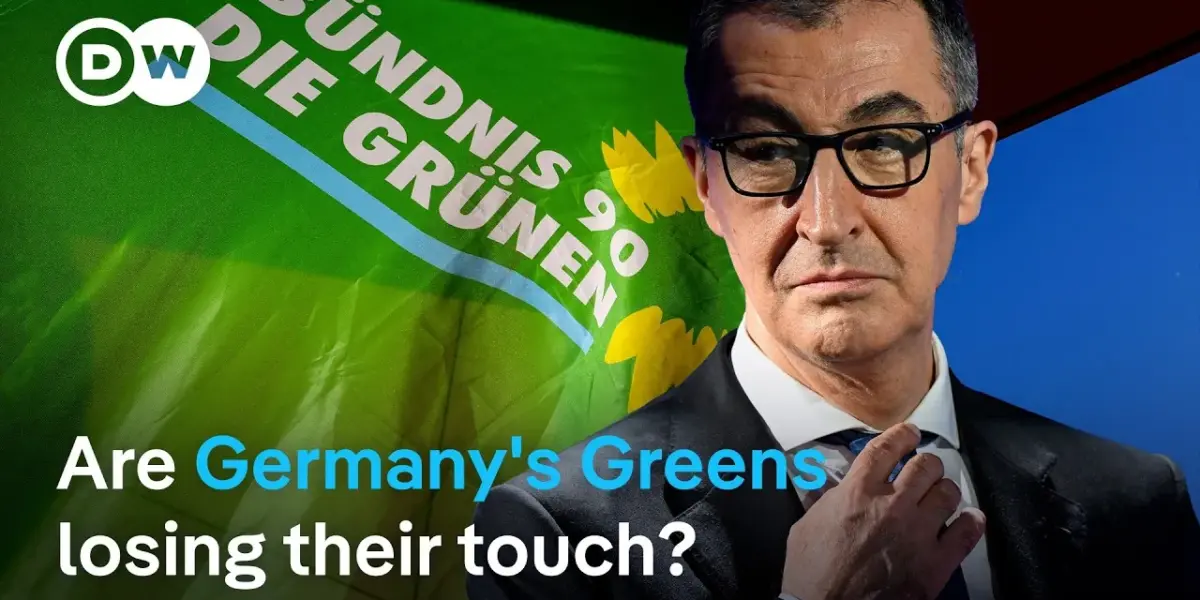
Germany's Green Party faces a critical test in Baden-Württemberg, their long-held stronghold, as state elections loom. After 15 years of leadership, the Greens are polling behind the CDU, with economic concerns and national party headwinds threatening their grip on power. The pragmatic legacy of Winfried Kretschmann is now being carried by Cem Özdemir, whose personal popularity may be key to navigating the party through this challenging period.

Greens Risk Losing Grip on Baden-Württemberg’s Governorship
Baden-Württemberg, a region renowned for its automotive industry giants like Mercedes and Porsche, as well as its picturesque Black Forest, is facing a pivotal state election on March 8th. This prosperous German state has been a surprising bastion of support for the environmentalist Green Party, which has held the position of state premier for 15 years under the leadership of Winfried Kretschmann.
However, the party’s long-standing dominance is now under threat, with current polling indicating a potential loss of leadership for the first time in over a decade. This electoral contest in the Greens’ most significant stronghold raises questions about the party’s ability to adapt and maintain relevance in an increasingly fragmented German political landscape.
Shifting Political Tides and Electoral Forecasts
The Green Party’s electoral fortunes in Baden-Württemberg have taken a downturn. After achieving a strong result with nearly a third of the vote in 2021, recent polls place them at approximately 27%. They now trail the conservative Christian Democratic Union (CDU), which is projected to win the state leadership with 28% of the vote.
Adding another layer of complexity to the forecast is the rise of the far-right Alternative for Germany (AfD). The AfD is projected to secure third place with around 18% of the vote, marking its strongest performance to date in the state.
A Glimpse into the Green Campaign Trail
In the industrial town of Biberach, a campaign event for the Green Party drew a significant crowd, primarily consisting of pensioners eager to hear from the party’s candidate for state premier, Cem Özdemir. Despite the upbeat atmosphere within the hall, a palpable sense of disillusionment among some attendees was noted.
The event featured prominent Green Party figures, including Germany-wide co-leader Annalena Baerbock, veteran former Foreign Minister Joschka Fischer, and the energetic Enes Enriad Lang, a rising star in the party’s social media presence. However, the central figure of the day was undoubtedly Winfried Kretschmann, the outgoing premier whose 15-year tenure has been synonymous with the Greens’ success in the region.
Kretschmann’s Legacy: Pragmatism as a Winning Formula
Winfried Kretschmann, 77, is widely credited with the Green Party’s remarkable success in Baden-Württemberg. His pragmatic approach, which skillfully balanced economic interests with climate protection, often diverged from the more left-leaning policies espoused by the Green Party at the federal level.
This moderate stance resonated strongly in a state traditionally dominated by conservative parties, earning him significant support, even among Christian Democrat voters and the broader bourgeois electorate. His ability to position himself in the political center was a key factor in his enduring popularity.
“He was so to say positioning himself in the middle and uh he was so to say a key for the success. He was quite popular even among the Christian Democrats, among the bourgeois electorate.”
The Challenge of Succession: Cem Özdemir Steps In
Kretschmann’s impending retirement leaves a significant void, and the task of filling his shoes falls to Cem Özdemir. Özdemir is no political novice; born to Turkish parents in Bad Urach, he has a distinguished career that includes leading the Green Party at the national level, serving as a Member of the European Parliament, and holding a ministerial position in the federal government. He is known to the voters of Baden-Württemberg and is recognized for adopting Kretschmann’s pragmatic political style, making him a popular candidate. Nevertheless, the era of record-breaking wins for the Greens in the state appears to be drawing to a close, with underlying issues suggesting that even a popular candidate may not be enough to overcome systemic challenges.
National Headwinds and Voter Discontent
The Green Party is facing broader national challenges that are impacting its standing in Baden-Württemberg. The party has experienced stagnation at the federal level, and its reputation has been tarnished by several unpopular policies implemented during its five years in the federal government, which concluded in 2025.
Energy policies enacted in the wake of rising prices following Russia’s invasion of Ukraine have drawn considerable criticism. Germany already has the second-highest energy prices in Europe, and the Greens have been associated with these high costs, leading to voter dissatisfaction.
“You have to recall that uh the Germans have the second highest energy prices in Europe. Only the Danes, they pay higher prices.
Uh and this is of course attributed to the green politics. So when the Greens in general have a downward trend, this will also hit uh Banutenberg uh the Banut Greens however on a higher level.”
Economic Woes Grip Baden-Württemberg’s Automotive Sector
Beyond national political trends, the economy of Baden-Württemberg has become a paramount concern for voters. The state’s automotive-centric economy is grappling with a significant crisis. Major manufacturers like Mercedes-Benz and Porsche, along with suppliers such as Bosch, have announced substantial job cuts expected by 2030.
This downturn is attributed to a confluence of factors, including the structural shift towards electric vehicles, increasing competition from China, high energy and production costs, and a perceived lack of innovation. Insolvency filings have risen for the second consecutive year, and while unemployment remains below the national average, its rate of increase is accelerating. Tamara Humbna from the trade union IG Metall highlighted growing concerns about job security, noting that while the state government has attempted to manage the structural changes, its efforts have not always been successful.
Assigning Blame Amidst Economic Uncertainty
Dissatisfaction with the ruling party often escalates during periods of economic hardship. The crisis in the carbon-intensive car industry makes it easy for voters to attribute blame to the Green-led state government.
When asked about the causes of the economic downturn, Cem Özdemir pointed to external factors such as international trade policies, including tariffs imposed by the Trump administration, and China’s role as a formidable competitor, sometimes employing what he described as unfair methods. He also referenced the unavailability of cheap Russian gas, a resource that was previously a significant factor in German industry.
“We’re an export state number one in Germany. We produce excellent products that we sell to the whole world. But I mean the tariffs of Donald Trump uh China’s role that is now a strong competitor also playing on sometimes with unfair methods cheap Russian gas which is not available anymore.
And let me remind you it was not the Green Party who fought that if you’re nice to Mr. Putin he will be nice to us. We always warned that dictators do not have good intentions with a vi European with a vas.”
The Road Ahead: Navigating Coalition Politics
Regardless of the election outcome, the Green Party is likely to remain in government in Baden-Württemberg, albeit potentially as a junior coalition partner. Their once highly effective pragmatic approach may no longer be sufficient to secure a broad majority.
Some of their core environmental policies, which were once a strong selling point, could now be perceived as a hindrance to voters concerned about economic stability and energy costs. Ultimately, the personal popularity of candidate Cem Özdemir might prove to be the most significant factor in mitigating potential electoral losses for the Greens in this crucial state.
Source: Can the Green party hold on to its one stronghold in Germany? | DW News (YouTube)

Related Articles
Wall Street Soars as Americans Struggle: A Widening Economic Divide
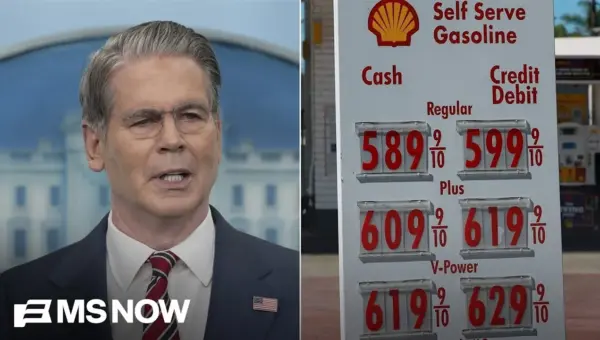
Wall Street is experiencing record profits while ordinary Americans struggle with rising costs and economic uncertainty. This widening gap is fueled by policy decisions and a disconnect between market performance and everyday lived experiences. Key issues include sticky prices, unclear government objectives, and proposed budget cuts that raise questions about national priorities.
Trump’s War Claims Spark Stupidity or Insanity Debate
Donald Trump's recent claim that 'nobody has ever ended one war' has sparked debate about his mental state and political awareness. Experts and critics point to his past statements and actions, including his handling of the Strait of Hormuz conflict, raising concerns about his fitness for office. The upcoming elections are seen as a critical juncture for assessing his political standing.
GOP Rep. Cory Mills Faces New Calls to Resign Amid Misconduct Allegations
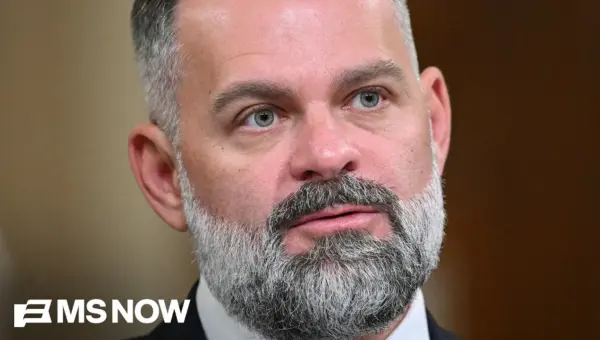
Florida Republican Representative Cory Mills is facing renewed calls to resign amid serious allegations of assault and misconduct. A woman reported an assault at his home in February 2025, and he was previously subject to a protective order. Despite denials, critics and some within his own party are demanding accountability.