GOP’s Iran Stumble: Contradictions Expose Leadership Void
The Republican party is grappling with a significant communication crisis following recent joint U.S.-Israel strikes in Iran. Conflicting statements from officials, including Senator Markwayne Mullin and Senator Marco Rubio, reveal a struggle to maintain a consistent narrative and justify the military actions, leading to widespread accusations of hypocrisy and incompetence.

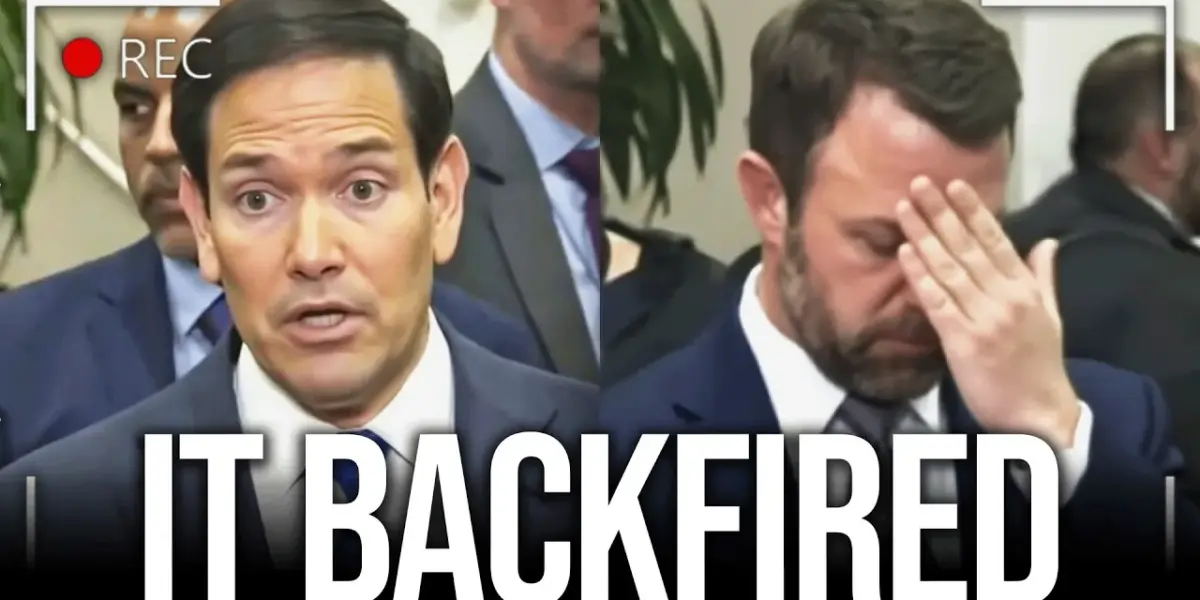
GOP’s Iran Stumble: Contradictions Expose Leadership Void
A recent series of joint strikes by the United States and Israel against Iran has plunged the Republican party into a state of visible disarray, marked by a cascade of contradictory statements and a palpable struggle to maintain a coherent narrative. The administration’s handling of the situation, from the initial justification for the strikes to the public’s understanding of the ongoing conflict, has been characterized by a profound lack of clarity and a series of embarrassing public backtracks, revealing deep fissures within the party’s leadership and communication strategy.
A War of Words: Shifting Definitions and Denials
One of the most striking aspects of the fallout has been the contortions undertaken by Republican officials to define the nature of the engagement. Senator Markwayne Mullin, initially a vocal proponent of the administration’s stance, found himself in a public debate with himself. Having spent days arguing that the strikes did not constitute a “war,” he abruptly shifted his position after a closed-door Senate briefing, declaring, “This is war.” When confronted by reporters about his earlier statements, Mullin resorted to calling his previous remarks a “misspoke” and attempting to differentiate between “declaring war” and “fighting the threat.” This semantic gymnastics highlights the administration’s difficulty in reconciling its actions with its rhetoric, particularly given President Trump’s campaign promises to end wars.
The contradiction extends beyond the definition of war itself. The stated reasons for the strikes have been a moving target. Initially, the focus was on Iran’s nuclear capabilities.
This was quickly followed by President Trump’s assertion that he desired the freedom of the Iranian people and regime change. Subsequently, an “imminent threat” was cited, which then broadened to encompass the “past 40 years of terrorism” attributed to Iran. This shifting rationale has left many questioning the true objectives and justifications for the military action.
Marco Rubio’s Shifting Narrative: From Admission to Retraction
Senator Marco Rubio’s public statements also illustrate the administration’s communication breakdown. Initially, Rubio appeared to suggest that Israel had, in effect, “dragged” the United States into the conflict.
He detailed how the U.S. Preemptively acted due to the anticipation of an Iranian response to an Israeli strike, a response that would have endangered American forces. He outlined a scenario where intelligence indicated that if the U.S. Waited for Iran to retaliate, American casualties would have been significantly higher.
However, shortly after these remarks, Rubio appeared to walk them back, stating that the president had made a decision to dismantle Iran’s “terroristic capability” and that the strikes were a matter of timing and a joint operation. This reversal, along with the Secretary of Defense’s own wavering explanations, underscores a disjointed and reactive approach to explaining the U.S. Involvement in the escalating tensions.
The Netanyahu Factor: Israeli Influence Questioned
The role of Israeli Prime Minister Benjamin Netanyahu has also come under scrutiny. While some administration officials and allies have downplayed the idea that Netanyahu could “drag” President Trump into actions, the timeline and nature of the strikes have fueled speculation. The speed with which events unfolded, leading to a lack of evacuation plans for U.S. Embassies, has been interpreted by some as evidence of a hastily executed plan, potentially influenced by Israeli strategic interests.
Netanyahu’s own public statements, particularly his lighthearted dismissal of the notion that he controls Trump’s foreign policy decisions, have done little to quell these concerns. His effusive praise for Trump as the “strongest leader in the world” has been viewed by critics as an attempt to curry favor and maintain influence over U.S. Actions in the region.
Internal Dissent and the Appearance of Incompetence
Beyond the public statements, reports of internal dissent suggest a deeper dissatisfaction within the Republican party. Senator Todd Young, a Republican reportedly retiring soon, was noted for his willingness to critically question administration officials, even drawing parallels between leadership decisions in the heat of the moment and the controversial actions of figures like Kristi Noem. This internal questioning, while sometimes focused on unrelated matters like animal cruelty, hints at a broader unease with the administration’s decision-making processes.
The most telling sign, however, is the sheer volume of contradictions. Republicans are not only contradicting their own words from the previous day but also contradicting each other and their own stated intelligence. This creates an impression of improvisation and a lack of strategic foresight, making it difficult for even casual observers to follow the administration’s narrative.
Why This Matters
The repeated contradictions and shifting justifications surrounding the U.S. Actions in Iran are more than just a political embarrassment; they erode public trust and undermine the credibility of U.S. Foreign policy. When official statements are inconsistent, it becomes challenging for allies and adversaries alike to understand American intentions and commitments. This ambiguity can lead to miscalculation, increasing the risk of unintended escalation.
Implications, Trends, and Future Outlook
The current situation reflects a broader trend of political polarization where adherence to party lines often trumps factual consistency. The administration’s struggle to present a united front on a critical foreign policy issue suggests potential weaknesses in strategic planning and crisis communication.
Moving forward, the administration faces the challenge of re-establishing a clear and consistent message to regain credibility. The reliance on reactive explanations and semantic distinctions indicates a reactive rather than proactive foreign policy, which could have long-term implications for regional stability and U.S. Standing on the global stage.
Historical Context and Background
The history of U.S. Involvement in the Middle East is replete with examples of complex conflicts where justifications and objectives have evolved over time. The current situation in Iran echoes past instances where the rationale for military intervention has been debated, often with shifting explanations provided by successive administrations.
The tension between stated policy goals, such as promoting democracy or preventing nuclear proliferation, and the realities of military engagement, can lead to the kind of communication challenges witnessed today. President Trump’s “America First” platform, which included promises to end “endless wars,” adds another layer of complexity, as initiating new military actions or deepening involvement in existing conflicts can be seen as a departure from his core campaign promises.
The administration’s inability to present a cohesive and consistent narrative regarding the strikes in Iran exposes a significant deficit in strategic communication and potentially in strategic planning itself. This “freak out” over their own “disaster” is not merely a political gaffe but a symptom of a deeper issue concerning the clarity and credibility of U.S. Foreign policy under the current administration.
Source: Trump Admin FREAKS OUT over their OWN DISASTER (YouTube)

Related Articles

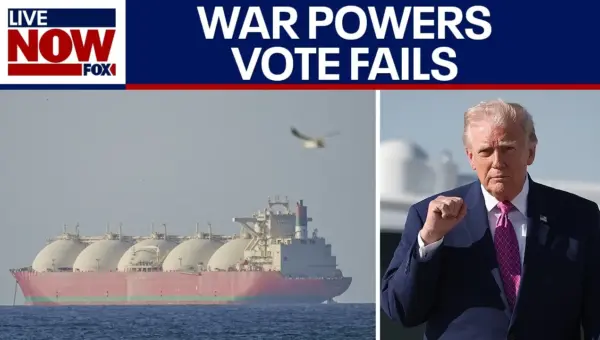
Senate Blocks Limits on Trump’s War Powers Against Iran
The U.S. Senate has voted against limiting President Trump's war powers concerning Iran, rejecting a resolution that aimed to restrict his ability to order further military strikes. Democrats have repeatedly pushed for such limitations, citing concerns over potential escalation and the cost of conflict. Despite some bipartisan unease, the measure failed to gain sufficient support.

NJ Candidate Slams US-Iran War as ‘Costly Mistake’
Progressive New Jersey congressional candidate Analilia Mejia criticizes U.S. involvement with Iran as a "war without a plan." She argues that military spending diverts resources from domestic needs, directly impacting American families' finances. Mejia pledges to prioritize diplomacy and constituent economic well-being if elected.

Fetterman Stands Apart: Votes Against Iran War Powers Bill
Senator John Fetterman announced he will be the sole Democrat voting against a resolution to end U.S. military action against Iran. He also plans to oppose blocking weapons for Israel, signaling a departure from his party's current direction. This move highlights potential divisions on foreign policy within the Democratic party.