America’s War on Words: Defining Conflict in a Modern Age
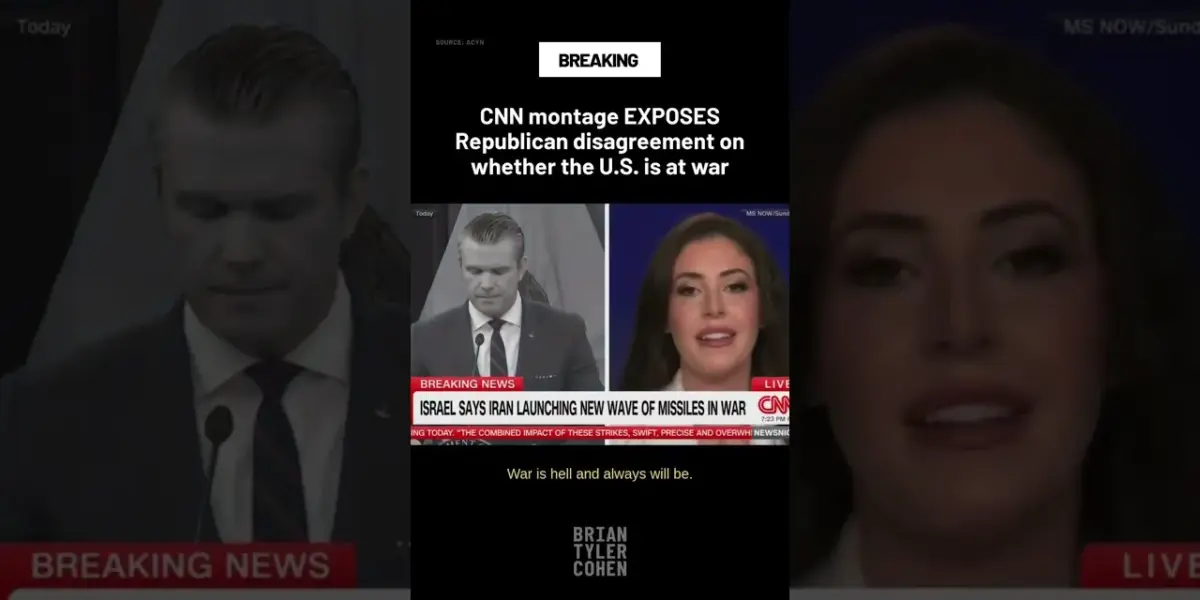
A CNN montage reveals Republican politicians grappling with the definition of 'war,' highlighting a growing disconnect between combat reality and constitutional responsibility. This semantic battle underscores the evolving nature of conflict and the erosion of congressional oversight in military engagements.

America’s War on Words: Defining Conflict in a Modern Age
The very definition of “war” has become a battleground, as evidenced by a recent CNN montage that highlighted stark disagreements among Republican politicians regarding the United States’ current engagement in combat operations. This semantic struggle, while seemingly pedantic, underscores a deeper, more complex issue: the evolving nature of conflict and the constitutional responsibilities of lawmakers in authorizing military action. The clips reveal a spectrum of opinions, from those who readily label the engagements as “war” to others who vehemently deny it, opting instead for terms like “combat operations” or “strategic strikes.” This linguistic dance is not merely academic; it has profound implications for how the public perceives these actions, how policymakers are held accountable, and ultimately, how the nation wages war.
The Shifting Sands of Semantics
The core of the disagreement lies in the technicality of a formal declaration of war. As one commentator points out, “We haven’t declared war.” This legalistic distinction is wielded by some as a shield, suggesting that without a formal declaration from Congress, the United States is not technically at war, even if troops are engaged in combat and casualties may occur. This perspective allows for a certain distancing from the gravity and implications that a declared war typically entails.
Conversely, others, including the Secretary of Defense, are more direct, stating, “Today, this is a war.” This acknowledgment, even if framed as a matter of fact rather than a formal declaration, suggests a recognition of the reality on the ground. The assertion that “We set the terms of this war from start to finish” further blurs the lines, implying a comprehensive engagement that extends beyond isolated “combat operations.” The phrase “War is hell and always will be” is invoked, acknowledging the inherent brutality and cost of armed conflict, regardless of its official designation.
The montage also reveals a pragmatic, perhaps even cynical, interpretation: the reluctance to call it a “war” might stem from a desire to avoid congressional responsibility. “I guess they’re the Congress people that you saw in that clip are all convinced that it’s not a war because that would mean that they would have had to have done their job beforehand to authorize this,” one speaker suggests. This points to a potential abdication of duty, where the executive branch takes on significant military actions without the explicit consent and oversight that the Constitution mandates through a declaration of war.
Historical Context: The Declining Use of Formal Declarations
The United States Constitution, in Article I, Section 8, grants Congress the power to “declare War.” Historically, this was a solemn and deliberate process. However, in the post-World War II era, particularly with the advent of the Cold War and subsequent global interventions, formal declarations of war have become exceedingly rare. Instead, presidents have frequently deployed military forces under broader authorizations for the use of military force (AUMFs), in response to perceived immediate threats, or under the guise of “police actions” or “limited interventions.” This shift has gradually eroded the explicit power of Congress in initiating large-scale military engagements, leading to a growing executive dominance in foreign policy and military affairs.
The Korean War and the Vietnam War, for instance, were never formally declared wars by Congress, despite involving extensive troop deployments and significant casualties. These conflicts were prosecuted under broad presidential authority, often justified by the need to contain communism. This historical precedent has set a powerful example, normalizing the idea that the U.S. can be engaged in prolonged, high-stakes combat without the formal imprimatur of a declaration of war.
Why This Matters
The semantic debate over “war” versus “combat operations” is more than just a linguistic quibble; it is a fundamental issue of accountability and transparency. When military actions are not formally declared wars, several critical consequences emerge:
- Erosion of Congressional Power: The power to declare war is a cornerstone of legislative oversight. By avoiding this designation, presidents can bypass the need for explicit congressional authorization, weakening the checks and balances inherent in the U.S. System of government.
- Public Perception and Consent: The term “war” carries immense weight and evokes a sense of national commitment and sacrifice. Labeling engagements as something less significant can obscure the true cost and potentially lower public awareness and scrutiny of prolonged military involvement.
- Legal and Constitutional Ambiguity: The lack of clear definitions can lead to legal uncertainties regarding the scope of presidential power, the application of the laws of war, and the rights and responsibilities of those involved in the conflict.
- Resource Allocation and Public Support: Declared wars typically mobilize national resources and garner broad public support, as the nation understands the stakes. “Combat operations,” on the other hand, can be more easily compartmentalized, potentially leading to a disconnect between the public and the ongoing military efforts.
Implications, Trends, and Future Outlook
The trend towards euphemistic language and the avoidance of formal war declarations is likely to continue. The nature of modern warfare, characterized by asymmetric threats, proxy conflicts, and the rapid deployment of special forces, often doesn’t fit the traditional mold of large-scale, state-on-state warfare that a declaration of war implies. This makes the old legal frameworks seem increasingly anachronistic.
However, this evolution presents a significant challenge to democratic governance. As the lines blur, it becomes harder for citizens to understand the extent of their nation’s commitments and the justifications for them. The accountability mechanisms that were designed to safeguard against unchecked executive power in matters of war are being circumvented, not by outright defiance, but by a subtle yet persistent redefinition of terms.
The CNN montage is a clear reminder that the debate over the definition of war is not just about words; it’s about power, responsibility, and the very essence of how a democracy engages in armed conflict. As the United States continues to navigate an increasingly complex global landscape, a clear understanding and honest discussion about the nature of its military engagements, and the constitutional roles in authorizing them, are more critical than ever. The danger lies not in the combat itself, but in the erosion of the democratic processes that should govern its initiation and execution.
Source: CNN montage EXPOSES Republican disagreement on whether the U.S. is at war (YouTube)

Related Articles
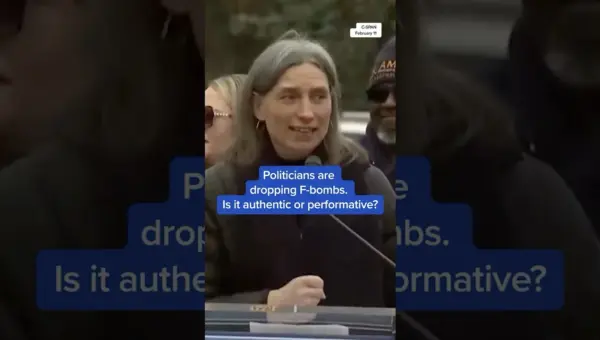
Politicians Swear More: Democrats Lead ‘F-Bomb’ Trend
A new analysis reveals politicians are swearing more than ever, with Democrats using curse words more frequently than Republicans. This trend sparks debate over whether the profanity reflects genuine emotion or is a calculated performance to connect with voters.
Pelosi Slams Congress for Ceding Power to Trump
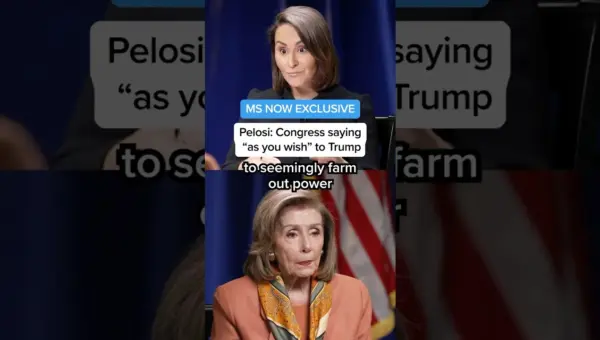
Former Speaker Nancy Pelosi has strongly criticized Congress for deferring to President Trump, stating lawmakers have said "As you wish." In an exclusive interview, she argued that Speaker Mike Johnson's strategy allows the White House to "farm out power," undermining congressional authority. Pelosi's remarks highlight concerns about the balance of power between the legislative and executive branches.

Rogan Slams MAGA Movement: ‘A Bunch of Dorks’
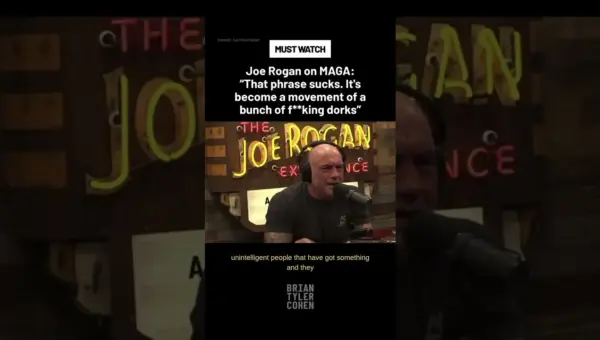
Joe Rogan has openly criticized the 'Make America Great Again' movement, labeling its followers as 'a bunch of dorks.' He finds the slogan itself problematic, preferring the idea of making America 'greater' rather than 'great again.' Rogan's comments highlight concerns about the perceived intelligence and character of those drawn to the movement.