MTG’s Warning: Trump Eyes Midterm Election Sabotage
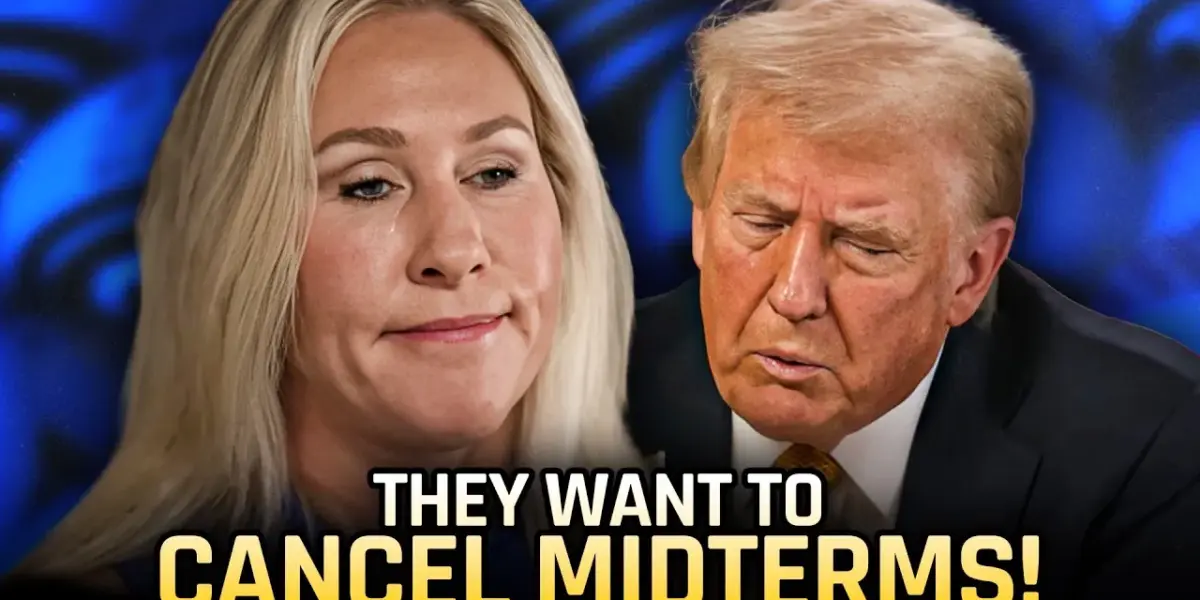
Even Marjorie Taylor Greene is now voicing concerns that Donald Trump might attempt to cancel the upcoming midterm elections. This alarming sentiment, echoed by conservative podcaster Shannon Joy, highlights a worrying willingness within some political circles to explore extreme measures. While legal barriers exist, the uncertainty surrounding the potential response from Congress and the courts creates a deeply unsettling scenario for the future of democratic processes.

MTG’s Stark Warning: Trump Eyes Midterm Election Sabotage
The political landscape in the United States has reached a point of such profound instability that even staunch loyalists are beginning to voice anxieties about the integrity of democratic processes. The latest tremor comes from Marjorie Taylor Greene, a congresswoman known for her unwavering support of Donald Trump, who has publicly mused about the possibility of the former president attempting to cancel the upcoming midterm elections. This sentiment, echoed by conservative podcaster Shannon Joy, signals a deeply concerning undercurrent within a segment of the political right, suggesting a willingness to explore extreme measures to circumvent electoral outcomes they fear losing.
A Conservative Concession: Echoes of Doubt
The initial spark for this discussion was ignited by a social media post from Shannon Joy, a conservative podcaster, who speculated, “Trump doesn’t seem to care about the midterms. Who wants to bet he’ll declare a national emergency because of Iran or some other manufactured crisis and try to cancel the elections in November?” The gravity of this statement, coming from within conservative circles, was amplified when Marjorie Taylor Greene responded with a simple yet chilling, “Yeah, I could see it. Insane.” The author of the original piece notes the rarity of such unvarnished truth from two conservative voices in the same conversation, framing it as a moment of almost unbelievable accuracy.
The Legal and Constitutional Maze
While the idea of cancelling elections sounds like a dramatic departure from democratic norms, the legal framework surrounding election dates and procedures presents a complex picture. According to the U.S. Constitution, the date of federal elections is set by Congress. Therefore, any alteration to this date would legally require an act of Congress.
Donald Trump, despite his past rhetoric and alleged inclinations, does not possess the unilateral authority to cancel elections. States, on the other hand, retain the power to determine the manner in which their elections are conducted.
The Congressional Calculus: A Party’s Self-Interest?
This legal reality, however, does not entirely assuage concerns. The question then shifts to Congress, the body that would need to act. The current political climate, where the Republican party anticipates losing control of Congress in the midterms, introduces a layer of self-interest into the equation.
The author posits that if the party believed a significant loss was imminent, there might be a temptation to postpone elections to preserve power. The razor-thin majority currently held by Republicans in the House of Representatives, as of the time of the transcript, is presented as a potential deterrent to such drastic action.
The loss of even a few votes could thwart any attempts to manipulate election schedules. However, the author expresses uncertainty about the future, suggesting that if Republican seats are regained and the majority solidifies, the landscape could change.
Beyond Congress: The Uncharted Waters of Presidential Power
Even if Congress were to resist any move to alter election dates, the possibility of Donald Trump attempting to circumvent legal channels remains a significant concern. The author acknowledges that Trump would likely try such a tactic, but the crucial question becomes whether the courts would intervene effectively. While legally the courts could and should stop such an attempt, the author expresses profound doubt about whether they would.
This uncertainty highlights the unprecedented nature of the situation. We are, as the author states, in “uncharted waters.” The response of the judiciary, the resilience of Congress, and the public reaction to such an unprecedented crisis are all unknown variables.
The Terrifying Unknown: A Crisis of Uncertainty
The core of the anxiety surrounding this discussion lies in the sheer unpredictability of such a scenario. The author emphasizes that no one, regardless of their expertise or political affiliation, can definitively predict the outcome if Trump were to attempt to cancel elections. Speculation is rife, and while it is a natural response to a perceived threat, it is crucial to recognize that any definitive pronouncements are mere guesses.
This lack of certainty about the fundamental process of democratic elections is, in itself, a terrifying reality. It is a situation that Trump has, according to the author, “created for all of us.” The potential for manufactured crises, coupled with a willingness to challenge electoral norms, creates a volatile environment where the very foundation of American democracy feels precarious.
Why This Matters
The significance of this discussion extends far beyond the immediate political machinations. It speaks to a broader trend of democratic erosion and the questioning of established institutional norms. When figures within the political sphere, even those on the fringes, begin to openly discuss the cancellation of elections, it signals a dangerous normalization of anti-democratic ideas.
The reliance on “manufactured crises” as a pretext for extraordinary measures is a tactic employed by authoritarians throughout history. The uncertainty surrounding the legal and institutional response further exacerbates the threat, as it suggests that the checks and balances designed to protect democracy may be insufficient in the face of a determined challenge.
Implications, Trends, and Future Outlook
The implications of these sentiments are far-reaching. They suggest a potential for continued political instability and a deepening distrust in electoral processes. The trend of questioning election integrity, which has been a hallmark of recent political discourse, could escalate into more direct challenges to the holding of elections themselves.
The future outlook is one of caution. While legal and constitutional barriers exist, the willingness of key political figures to contemplate such extreme actions, and the uncertainty about the effectiveness of institutional defenses, paints a concerning picture.
The potential for a crisis of legitimacy, should such an attempt be made, could have profound and lasting consequences for the American republic. The author’s repeated emphasis on the unknown highlights the fragility of democratic institutions when faced with deliberate attempts to undermine them.
Historical Context
Throughout history, democratic nations have faced threats to their electoral processes, often arising during times of significant political upheaval or perceived national crisis. Leaders have, at various points, sought to extend their power by manipulating or postponing elections, particularly in the lead-up to or during periods of conflict. However, the modern American context, with its established legal framework and a deeply polarized electorate, presents a unique set of challenges.
The speed at which information and misinformation can spread, coupled with the heightened partisan animosity, creates an environment where such ideas can gain traction more easily. The current discussion echoes historical anxieties about the concentration of power and the potential for leaders to exploit crises, but the specific dynamics of the contemporary U.S. Political scene make this a particularly unnerving iteration.
Source: Even Marjorie Taylor Greene Thinks Trump Will CANCEL Midterms (YouTube)

Related Articles
US F-15 Jet Downed Over Iran; President Trump Briefed
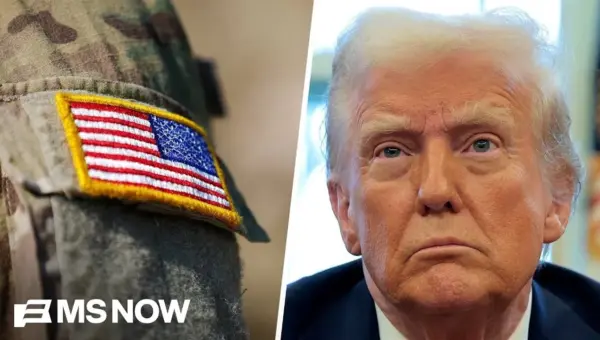
A U.S. F-15 fighter jet with two crew members aboard has been shot down over Iran, prompting an urgent briefing for President Trump. Search and rescue operations are underway as the incident marks a potential turning point in the ongoing conflict. The administration is now considering its options, which could include proceeding with de-escalation plans, retaliating against Iran, or pursuing diplomatic negotiations for the pilots' release.
Trump’s MAGA World Shaken by Bondi’s Firing, Iran Policy Woes
Pam Bondi's firing from Donald Trump's circle has ignited debate among MAGA supporters, with some celebrating her dismissal. Meanwhile, Trump faces criticism for his Iran policy, which critics claim has led to higher gas prices and alienated his base.

Trump Fires AG Pam Bondi, Cites ‘Private Sector’ Move
President Donald Trump announced that Attorney General Pam Bondi is leaving her post to pursue a new role in the private sector. The departure follows a reported heated confrontation and comes amid scrutiny over her handling of the Jeffrey Epstein files. Bondi's deputy, Todd Blanch, will serve as acting Attorney General.