Iran War Escalates: Wider Regional Conflict Looms
The war involving Iran, Israel, and the U.S. shows no signs of slowing, with recent escalations including widespread drone and missile attacks across the Gulf and the involvement of Hezbollah in Lebanon. Experts warn of a growing risk of a wider regional conflict, potential Iranian state collapse, and significant global economic and security repercussions.

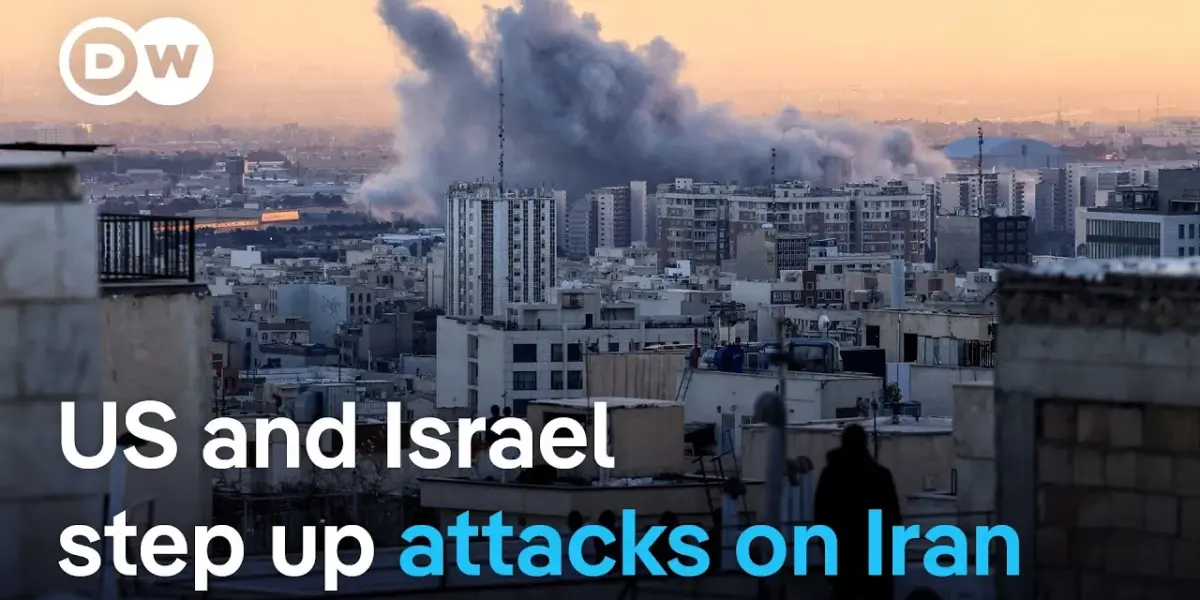
Iran Conflict Widens, Regional War Risk Soars
The conflict involving Iran, the United States, and Israel shows no signs of abating, with recent escalations pointing towards a potentially wider regional war. Both Israel and the U.S. Have intensified their military operations, with U.S. President Donald Trump indicating a prolonged capability for sustained action.
In response, Iran has broadened its retaliatory strikes, targeting multiple Gulf states and the U.S. Embassy in Saudi Arabia. The conflict has now extended to Lebanon, where Iran-aligned Hezbollah has declared readiness for open warfare with Israel, further increasing regional tensions.
Escalating Strikes and Regional Spillover
Recent reports indicate significant Israeli and U.S. Strikes targeting Iranian military command centers, including the headquarters of the Iranian Revolutionary Guard Corps. A spokesperson stated, “We’re not stopping, not even for a minute. The power of our attacks is unprecedented.
The Iranian regime is being struck to its core. It’s weakening by the day.”
Iran’s retaliation has been swift and widespread, deploying drones and missiles against targets across the region, including Saudi Arabia, Iraq, and the UAE, particularly areas with a U.S. Military presence. The involvement of Hezbollah, a key Iranian proxy based in Lebanon, marks a significant escalation. The group has vowed to resist Israel, opening a new front in the conflict.
Israel has responded with strikes across Lebanon, including an attack that reportedly destroyed the headquarters of Hezbollah’s Alnure radio station in Beirut. Civilian impact is also a growing concern, with reports of evacuation warnings and Israeli ground incursions into southern Lebanon, prompting tens of thousands of Lebanese civilians to flee.
Expert Analysis: Leadership Vacuum and Unpredictability
Justin Crump, an intelligence expert and CEO of the security consultancy Cybelline, discussed the potential ramifications of a leadership vacuum in Iran following the death of Ayatollah Ali Khamenei. “There are a lot of quite bad outcomes I think of that current situation,” Crump noted. While the U.S. And Israel may hope for a change in Iranian leadership leading to different negotiation stances, Crump warned of a more precarious reality.
“I think the reality is whatever happens will fall short of that and the worst fears are of course of complete collapse in Iran, something that looks very much like Libya did in quite similar circumstances.”
The fear of Iran collapsing into civil strife, potentially leading to violence throughout the Gulf region and mass refugee movements impacting Europe, is a significant concern for regional stability.
Gulf States’ Restraint and Potential Intervention
The article highlights the notable restraint shown by Gulf nations, such as Saudi Arabia and the UAE, despite facing sustained Iranian missile and drone attacks. Crump observed, “I think the restraint of the Gulf nations is notable. They they spent a lot of money on their armed forces for this exact scenario.” While these nations possess the military capacity to retaliate, joining a U.S.-led coalition in offensive action would require significant adaptation and coordination, as current plans were not designed with their direct offensive involvement in mind.
However, the continuous attacks could push these nations towards military intervention. “There comes a point where you just can’t tolerate this sort of attack anymore and you look weak just sitting back and letting it happen,” Crump explained.
Potential trigger events, such as attacks on critical infrastructure like desalination plants, could force their hand. The impact on oil markets is also a considerable factor, adding to the pressure on Gulf states.
Proxy Autonomy and Operational Flexibility
The role and autonomy of Iran’s proxies, including Hezbollah, Hamas, and the Houthis, are crucial to understanding the conflict’s dynamics. Crump suggested that many of the current military actions are being directed at a tactical or operational level, rather than a top-down strategic command. “It looks like they had a plan in place before the conflict.
They briefed commanders. They were given tasks. They were given missions in the event that conflict started.”
This operational autonomy allows Iran’s proxies to act with a degree of independence, especially if communication lines are compromised. This approach is seen as a survival tactic for Iran, aiming to create maximum disruption and pressure the U.S. To ensure the survival of the Islamic regime.
Broader Security Risks and Global Ramifications
Beyond the immediate theater, the international community faces urgent security risks if the conflict prolongs. Crump identified continued market impacts as a primary global concern, even without extensive damage to oil infrastructure.
“The uncertainty is already mounting the costs are already mounting.” This uncertainty affects global trade, with companies rerouting shipping and stockpiles building up. The ripple effects extend to other commodities and even impact sectors like the AI boom in the U.S., which relies on stable energy prices.
The heightened threat of terrorism, particularly against U.S. Interests, is another significant consequence of the current geopolitical climate. In the longer term, potential Iranian collapse could lead to widespread destabilization, refugee flows, and increased Iranian influence in neighboring regions. The conflict also carries long-term strategic implications, particularly concerning the U.S. Objective of reallocating resources towards the Pacific and its long-term strategic balance with China.
Looking Ahead
As the conflict intensifies, the international community watches closely for signs of de-escalation or further expansion. The decisions made by regional powers, the effectiveness of Iran’s proxy network, and the potential for critical infrastructure attacks will be key factors in determining the trajectory of this volatile situation. The long-term geopolitical realignments stemming from this conflict also remain a critical area of observation.
Source: Iran war: How big is the risk of a wider regional war? | DW News (YouTube)

Related Articles


Trump’s Foreign Policy Lacks Clear Doctrine, Analysts Say
Analysts argue that the U.S. foreign policy under President Trump lacks a consistent doctrine, with actions driven more by personal interests than a strategic plan. This absence of a clear guiding principle creates global uncertainty and challenges the existing world order.


Russia’s Oil Exports Hit Hard By Drone Attacks
Russian oil export capacity has dropped by up to 40% due to Ukrainian drone attacks on key terminals. This disruption impacts Russia's government revenue and profit margins, despite global oil price increases. The conflict continues to influence global energy markets and economies.

Trump Warns of ‘Stone Age’ Attack on Iran’s Infrastructure
Former President Donald Trump has warned of severe military action against Iran, targeting its power and oil infrastructure if diplomacy fails. This could lead to significant global market volatility, particularly in oil prices, and impact various industries.