Strait of Hormuz Reopens Amid Shifting Power Dynamics
The Strait of Hormuz has reportedly reopened, with President Trump claiming credit amid complex negotiations with Iran. Meanwhile, explosive allegations surface regarding FBI Director Cash Patel's conduct, and Defense Secretary Pete Hegseth faces ridicule for quoting Pulp Fiction at a prayer service. These events raise significant questions about leadership and stability within the administration.

Strait of Hormuz Reopens Amid Shifting Power Dynamics
After weeks of conflict and escalating tensions, the vital Strait of Hormuz has reportedly reopened for business. This development comes after thousands of lives were lost, fuel prices surged, and shipping faced significant disruptions. President Donald Trump announced the reopening, claiming credit for the restored flow of commerce through the strategic waterway.
The situation remains complex, with conflicting statements emerging from Iranian officials. While Iran’s foreign minister initially indicated the strait was open, the speaker of Iran’s parliament later suggested it could be closed again if the U.S. continues its blockade of Iranian ships. This uncertainty highlights the delicate balance of power and the ongoing negotiations shaping the region.
Iran’s Leverage in Negotiations
The apparent reopening of the Strait of Hormuz appears to be linked to a ceasefire agreement between Israel and Lebanon, which both nations reportedly accepted. This suggests that Iran used its control over the Strait of Hormuz, a critical chokepoint for global oil supplies, as leverage to bring the United States and Israel to the negotiating table.
President Trump’s acknowledgment of the Strait of Hormuz as the “Strait of Iran” has been interpreted by some as a concession, effectively recognizing Iran’s significant influence over the waterway. This designation highlights the shift in perceived control, particularly given that the strait was reportedly open before the recent conflict began.
Concerns Over Frozen Assets and Nuclear Deal
Further complicating the situation, reports indicate that the Trump administration is in negotiations to release $20 billion in frozen Iranian assets. This would be in exchange for Iran abandoning its stockpile of enriched uranium, a key component for developing nuclear weapons. This development draws parallels to the Obama administration’s nuclear deal with Iran, which also involved unfreezing assets and faced significant political opposition.
During the Obama era, the U.S. unfroze approximately $50 billion in Iranian assets as part of the Joint Comprehensive Plan of Action (JCPOA). A separate legal settlement involved a $400 million payment to Iran, plus $1.3 billion in interest, which was criticized by some as a ransom for the release of prisoners. The current negotiations raise questions about consistency in U.S. policy towards Iran and draw comparisons to past controversies.
Humanitarian and Regional Impact
The recent conflict has had a devastating human toll, with thousands killed, including hundreds of school children in a single bombing incident. The conflict also resulted in the deaths of 13 American service members and displaced over a million people in Lebanon. The energy infrastructure in the region has also suffered significant damage, leading to widespread suffering.
The author argues that the situation has left the region worse off than a decade ago, prior to the collapse of the Iran nuclear deal. The renewed geopolitical leverage of Iran, controlling passage through the Strait of Hormuz, is seen as a direct consequence of the recent escalation. This outcome is described as a failure, leaving the region more unstable.
Pattern of Trump’s Foreign Policy
The current situation is characterized as a recurring pattern in President Trump’s foreign policy approach. This pattern involves strong rhetoric, followed by overplaying his hand, and ultimately leaving situations worse than before his involvement. Examples cited include his interactions with North Korea, where threats of “fire and fury” led to a summit with Kim Jong-un but did not halt nuclear weapons testing.
Similarly, trade disputes with China, marked by aggressive talk and threats, eventually led to Trump conceding when China utilized its economic leverage, particularly concerning soybean purchases. These instances suggest a consistent approach where initial bluster is followed by concessions when faced with opposing leverage, ultimately resulting in less favorable outcomes.
Controversy Surrounds FBI Director Cash Patel
In separate but related news, explosive allegations have emerged regarding FBI Director Cash Patel. A report in The Atlantic, citing dozens of FBI sources, details concerns about Patel’s conduct, including alleged frequent intoxication on the job, regular absences, and paranoia about being fired.
The report includes anecdotes where officials noted that meetings had to be rescheduled due to Patel’s alleged alcohol-fueled nights. Security details reportedly had difficulty waking him on several occasions, and a request was made for breaching equipment, typically used by SWAT teams, because Patel was unreachable behind locked doors. Patel has vehemently denied these allegations, calling the report “fabricated” and threatening legal action.
Concerns Over Leadership and Judgment
The allegations against FBI Director Cash Patel have raised serious questions about his judgment and ability to lead the bureau. Sources claim Patel expressed deep concern about his job security, once panicking and believing he was fired due to a technical issue with a computer system. This incident, though resolved, highlighted his perceived paranoia and impulsivity.
The report further suggests that Patel’s actions, including potentially premature public statements about ongoing investigations, have impacted the FBI’s ability to pursue cases. The author emphasizes the critical need for stability and clear-headed leadership within the FBI, especially given the current high threat environment. Patel’s alleged willingness to use FBI resources for the president’s “personal projects” is also a significant concern.
Secretary of Defense’s Controversial Prayer
Adding to a series of controversies, Secretary of Defense Pete Hegseth has faced international ridicule for quoting a passage that closely resembled dialogue from the movie *Pulp Fiction* during a Pentagon prayer service. While the Pentagon described it as a “custom prayer” inspired by Ezekiel 25:17, The LA Times noted that the *Pulp Fiction* speech was largely a screenwriter’s creation, with only the final part loosely based on the biblical verse.
The incident drew widespread criticism, with California Governor Gavin Newsom creating a parody poster titled “Pete Fiction.” Late-night hosts also satirized the event. Critics argue that Hegseth’s use of religious language to justify military actions, coupled with this misquotation, reveals a pattern of insincerity and a potential lack of understanding of the religious texts he invokes.
Implications for the Administration
The controversies surrounding both the Strait of Hormuz negotiations and the conduct of high-ranking officials like Cash Patel and Pete Hegseth raise broader questions about the Trump administration’s competence and decision-making. Critics suggest that these events highlight a pattern of instability, questionable judgment, and a potential disregard for established norms.
The author and guests express concern that these issues could undermine public trust and national security. The focus on perceived political enemies and the use of government resources for personal agendas are seen as particularly damaging. The upcoming weeks will likely see further scrutiny of these events and their impact on U.S. foreign policy and domestic stability.
Source: MS NOW Highlights – April 17 (YouTube)

Related Articles
Trump’s Threats: Iran Deal Deadline Looms
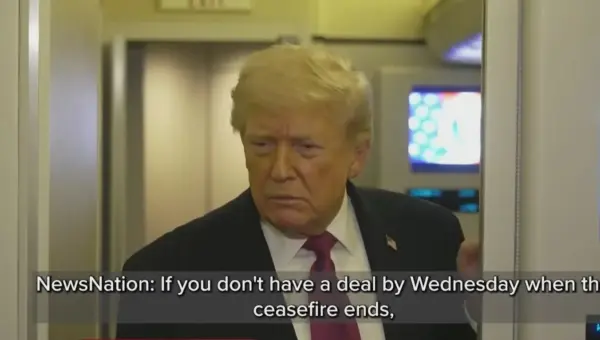
As a critical ceasefire deadline looms, President Trump has issued stark warnings to Iran about potential military action if a nuclear deal isn't reached. The U.S. maintains a naval blockade, while diplomatic efforts continue amidst fragile regional stability. The outcome in the coming days will significantly impact Middle Eastern security.
Trump’s Catholic Allies Uneasy Over Pope Attacks
Donald Trump's recent attacks on Pope Francis have created discomfort among his Catholic allies, who feel "squeamish" about the rhetoric. Meanwhile, escalating tensions with Iran have led to the closure of the Strait of Hormuz, complicating ongoing peace talks and creating an unpredictable diplomatic landscape.
Rogan Sent Trump Info on Ibogaine for Addiction Treatment
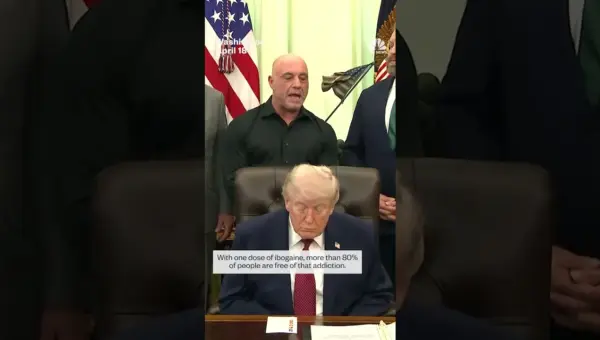
Joe Rogan revealed he shared information about ibogaine, a psychedelic drug showing high success rates for opioid addiction, with former President Donald Trump. Rogan stated Trump responded positively, asking about FDA approval. This exchange underscores growing interest in psychedelic therapies for mental health and addiction.