Russia Nuclear Threat to Satellites Sparks Space War Fears
U.S. Space Command Commander General Steven Whiting has warned of escalating threats to satellites from Russia and China, including a potential Russian nuclear weapon for space. He highlighted the catastrophic risks of such an attack and the critical role satellites play in daily life, while also expressing optimism for future space exploration.

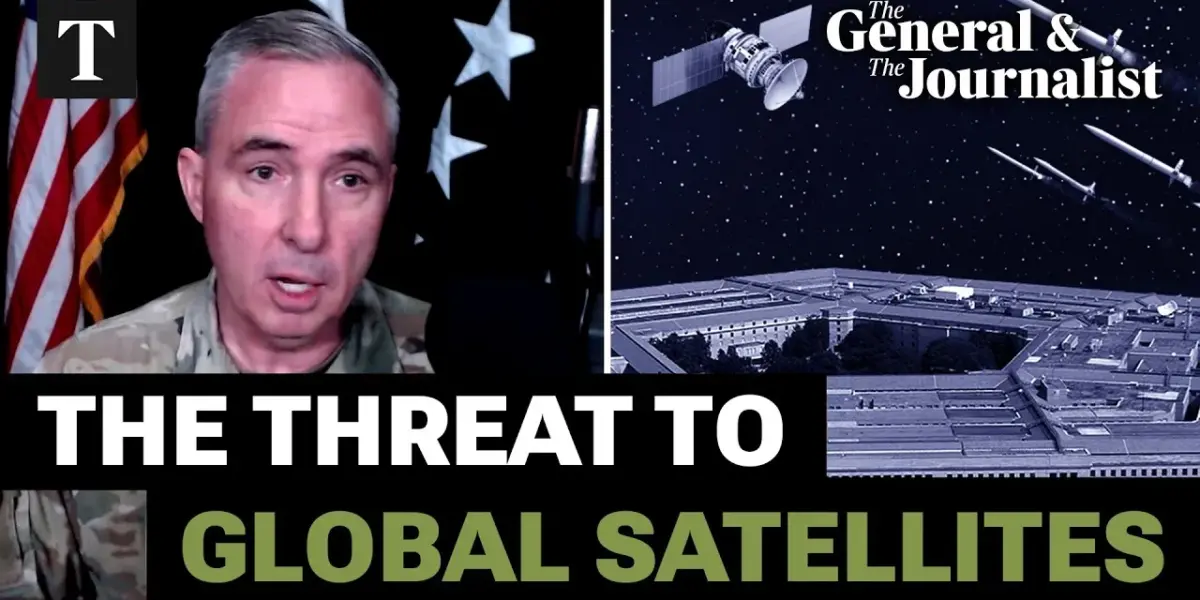
US Space Command Warns of Growing Threats from Russia and China
Military operations in space are becoming crucial in modern conflicts, with satellites playing an ever-larger role in our daily lives. Threats to these vital assets are growing, according to U.S. Space Command Commander General Steven Whiting. He recently highlighted concerns about potential attacks on satellites, including a troubling report that Russia may be developing a nuclear weapon for use in space.
A New Age of Space Exploration and Risk
General Whiting expressed optimism about a new era of space exploration, drawing parallels to the Apollo missions. He believes humanity is on the verge of significant advancements, with potential for a permanent lunar base within five years and future missions to Mars and beyond. This vision of expanding human presence and economic activity in space, however, hinges on protecting these ventures from emerging threats.
“I believe we are on the precipice of just an amazing new space age,” Whiting stated. “Humans are now going back to the moon and I believe we’re going to see a permanent lunar installation… And then we’re going to move off into the solar system going to Mars, going to the asteroids.” This future, he emphasized, needs to be protected.
Space as a Warfighting Domain
Once considered a relatively safe frontier, space is now recognized as a warfighting domain. General Whiting explained that unlike in the past, when adversaries needed to be given hypothetical advanced capabilities for war games, these threats are now real. Both China and Russia have developed a range of weapons designed to disrupt or destroy U.S. and allied space capabilities.
These threats include cyberattacks, jammers for satellite communications and GPS, directed energy weapons, and anti-satellite rockets. China, in particular, has rapidly expanded its capabilities in space. Russia, despite economic sanctions, continues to invest in counter-space weapons, with the most concerning development being the potential deployment of a nuclear anti-satellite weapon.
The Devastating Impact of a Nuclear Detonation in Space
General Whiting described the catastrophic consequences of a nuclear detonation in space. Such an event, depending on its size and location, could disable a third of all satellites in low Earth orbit within hours. Over the following months, increased radiation would likely cause the remaining two-thirds of satellites in that region to fail.
This would cripple critical infrastructure. “All of low Earth orbit would be at risk,” Whiting warned. “That’s where the International Space Station is.
So it would put at risk those astronauts. It’s where the Chinese space station is, those taken.” The impact would extend far beyond military applications, affecting everyday life on Earth.
Satellites Underpin Daily Life
The reliance on satellites for daily life is immense, though often unnoticed. General Whiting highlighted how smartphones use GPS for navigation, ride-sharing services, and even autonomous vehicles. GPS signals are also vital for synchronizing global stock markets and payment systems.
Satellites provide broadband internet access, enabling communication, education, and commerce in remote areas. Losing these capabilities would mean a significant step backward, reverting to a pre-space age style of living. “We don’t want to lose all of that and go back to a pre-space age style of living that we’ve just advanced beyond at this point,” he stated.
Concerns Over Russian and Chinese Actions
The Outer Space Treaty, signed by most major space powers, prohibits placing weapons of mass destruction or nuclear weapons in orbit. Russia’s reported pursuit of such a weapon is therefore a grave concern, as it would violate this treaty and endanger all satellites in low Earth orbit. Russia views this as a way to counter perceived conventional overmatch by the U.S. and NATO.
General Whiting also confirmed that Russia has engaged in disruptive activities, including sustained satellite communication and GPS jamming, particularly in Eastern Europe. These actions have affected civilian aviation, posing a serious risk to international travel. “When we put at risk civilian airliners, full of just citizens trying to go on business or holiday, that’s incredibly problematic,” he said.
Deterrence and International Cooperation
U.S. Space Command’s primary goal is to deter conflict in space, aiming to prevent a scenario that could be described as a “Pearl Harbor in space.” This involves establishing resilience, denying adversaries the benefits of an attack, and possessing the capability to impose costs.
International cooperation is seen as essential. General Whiting leads the multinational Operation Olympic Defender, working with allies like the UK, France, and Germany.
He stressed that space is a “team sport” where burden-sharing and interoperability strengthen collective security. “When we work together, when we all bring our capabilities to bear, burden sharing, if you will, I think we’re stronger and better together,” he noted.
Increased Investment Needed
The conversation also touched upon defense spending in space. While the U.S. invests significantly, concerns were raised about allies potentially not investing enough. General Whiting suggested that modern militaries must increase their investment in space to defend critical space capabilities and services.
“A modern military is going to have to increase its investments in space, giving the threats that are now arrayed against us,” he stated. “If you’re going to have a capable army, a capable navy, a capable air force, they are not going to be able to operate unless you can deliver and defend space capabilities, space services to those forces.”
Looking Ahead
Despite the serious threats, General Whiting remains hopeful about avoiding active conflict in space. However, defense strategies are built on capabilities, not just hope. U.S. Space Command is prepared to ensure that if an adversary chooses to act in space, they will face the strongest possible response and be met with a decisive victory.
Source: Russia’s Nuclear Bomb Threat To Satellites – Head Of US Space Command (YouTube)

Related Articles
China’s Spy Satellite Aided Iran’s Attacks on US Bases
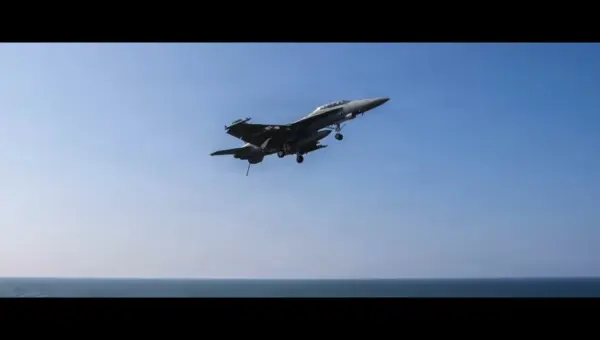
A new report reveals Iran has used a Chinese spy satellite to monitor US military bases in the Middle East, potentially aiding in recent attacks on American warplanes. Leaked documents suggest Iran purchased the satellite, which significantly outperformed its own capabilities, raising concerns about China's role in regional conflicts.

China Agrees Not to Send Weapons to Iran, Trump Claims
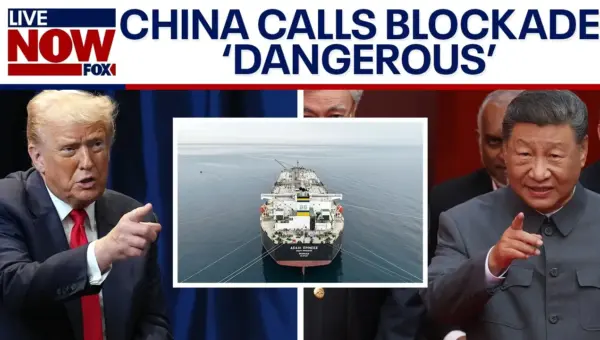
President Trump claims China has agreed to stop sending weapons to Iran, a move aimed at increasing pressure on Tehran. The U.S. is also tightening economic sanctions and enforcing a naval blockade on Iranian ports. Diplomatic talks are ongoing as a ceasefire nears its expiration.
China Aids Iran, Trump to Confront Xi on Trade
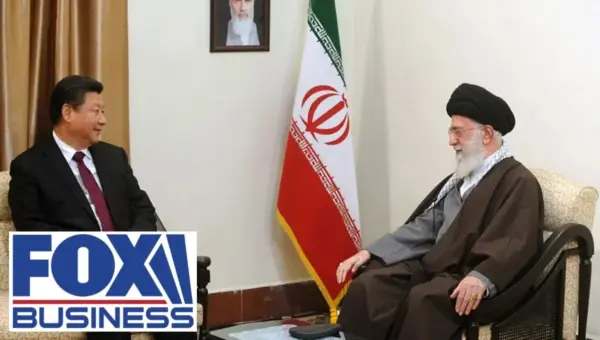
President Trump plans to discuss China's alleged support for Iran with President Xi Jinping at an upcoming summit. Reports indicate Iran has used Chinese spy satellites, and concerns exist over dual-use technology transfers. U.S. actions to limit Iran's oil exports aim to pressure China, a key energy partner.