China Agrees Not to Send Weapons to Iran, Trump Claims
President Trump claims China has agreed to stop sending weapons to Iran, a move aimed at increasing pressure on Tehran. The U.S. is also tightening economic sanctions and enforcing a naval blockade on Iranian ports. Diplomatic talks are ongoing as a ceasefire nears its expiration.

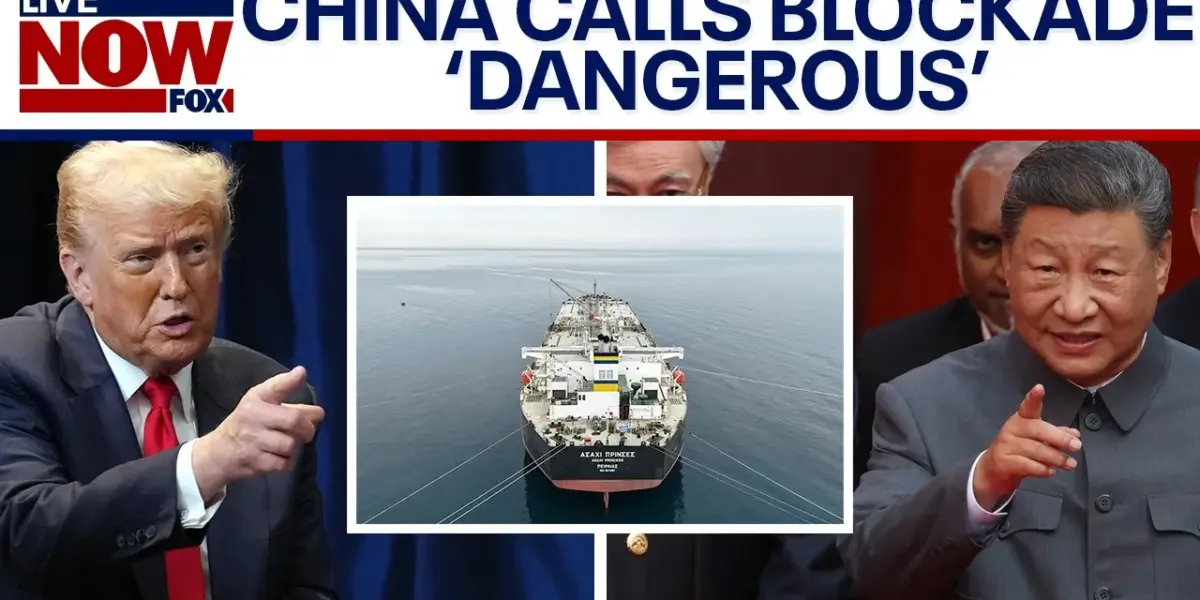
China Pledges to Halt Arms Shipments to Iran Amid US Pressure
President Trump announced that China has agreed to stop sending weapons to Iran, a significant development in the ongoing Middle East conflict. This agreement, if upheld, would mark a shift in global dynamics as the United States continues to apply economic pressure on Tehran. The announcement comes as the U.S. imposes secondary sanctions on financial institutions dealing with Iran, aiming to cripple its economy.
Economic Sanctions Bite: The Financial War on Iran
Treasury Secretary Scott Besson described the new U.S. sanctions as the “financial equivalent of the bombing campaign” against Iran. These measures target financial institutions that do business with Iran, aiming to cut off its access to global markets. The strategy is designed to inflict severe economic pain, making it difficult for Iran to import essential goods, including pharmaceuticals.
Retired Marine intelligence officer Hal Kemper explained the impact of these sanctions, particularly in conjunction with a naval blockade. “With the naval blockade, nothing’s going in and out of the ports,” Kemper stated.
This blockade prevents Iran from exporting oil, its primary source of revenue. Without this income, the country struggles to import necessary items for its economy and population.
China Faces Economic Fallout Over Iran Dealings
A key focus of the U.S. sanctions strategy is China. Reports indicated that China was prepared to ship air defense weaponry and anti-aircraft missiles to Iran.
The U.S. responded by threatening immediate 50% tariffs on all Chinese goods if the arms transfer proceeded. Such tariffs would be devastating for China, especially given its reliance on oil imports and existing economic challenges.
Kemper noted the severe impact these actions could have on China’s economy. “The Chinese economy is in absolute freefall,” he observed, highlighting the country’s current economic struggles. The combination of potential tariffs and reduced oil access creates a difficult situation for Beijing.
Trump’s Claim: Beijing Denies, but Action Expected
While President Trump asserted that China has agreed to cease weapons shipments, China’s foreign ministry has reportedly denied considering arms transfers. However, Kemper suggested that China has historically supplied weapons or components to Iran. He expressed hope that these shipments would now stop, preventing further escalation of the conflict.
Kemper pointed to past incidents where large Chinese cargo planes landed in Iran, sparking speculation about their cargo. “Everybody suspected they were bringing in missiles or missile components to help the Iranians,” he said. The current U.S. stance aims to prevent any recurrence of such support.
Naval Blockade Tightens Grip on Iranian Ports
U.S. naval vessels are actively patrolling the Gulf of Oman, enforcing a blockade on ships entering and leaving Iranian ports. U.S. Central Command (CENTCOM) confirmed its forces are “present, vigilant, and ready to ensure compliance” with the blockade. Radio communications from the operation reveal the strict enforcement measures being taken.
One intercepted radio message warned vessels: “The U.S. has announced a formal blockade of Iranian ports and coastal areas. This is illegal action. All vessels are advised to immediately return to port if leaving and discontinued transit to Iran if that is your next port call.” The message further stated that non-compliant vessels would be boarded, seized, or met with force.
Iran Threatens Retaliation Amidst Blockade
In response to the U.S. blockade, Iran has threatened to halt trade in the Gulf region if the U.S. does not lift its restrictions. Commander of Iran’s joint military issued the warning, escalating the war of words between the two nations. However, Kemper downplayed Iran’s ability to significantly disrupt regional trade, citing its limited military capabilities.
Kemper described Iran’s forces as having “very limited means,” including some drones, ballistic missiles, and small speedboats. He noted that Iran’s primary mine-laying vessels have been destroyed, reducing its capacity for naval warfare. While Iran could potentially launch drones and missiles to damage port facilities, its ability to act as a major maritime power is severely restricted.
Diplomatic Efforts Continue Amid Ceasefire Uncertainty
Despite the heightened tensions and the ongoing blockade, diplomatic efforts are underway to de-escalate the conflict. A Pakistani delegation recently met with Iranian officials in Tehran, aiming to facilitate a second round of negotiations between the U.S. and Iran. These talks are crucial as the current two-week ceasefire is set to expire soon.
Kemper believes that negotiations are more likely than not, given Iran’s dire economic situation. “They realize that their country is going to literally run out of what it takes to run their economic engine in about three to four weeks,” he explained.
The U.S. can maintain the blockade for this duration, creating pressure on Iran to reach an agreement. While the White House has not ruled out a return to military hostilities, they are expressing optimism about ongoing talks.
What’s Next: Ceasefire Expiration Looms
With the ceasefire set to end this weekend, all eyes are on the diplomatic front and the potential for renewed military action. The effectiveness of the U.S. blockade and China’s adherence to its promise not to supply weapons to Iran will be critical factors. The coming days are crucial for determining whether a lasting peace can be forged or if hostilities will resume.
Source: Trump says China has agreed to not send weapons to Iran (YouTube)

Related Articles

Iran Talks Resume as Trump Faces Costly Compromise
Renewed diplomatic efforts are underway as the U.S. and Iran engage in talks aimed at de-escalating rising tensions. Reports suggest a potential deal mirroring past agreements, focusing on limiting Iran's uranium enrichment. This comes after a period of conflict that saw significant costs and damaged U.S. global standing.


Kushner, Witkoff Conflicts Cast Shadow on US-Iran Talks
President Trump's repeated claims that the war with Iran is nearly over are met with skepticism, especially as Iran threatens to block vital shipping lanes. Concerns are mounting over potential conflicts of interest involving key U.S. negotiators like Jared Kushner and Steve Witkoff, whose business dealings have financial ties to nations involved in the talks. The article questions whether past diplomatic opportunities were missed, leaving the fate of U.S. troops in the region uncertain.


Bitcoin Surges as Iran Leverages Crypto Amidst US Sanctions
Bitcoin's price surged past $75,000 amid reports of Iran leveraging the cryptocurrency for billions in transactions and facing US sanctions. Meanwhile, Elon Musk's X platform launched a new crypto and stock feature powered by Solana, sparking debate on Bitcoin's origins and decentralization.