Bond Gets Gritty: For Your Eyes Only Returns to Roots
James Bond returns to his roots in 'For Your Eyes Only' (1981), ditching the space adventures for a gritty, grounded spy thriller. This film, inspired by Ian Fleming's short stories and facing budget constraints, marks a shift towards character-driven plots and more realistic action. It also features a poignant tribute to Tracy Bond and introduces the formidable Melina Havelock.

Bond Gets Gritty: For Your Eyes Only Returns to Roots
After a trip to space in Moonraker, James Bond is back on solid ground with For Your Eyes Only (1981). This film steers away from the over-the-top sci-fi action, offering a more grounded and serious take on the iconic spy. It’s a return to the style that fans loved from Sean Connery’s era, focusing more on character and plot than massive explosions. The movie cleverly blends elements from Ian Fleming’s short stories, showing how the Bond producers often improved upon the original books.
From TV Idea to Big Screen Thriller
The story for For Your Eyes Only started as an idea for a TV episode written by Fleming in 1958. While that show never happened, the concept was turned into a short story. Producers had considered it for years, even hinting at it after The Spy Who Loved Me. However, the massive success and huge cost of Moonraker, along with financial troubles at United Artists and a tough economy in the early 80s, meant budgets were tight. This forced the Bond franchise to scale back and focus on what they could do with less money.
New Leadership, New Direction
With less money to spend, the Bond team couldn’t afford big-name directors like Guy Hamilton or Lewis Gilbert. Instead, they turned to John Glen, who had worked as an editor on previous Bond films. This decision led to a long partnership, with Glen directing all the Bond movies in the 1980s. Michael G. Wilson also stepped up as executive producer, a role that became central to his career. Though he had worked on earlier films, this marked his rise to a key position in shaping the franchise.
The focus shifted from huge stunts and gadgets to character development and plot. Bond had to rely more on his smarts, and even his iconic Lotus Esprit was replaced by a more humble Citroën 2CV. This signaled a move towards a lower-tech, more realistic Bond. The film also borrowed the thrilling ‘keelhauling’ scene from Fleming’s Live and Let Die, and the story was shaped by writers Richard Maibaum and Christopher Wood.
A Nod to the Past, A Threat from the Future
The film opens with a powerful scene: Bond visiting the grave of Tracy Bond, his wife from On Her Majesty’s Secret Service. Her tombstone reveals her full name, Teresa, and the year of her death, 1969, the same year Her Majesty was released. The inscription, “All the time in the world,” is a direct reference to a memorable line from that film. This opening serves as a heartfelt tribute to a beloved character and reminds audiences that this is indeed the same James Bond.
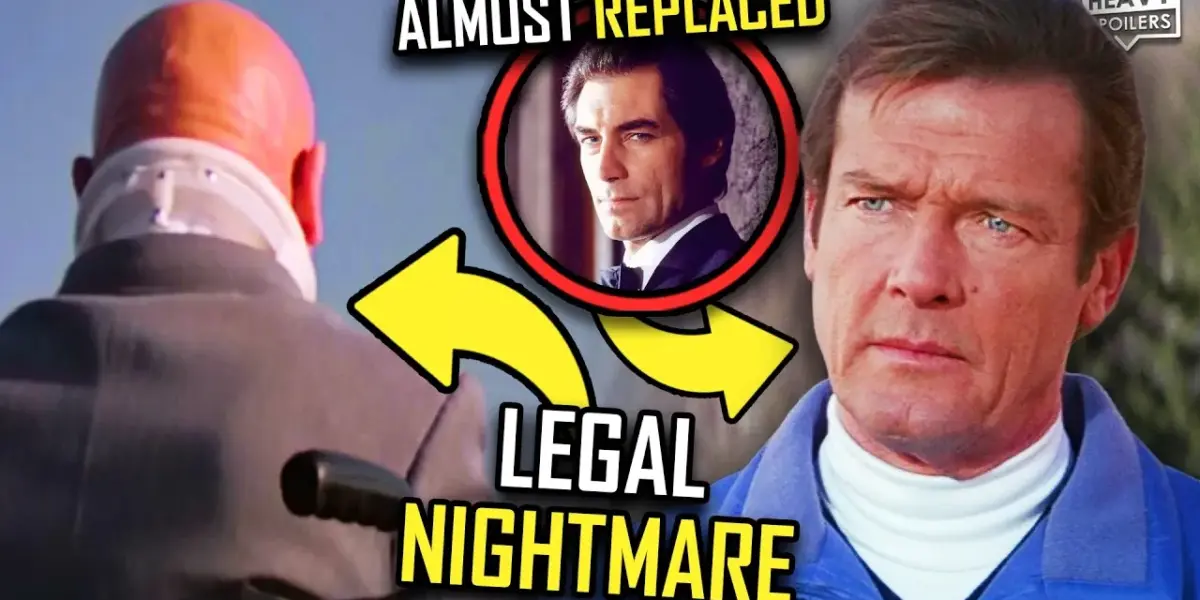
Bond is then called to MI6 for an emergency, only to find himself in a trap set by his old enemy, Ernst Stavro Blofeld. However, due to legal battles over the rights to the character, Blofeld is never named in the film and is credited only as ‘Nofeld’. This was Eon Productions’ way of asserting their independence and showing they could continue the Bond saga without the character, even if he was clearly intended to be Blofeld, complete with a neck brace and a white cat.
Roger Moore’s Enduring Appeal and a Potential New Bond
Roger Moore, despite being in his 50s, returned as Bond. While he had signed a three-film contract ending with The Spy Who Loved Me, his popularity kept him in the role. However, the producers were also looking at other actors, considering a soft reboot. Timothy Dalton was offered the role but turned it down, feeling the series was going in the wrong direction. Interestingly, Cassandra Harris, who played Countess Lisl von Schlaf in the film, was married to Pierce Brosnan, whom producer Cubby Broccoli noted as a potential future Bond.
The Sound of the 80s and a Gritty Opening
The film’s score by Bill Conti, known for Rocky and The Karate Kid, gives For Your Eyes Only a distinct 1980s feel. While some of Conti’s music might feel dated, his gun barrel sequence is considered one of the best. The opening action sequence, featuring Bond climbing on a helicopter, was a daring stunt that even inspired Tom Cruise years later in Mission: Impossible. The remote-controlled helicopter idea came from director John Glen watching a child play with a remote-controlled car.
However, the dialogue in the opening can be a bit jarring, especially the line, “I’ll buy you a delicatessen in stainless steel.” This phrase has a surprising origin, tied to Cubby Broccoli’s childhood in 1920s/30s New York, where delicatessens were sometimes used as fronts for mafia bribes. The producers used this line to show Blofeld as a common thug, possibly as a jab at Kevin McClory, who had caused legal headaches for the franchise.
Melina Havelock: A New Kind of Bond Girl
The plot kicks off with the sinking of a British spy ship, the St. Georges, which carries the ATAC (Automatic Targeting Attack Communicator). This high-stakes device falls into the wrong hands, leading to a race to recover it. The story is inspired by real-life incidents, including the recovery of Soviet and German submarines and the sinking of British destroyers.
We are then introduced to Melina Havelock (Carole Bouquet), a key figure seeking revenge for her parents’ murder. Her name, Melina, is a nod to the Greek word for honey, referencing Honey Ryder from the first Bond film. Melina is portrayed as a strong, capable, and determined character, a far cry from the more passive Bond girls of the past. Her personal quest for vengeance drives much of the film’s plot, and her story is based on Fleming’s short story “For Your Eyes Only.”
Adapting Fleming’s Stories and the Cost of Revenge
In Fleming’s short story, Melina’s parents are murdered by a Cuban agent named Hector Gonzales, working for a man named Hammerstein. Melina, who was not present during the attack, discovers their bodies and vows revenge. Bond is sent on an unsanctioned mission to hunt down Hammerstein. The film changes this, with Melina witnessing the attack and Bond being tasked with recovering the ATAC system. The film’s approach to revenge is complex; Bond’s mission is officially about the ATAC, but Melina’s personal vendetta is a major driving force. The film explores the heavy price of revenge, using the Greek myth of Electra as a parallel to Melina’s obsessive quest.
The film also features the return of Bill Tanner (James Villiers), who becomes a trusted ally for Bond, and a brief appearance by Sir Frederick Gray (Jeffrey Keen), filling in for the recently deceased Bernard Lee, who had played M for so long. Lee’s passing left a significant void, and the producers opted not to recast M immediately, instead having his duties temporarily handled by others.
Bond’s Cars and a Memorable Chase
Bond drives the Lotus Turbocharged Esprit S3, a sleek and timeless sports car. The film famously features the destruction of the Lotus, a surprising move that played with audience expectations. This leads to a memorable chase scene involving the Citroën 2CV, which Cubby Broccoli described as the “anti-Bond car.” While some fans were initially disappointed by the less glamorous car, the chase itself is a masterclass in stunt work, with the car being flipped, rolled, and driven in incredible ways. This sequence, along with the film’s reduced reliance on Moore’s constant quips, contributes to its grittier tone.
Critical Reception and Lasting Legacy
For Your Eyes Only was a commercial success, grossing over $195 million worldwide against a budget of around $28 million. Critics generally praised its return to more realistic espionage after the excesses of Moonraker, though some found the plot less engaging than other entries. The film is often seen as a turning point, re-establishing Bond as a more grounded character. It successfully closed the chapter on Blofeld and set the stage for the remaining films of the 1980s, proving that even with a smaller budget, James Bond could still deliver thrilling and engaging adventures.
Source: FOR YOUR EYES ONLY (1981) Breakdown | James Bond Easter Eggs, Book Changes, Making Of & Review (YouTube)

Related Articles
Bond Gets Gritty: For Your Eyes Only Rewrites the Rules
James Bond sheds his space-age gadgets for gritty realism in "For Your Eyes Only" (1981). This film returns 007 to his Cold War roots, focusing on character and suspense over spectacle. It's a deliberate shift after the expensive "Moonraker," bringing a more grounded, Connery-esque feel to the franchise.

Noah Centineo’s ‘The Recruit’ Character Offers Wild Advice
Noah Centineo's character in Netflix's 'The Recruit' offers hilariously bad life advice, hinting at the show's dark comedic tone. Centineo himself admits he's not qualified to give life advice, unlike his character, Owen Hendricks, a CIA lawyer caught in a web of international espionage. The series blends action, humor, and intrigue, with early reactions praising its fresh take on the spy genre.
Moonraker: Bond’s Space Odyssey or Sci-Fi Misstep?
In 1979, James Bond blasted off into space with Moonraker, a bold pivot to sci-fi amidst the Star Wars craze. Despite box office success, the film divided critics and fans, marking a significant shift for the franchise.