Trump Hints at Escalation: ‘The Big One Is Coming Soon’
President Trump's recent remarks about an impending major escalation with Iran, stating "The big one is coming soon," have been met with confusion due to inconsistent messaging from his administration. Conflicting narratives on regime change and the immediacy of threats, coupled with reports of diplomatic overtures and regional instability, leave a cloud of uncertainty over the escalating conflict.

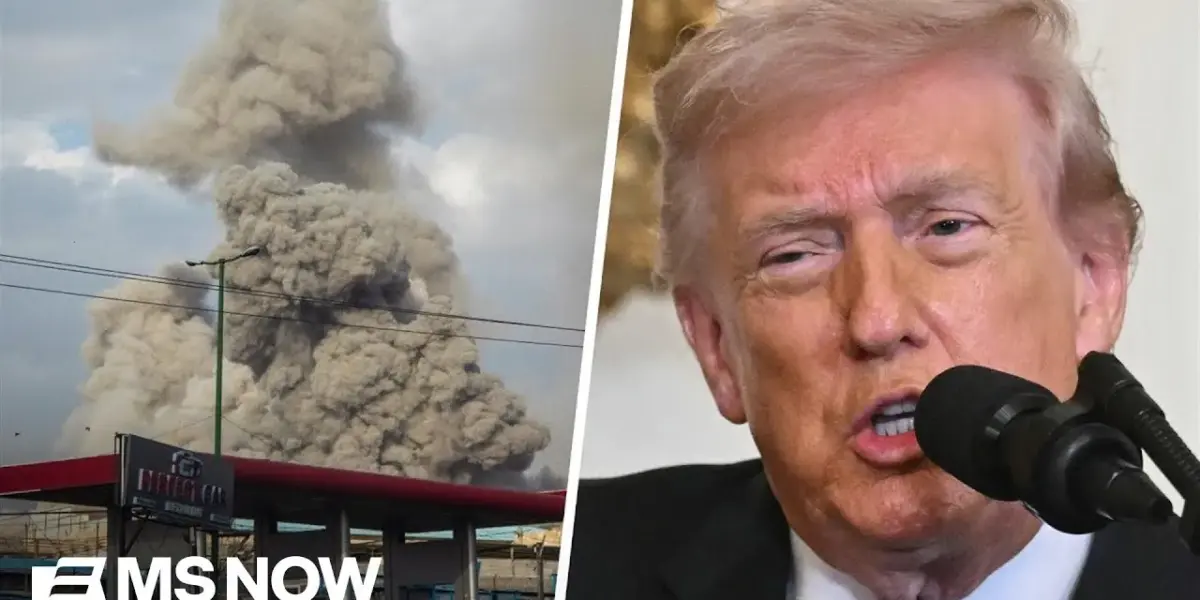
Trump Administration Sends Mixed Signals on Iran Conflict
In a rapidly evolving geopolitical landscape, the Trump administration is facing scrutiny over its communication strategy and stated objectives regarding recent military actions against Iran. While President Trump has alluded to an escalating conflict, stating, “The big one is coming soon,” and suggesting an imminent threat, his administration’s messaging has been characterized by inconsistencies, leaving both the American public and international observers seeking clarity.
Conflicting Narratives on Goals and Threats
The administration’s approach has drawn criticism for a lack of a clear, consistent message. During a recent appearance, Secretary Hegseth appeared to downplay the notion of a regime change objective, stating, “This is not a so-called regime change war.” However, this stance contrasts with President Trump’s earlier remarks, where he indicated a desire for regime change. This discrepancy raises questions about the administration’s true intentions and the basis for its military operations.
Further complicating the narrative, President Trump recently stated that America was “very nearly under threat” from Iran, citing concerns over the nation’s nuclear program. He suggested that Iran’s pursuit of enriching uranium beyond agreed-upon limits was sufficient justification for military strikes. This justification, however, has been met with skepticism, particularly in light of past statements by President Trump himself, who, as recently as 2024, had criticized nation-building and regime change as failed strategies.
Diplomatic Efforts Under a Cloud of Uncertainty
Adding another layer of complexity, reports suggest that diplomatic channels may have been open, even as military actions escalated. The Omani Foreign Minister reportedly met with U.S. officials in Washington D.C., suggesting that Iran had put forward a nuclear deal proposal that was considered more favorable than the Joint Comprehensive Plan of Action (JCPOA) negotiated under the Obama administration. It has also been suggested that Trump administration officials, including Jared Kushner and Steve Wittkoff, showed flexibility in negotiations regarding Iran’s nuclear enrichment capabilities.
However, President Trump’s recent declaration that “we can’t deal with these people” indicates a potential lack of willingness for diplomatic engagement in a second Trump administration. This stance casts a shadow over the efforts of his envoys and raises questions about the future of diplomatic negotiations, whether related to the Middle East or other international conflicts.
Regional Impact and Economic Concerns
The conflict has had immediate and tangible repercussions in the Middle East. Iran has responded with drone and missile attacks targeting U.S. bases and interests across the region, including in Qatar, Bahrain, Kuwait, and the United Arab Emirates. While some incidents, such as the downing of two Iranian fighter jets over Qatar, are still being verified, reports indicate that three American fighter jets were downed in Kuwait due to friendly fire, resulting in no injuries. Tragically, at least four U.S. service members have been killed, with four more in critical condition.
The attacks have also impacted vital energy infrastructure. Qatar has reportedly shut down its liquefied natural gas production due to drone attacks on its facilities, and Saudi Arabia has temporarily halted operations at its largest oil refinery following similar attacks. These disruptions are raising concerns about potential impacts on global oil prices, which could, in turn, affect the American economy. Gas prices in Europe have already reportedly surged by approximately 45%.
Internal Political Divisions and Shifting Stances
The administration’s actions and rhetoric are also creating internal political friction. While President Trump campaigned on a platform of non-intervention and peace, his presidency has seen a significant number of military operations. This has led to criticism from within his own political base, with figures like Tucker Carlson and Marjorie Taylor Greene questioning the rationale behind the strikes, particularly in the absence of a clear and imminent threat. They argue that the focus should be on domestic issues rather than engaging in conflicts overseas.
This shift in approach is notable, especially when contrasted with President Trump’s previous statements. As recently as 2024, he positioned himself as the candidate who would avoid new wars and criticized his opponents as “warmongers.” The current trajectory suggests a significant departure from that earlier platform, prompting questions about how his base will react in upcoming primary elections.
Expert Analysis on Regime Change and Nuclear Ambitions
Experts are divided on the interpretation of the events. Ali Baez, Iran Project Director at the International Crisis Group, questioned Secretary Hegseth’s assertion that the world is “better off” without the eliminated Supreme Leader, arguing that the Iranian regime, as a system, remains intact and continues to exert its influence. Baez emphasized that while there has been a transformation at the highest level, the fundamental structure of the regime and its repressive capabilities remain in place.
Regarding Iran’s nuclear ambitions, Baez noted that President Trump himself had previously stated that Iran’s nuclear program was “upliterated.” Citing U.N. inspectors, Baez asserted that there has been no evidence of Iran resuming its enrichment program or spinning centrifuges. Furthermore, Iran’s ballistic missile program has reportedly been limited to a 2,000-kilometer range, which covers Israel and U.S. bases in the region but does not extend to intercontinental ballistic missile (ICBM) capabilities. While acknowledging some technological overlap between space launch programs and ICBMs, Baez pointed to intelligence assessments suggesting Iran would not possess ICBMs for at least three to four years.
Looking Ahead: Uncertainty and Potential Escalation
As the situation continues to develop, the primary focus remains on the administration’s clarity of purpose and the potential for further escalation. The conflicting messages surrounding the objectives of the military actions, the status of diplomatic engagement, and the actual threat posed by Iran leave a significant degree of uncertainty. The coming days and weeks will be critical in determining the long-term implications of these events for regional stability and international relations.
Source: Trump on Iran attack plans: 'The big one is coming soon' (YouTube)

Related Articles
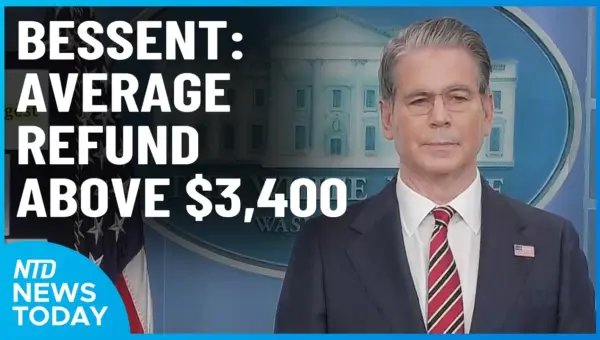
US Halts Iranian Trade: Peace Talks Loom Amidst Global Tensions
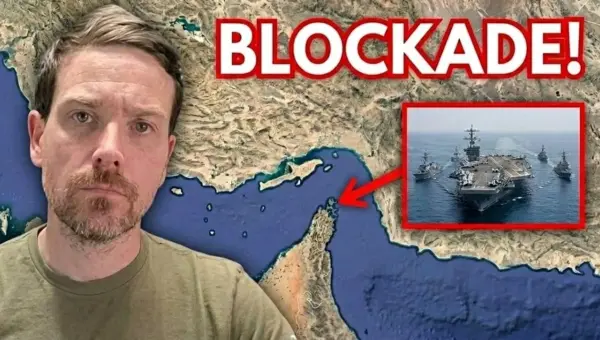
The U.S. has implemented a blockade on Iranian maritime trade, aiming to pressure the nation while simultaneously suggesting peace talks could be imminent. This move occurs alongside complex international relations, including China's involvement and ongoing regional conflicts. Domestically, the administration is highlighting significant tax refunds and economic relief measures for Americans and small businesses.
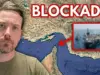
US Navy Blockade Tightens Grip on Iran’s Oil
The US Navy has imposed a strict blockade on Iranian ports, aiming to cripple the nation's oil exports and economy. With warships enforcing the closure, Iran faces significant financial pressure. The long-term effectiveness and potential for escalation remain key concerns.
Iran War Costs Mount, Deal Prospects Dim
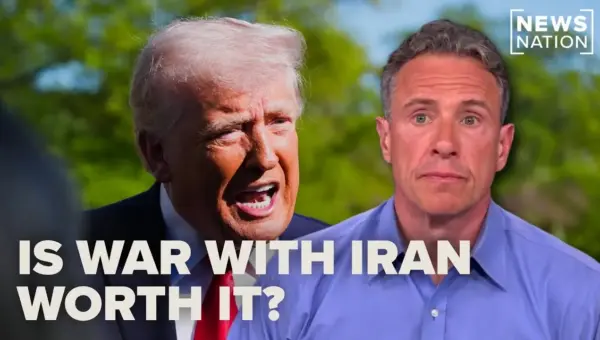
The war in Iran is costing the U.S. billions daily, impacting inflation and healthcare costs. While military gains are noted, concerns remain about Iran's nuclear ambitions and the lack of a clear diplomatic path. A "grand bargain" is sought, but the economic and human costs at home are rising.