US Troops Killed as Trump Escalates War with Iran
Three US service members have been killed as President Trump escalates military operations against Iran, dubbed Operation Epic Fury. Experts suggest the conflict is evolving into a prolonged regional war with potentially vast strategic consequences.

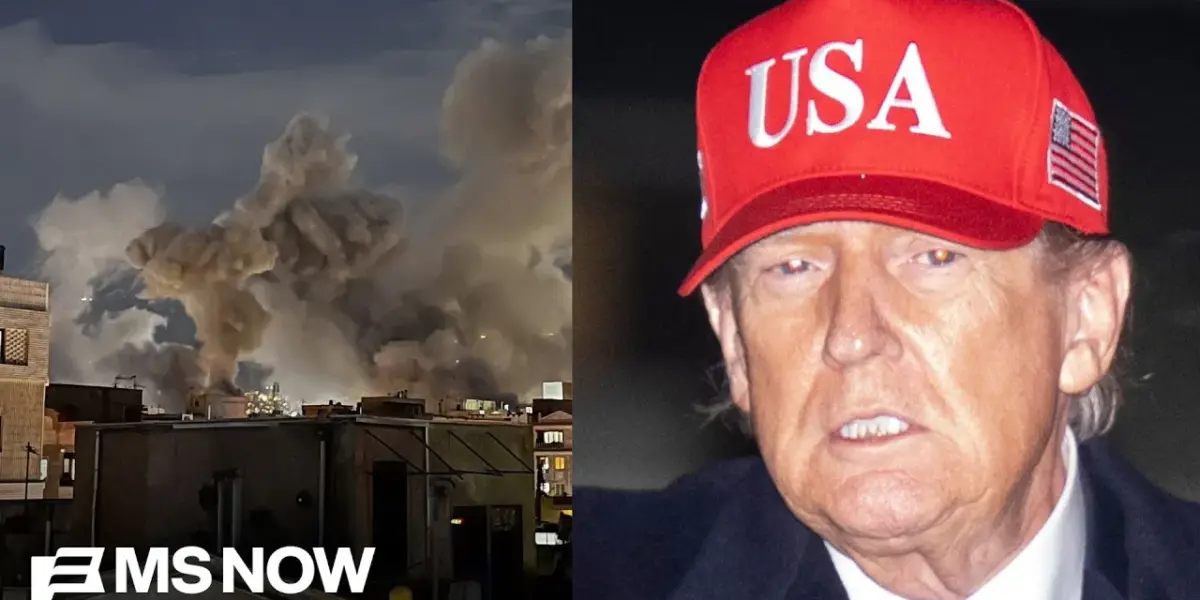
US Forces Suffer Fatalities Amid Intensifying Middle East Conflict
In a somber announcement on Monday, March 2nd, U.S. Central Command confirmed the deaths of three American military service members, a stark reminder of the escalating tensions in the Middle East. President Donald Trump has warned that further casualties are likely as the United States intensifies its military operations, dubbed Operation Epic Fury, against Iran. The situation is rapidly evolving, with significant developments unfolding over the weekend and continuing into the new week, prompting urgent analysis from foreign policy and military experts.
Administration Signals Prolonged Campaign Against Iran
Sources within the Trump administration, speaking off the record, indicate that the current military action is not expected to be a swift or simple endeavor. Instead, officials are reportedly planning for a multi-step process that could extend for up to six weeks. The strategy reportedly involves a phased approach, beginning with efforts to disrupt Iranian leadership, followed by measures to curtail its ability to launch regional strikes. A key objective appears to be the dismantling of Iran’s ballistic missile and nuclear capabilities, with some officials suggesting a broader aim to dismantle Iran’s war-making capacity established since the 1979 revolution.
David Ignatius, a columnist for The Washington Post, reported that President Trump himself has indicated a timeline of three to four weeks for the operation, suggesting he has sufficient ammunition supplies for a conflict of that duration. Ignatius noted that the President has repeatedly called on the Iranian people to rise up and change their regime, signaling substantial ambitions for the campaign.
“Nobody off camera is suggesting this is going to be quick or easy. They’re talking about a several step process that may take up to six weeks… The idea seems they are going to tear up the roots, from the roots, any warmaking ability that Iran has created since 1979.”
David Ignatius, The Washington Post
Regional War Unfolds as Attacks Expand
The conflict has already expanded significantly, with reports of Hezbollah firing into Israel and Israel retaliating. Experts now believe the region is already experiencing a full-scale regional war, dispelling concerns about the mere danger of such an escalation. U.S. Central Command estimates that approximately 2,000 targets have been hit in the first two days of Operation Epic Fury, while Iran has reportedly targeted around 500 locations in the Gulf.
Richard Haass, President Emeritus of the Council on Foreign Relations, emphasized the need for President Trump to clearly articulate the war’s objectives and benefits to the American public. “Without political support we’re going to see, I fear what we have in the past in the Middle East, which is that the country tires of war soon,” Haass stated, highlighting the potential for public fatigue with a prolonged conflict.
Strategic Consequences Comparable to Soviet Collapse
Stephen Erlanger, writing for The New York Times, suggested that the current military actions in the Middle East could have strategic consequences comparable to the collapse of the Soviet Union, regardless of public opinion on the war itself. This sentiment is echoed by those who have closely followed the region for decades.
The analysis suggests that even if the Iranian regime survives, the Middle East will be irrevocably changed. The Islamic Republic, already weakened and facing domestic unpopularity, is now further diminished in its regional power. This campaign represents one of the most significant challenges to its authority since its inception.
Trump’s Strategy: A Blend of Improvisation and Ambition
Experts observe a dynamic, almost improvisational quality to President Trump’s approach to the conflict. While he expresses readiness for talks on one day, he speaks of a long campaign to dismantle the Iranian regime the next. This duality has led some to question whether his statements are strategic pronouncements or speculative brainstorming.
However, the prevailing view among analysts is that President Trump’s strategy, particularly in light of the events in Venezuela which the administration views as a success, involves a persistent effort to reshape adversaries into partners. The current campaign against Iran is seen as a continuation of this approach, aiming for a fundamental change in the regime’s behavior and regional influence.
Strengthening Coalition and Shifting Alliances
Despite initial caution, key international allies are reportedly beginning to align with the U.S. strategy. Britain, initially hesitant to allow the use of its bases for the operation, is now reportedly opening them up. Similarly, Gulf allies like the UAE and Saudi Arabia, initially wary, appear to be moving towards a more robust stance against Iran, reportedly angered by recent missile attacks.
This evolving coalition suggests a growing regional consensus against Iran’s destabilizing influence. The conflict is seen by many as addressing the fundamental issues that have plagued the Middle East since the 1979 Iranian revolution.
Uncertain Future and Lingering Questions
The future trajectory of the conflict remains uncertain. While the White House is reportedly anticipating a four-to-six-week operation, the possibility of a swift Iranian regime collapse, though unlikely, could shorten the timeline. The expansion of the conflict into new fronts, such as the exchanges between Hezbollah and Israel, underscores the volatile nature of the situation.
The decision by Keir Starmer not to allow the use of U.S. bases in Great Britain for launching attacks has also emerged as a point of contention, with the administration reportedly angered by the move. As the conflict unfolds, the international community watches closely, grappling with the potential long-term consequences for regional stability and global security.
Source: David Ignatius: Trump's job now is to make his case clearly, directly to the U.S. (YouTube)

Related Articles

Trump’s Blockade Fails, Allies Shun Mission: A Pattern?
A reported failure of Donald Trump's blockade of the Strait of Hormuz, with ships passing through unimpeded, raises questions about policy effectiveness. This incident, coupled with allies' reluctance to join the mission, suggests a pattern of unintended consequences and strained international relations.


Trump’s Wild Claims Fuel GOP Chaos and Public Doubt
Donald Trump's recent erratic statements and Republican figures' defense strategies are causing political turmoil. Concerns over economic misrepresentation and the handling of the Jeffrey Epstein case are mounting, leading to a public demanding more accountability and truth.


Trump’s Allies Stumble, Exposing MAGA Movement’s Weaknesses
Recent events reveal cracks in the MAGA movement, from JD Vance's failed support for Viktor Orban in Hungary to disappointing Turn Point USA rallies. Trump's attacks on Pope Leo also alienate allies and expose strategic missteps. These challenges suggest a weakening of the movement's influence.